
Introduction: From Pyramids to Invisibility
Discover the Valley of the Kings in Luxor, Egypt. Explore hidden tombs, ancient pharaohs, fascinating secrets, and expert travel tips before your visit.
Here’s a question that trips up almost every first-time visitor to Egypt: if the pyramids were built to be seen, why did the pharaohs eventually stop building them? The answer is simple once you hear it, and a little unsettling. Giza’s pyramids were essentially giant billboards, and giant billboards attract giant robbers. So somewhere around 1550 BC, Egypt’s rulers made a strategic pivot from advertisement to secrecy, and they tucked their eternal resting places into a narrow, sun-bleached limestone canyon on the Nile’s west bank. That canyon is the Valley of the Kings, and it remains one of the most quietly dramatic places on Earth.
Getting there means crossing more than just a river. On the East Bank, Luxor is green, loud, and alive—palm trees, feluccas, the smell of grilled corn on street corners. Cross to the West Bank, though, and the landscape shifts almost violently into ocher cliffs and cracked earth. Ancient Egyptians saw this crossing as symbolic, almost like ferrying across their own version of the Styx, leaving the land of the living behind to enter the domain of Osiris, god of the dead and rebirth. It’s a mood shift you can genuinely feel in the car on the way there.
Here’s a fast fact worth tucking away for a dinner party: this valley was in continuous use as a royal burial ground for roughly 500 years, from about 1550 to 1070 BC, and to date archaeologists have uncovered 63 tombs cut into its rock. Some are enormous multi-chambered complexes fit for a king; others are small, unfinished, or belong to lesser royals and officials. Together, they form one of the densest concentrations of ancient art and mystery anywhere on the planet, which is exactly why Valley of the Kings Egypt trips consistently rank among the top experiences travelers report from their entire visit to the country.
“Best 5 Things to Do in Luxor Beyond the Temples.”
Logistics: The “Pro-Traveler” Way to Arrive
If you take away one practical tip from this entire guide, let it be this: show up at opening time. Not “early-ish.” Opening time. The gates typically swing open around 6:00 AM, and arriving then isn’t a nice-to-have, it’s genuinely non-negotiable if you want to enjoy the experience rather than survive it.
Two things make the 6:00 AM rule so important. First, the heat. This is a desert canyon with almost no shade, and by mid-morning in the warmer months, temperatures inside that limestone bowl can climb past 45°C. It doesn’t just feel hot, it feels like standing inside a convection oven with the door left open. Second, the crowds. Tour buses from Nile cruise ships and Luxor hotels tend to roll in around 10:00 AM, and within minutes the narrow paths between tombs turn into slow-moving human traffic jams. Beat both problems with one decision: get there at opening.
Once you’re through the gates, you won’t be walking to the tombs directly. The visitor center sits a fair distance from the actual valley entrance, so everyone gets shuttled in on a small electric tram, affectionately nicknamed the “tuf-tuf” by locals and repeat visitors alike. It costs a nominal 20 EGP in cash and takes just a few minutes, but skipping it means a long, shadeless walk you really don’t want under that sun.
As for getting from Luxor to the site itself, here’s how your main options stack up:
| Method | Time from Luxor | Cost (Approx.) | Best For |
|---|---|---|---|
| Taxi/Private Car | 30–45 mins | 500 EGP (half-day) | Independent flexibility |
| Rental Bike | 45 mins | 100 EGP | Active/Solo travelers |
| Organized Tour | Varies | Included | Ease of navigation |
A private taxi hired for the half-day gives you the most freedom—stop where you want, linger as long as you like, skip what doesn’t interest you. Renting a bike is a fun, budget-friendly option if you don’t mind the heat and some traffic near the main road, and it appeals to travelers who like earning their sightseeing with a bit of activity. An organized tour takes the thinking out of it entirely, which some people genuinely prefer, especially on a first trip to Luxor.
The Strategy: How to Choose Your 3 Tombs?
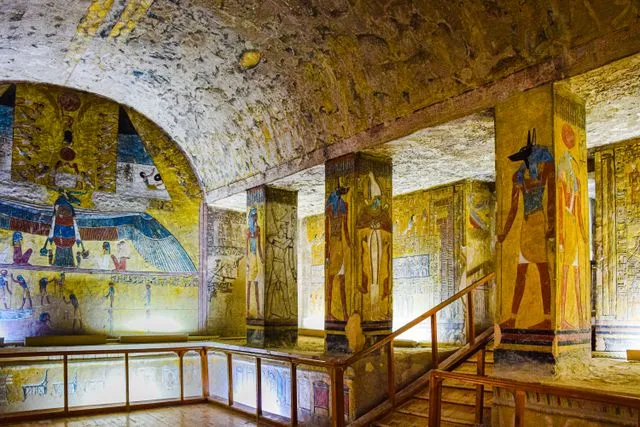
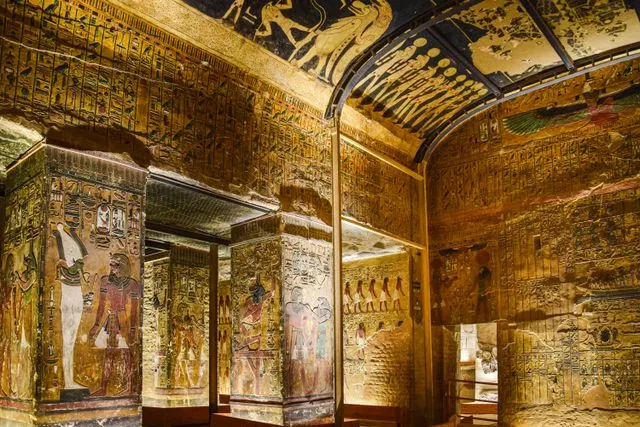
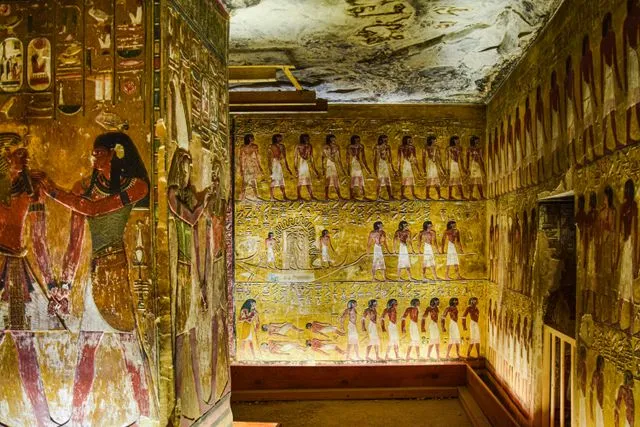
Here’s something that surprises a lot of visitors planning their Valley of the Kings Luxor itinerary: a standard entry ticket doesn’t get you into every tomb. It grants access to any three tombs out of roughly ten or eleven that are open to the public on rotation at any given time, since Egyptian authorities regularly close some tombs for conservation while opening others. That means a bit of strategy pays off before you even land in Luxor.
For most travelers on their first visit, here’s a reliable trio that balances accessibility, visual impact, and historical variety:
KV2 (Ramesses IV) is the most accessible tomb in the valley, both in terms of walking distance and ease of entry. It’s beloved for its vivid yellow-toned paintings, and the ceiling featuring the sky goddess Nut stretched protectively overhead is one of the most photogenic moments in the entire valley.
KV11 (Ramesses III) stands out for an unusual architectural quirk: a side chamber decorated with two blind harpists playing for the gods. It’s a small, human detail buried inside a monument built for eternity, and it tends to stick with visitors long after they’ve left Egypt.
KV8 (Merenptah) goes deep—literally. This tomb is long and monumental, and walking through it, you can actually observe how royal tomb architecture evolved and shifted over the generations, making it a fascinating companion piece to the other two.
Together, these three give you variety without exhausting your energy or your ticket budget, and they’re an excellent baseline before deciding whether to splurge on anything extra.
“Tap here and book your ticket in the valley of the kings.”
The “Premium” Splurges: Are They Worth the Extra Ticket?
Beyond the standard three, a handful of tombs require a separate, additional ticket. They’re pricier, sure, but each one offers something genuinely singular.
KV17 (Seti I), often nicknamed the “Sistine Chapel of the Ancients,” is the longest and deepest tomb in the entire valley, stretching an incredible 137 meters into the rock. The relief carvings here are considered unmatched in quality anywhere in the valley—crisp, deep, almost sculptural rather than merely painted. The undisputed highlight is the astronomical ceiling in the burial chamber, where constellations are rendered against a deep midnight blue, transforming the chamber into a kind of eternal night sky. If your budget allows for only one splurge, this is usually the one seasoned travelers recommend without hesitation.
KV9 (Ramesses V & VI) is what regular visitors call a total bargain, running at roughly 110 EGP for entry. What makes it special is a layered, almost palimpsest-like decoration scheme, since the tomb was reused and reworked, leaving behind a striking double image of the sky goddess Nut both swallowing and giving birth to the sun. It’s a rare, visually stunning depiction of the daily solar cycle that you won’t find quite so vividly rendered elsewhere.
KV62 (Tutankhamun), the world-famous boy king’s tomb, deserves an honest reality check. Architecturally, it’s small and comparatively plain—nowhere near as visually spectacular as Seti I’s chamber or even some of the standard-ticket tombs. The reason to visit isn’t the artwork; it’s the history. Inside a specially climate-controlled case, you can see Tutankhamun’s actual mummified remains, still resting in the tomb where Howard Carter made his legendary 1922 discovery. Go for the goosebumps of standing where that discovery happened, not for the wall paintings.
Decoding the Walls: Functional Magic & Underworld Books
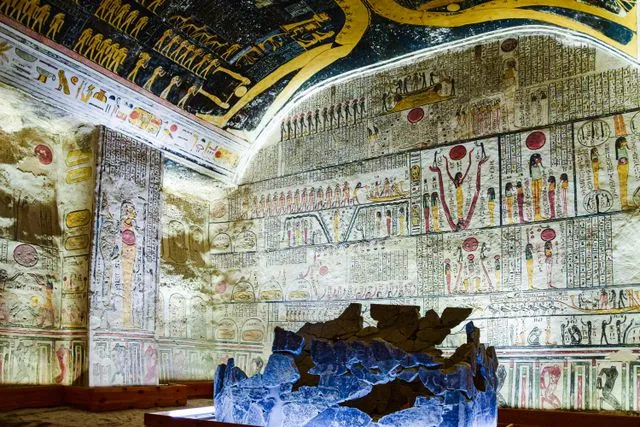
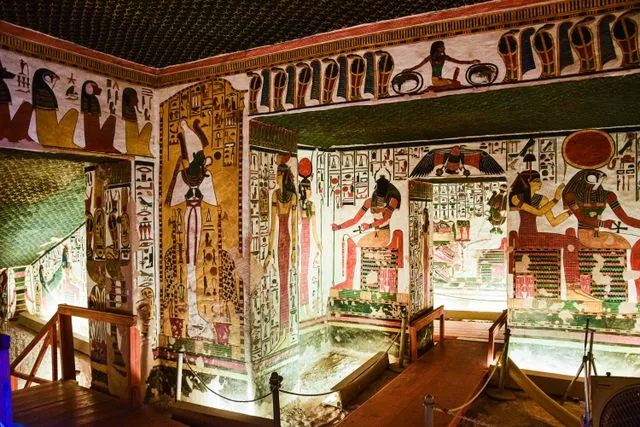
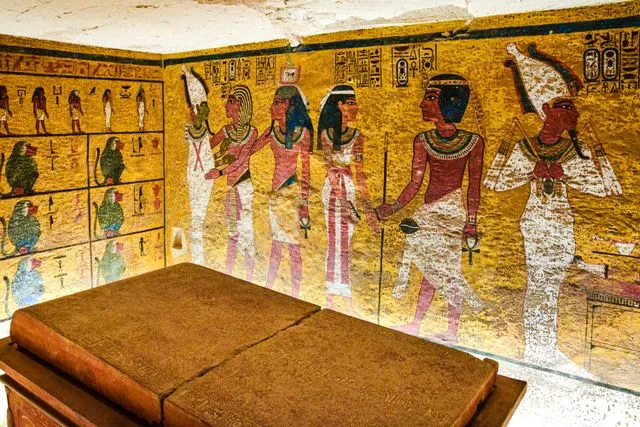
Here’s the thing that changes how you experience every tomb in this valley once you understand it: those elaborate wall paintings aren’t decoration. They’re instructions.
Ancient Egyptian religious texts like the Amduat, the Book of Gates, and the Book of Caverns weren’t created to be admired the way we admire art in a museum today. They functioned as something closer to a survival manual, or if you want a modern comparison, a set of cheat codes the pharaoh needed to successfully navigate the twelve dangerous hours of night in the underworld and be reborn with the sun at dawn. Every demon, gate, and divine figure painted on those walls represented an obstacle the deceased king needed to correctly identify and pass.
This is also why every tomb in the valley is built the way it is—descending, deeper and deeper into the rock as you move further in. That physical descent mirrors the mythological journey of the sun god Re, who was believed to sail his solar barque into the underworld each night, battling chaos and darkness, before triumphantly rising again each morning. Walking from the entrance to the burial chamber isn’t just a tour route; it’s a literal reenactment of that cosmic journey, which is part of what makes the Valley of the Kings feel so different from an ordinary archaeological site.
The “Hidden” Survival Guide: Things They Don’t Tell You
A few practical secrets that rarely make it into standard guidebooks but genuinely improve the visit.
First, the sunglasses hack. As you walk through the entrance market toward the ticket area, expect a gauntlet of persistent souvenir sellers eager to make eye contact and start a conversation you didn’t ask for. Dark sunglasses aren’t just sun protection here—they’re a subtle social shield. Without direct eye contact, most vendors will let you pass with far less friction.
Second, know the current photography rules before you pack your gear. As of 2026, mobile phone photography is completely free and unrestricted inside every tomb in the valley, including Tutankhamun’s. That’s a genuinely welcome change from older, stricter policies. DSLR cameras are a different story, though—they still require a professional photography permit, priced at roughly 300 EGP, purchased directly at the gate.
Third, and this one matters for your health: be ready for what locals half-jokingly call the “biological curse.” Inside many tombs, especially the deeper ones, humidity builds up into something close to a sauna, trapped moisture that’s been incubating molds and bacteria in that enclosed rock for centuries. For most visitors it’s simply uncomfortable. For anyone with asthma or other respiratory sensitivities, it can be genuinely demanding, so pace yourself, take breaks between tombs, and don’t feel pressure to enter every single chamber back to back.
FAQ: Quick Answers for Your Trip
How long should I stay in the Valley of the Kings?
Budget around 2 to 3 hours for a relaxed visit covering your three standard tombs plus one premium add-on. Rushing through defeats the purpose—give yourself room to actually absorb what you’re looking at.
Can tour guides enter the tombs with me?
No, Guides are prohibited from entering the tombs themselves, both out of respect for the dead and to help manage overcrowding in these narrow, enclosed spaces. Your guide will brief you thoroughly outside before you head in on your own.
Is there a dress code for visiting?
Yes, Egypt is an Islamic country, and modest dress is expected at religious and historical sites alike. Cover your shoulders and knees as a sign of cultural respect, and you’ll feel far more comfortable moving through the site regardless.
How do I pay for entry?
As of 2026, most major sites including the Valley of the Kings primarily require credit or debit cards for entry fees. Keep some cash on hand too, but mainly for baksheesh, the small tips customarily given to guards, guides, and site staff.
Final Thoughts
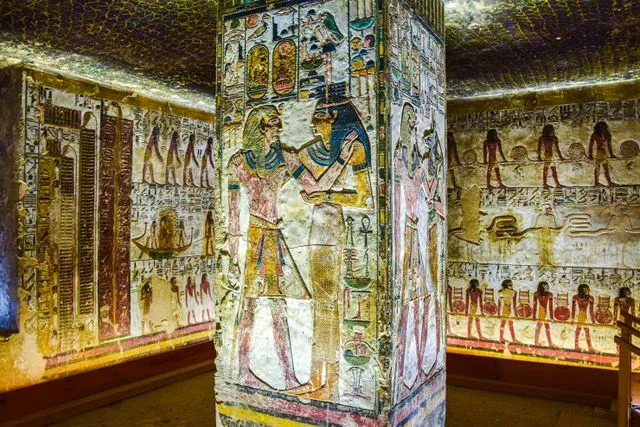
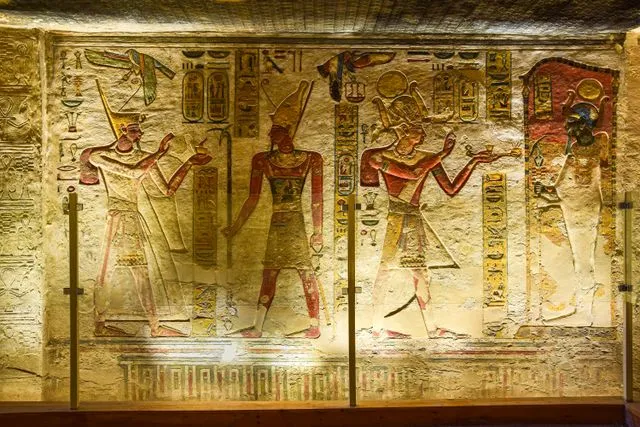
The Valley of the Kings rewards travelers who plan a little and rush a lot less. Arrive early, choose your tombs with intention, understand that every wall you’re looking at was meant to function rather than just decorate, and pace yourself against both the heat and the humidity. Do that, and this quiet limestone canyon on Luxor’s West Bank will give you one of the most genuinely moving experiences Egypt has to offer—not a spectacle built to be seen, but a secret finally worth uncovering.
What makes this place so different from almost anywhere else you’ll visit in Egypt is that it never really tries to impress you from the outside. There’s no towering silhouette on the horizon the way there is at Giza, no dramatic first glimpse from miles away. You arrive, you walk through a gap in the rock, and only then does the valley reveal itself—tomb after tomb, quietly cut into the cliffs, each one hiding something extraordinary just beneath a plain, unassuming doorway.
That contrast between the modest entrances and the riot of color and detail waiting inside is part of what makes the whole experience so memorable. It’s a place built for those willing to step inside and look closely, not for those glancing from a distance.
It’s also worth remembering that you’re not just visiting a historical site here, you’re walking through what was, for the ancient Egyptians, a deeply sacred piece of engineering. Every corridor, every painted ceiling, every carved doorway was created with total conviction that it would actually work, that it would genuinely guide a king safely through the underworld and back into eternal life. Keeping that mindset with you as you walk changes the visit from a checklist of photo opportunities into something closer to standing inside someone else’s belief system, one that shaped an entire civilization for centuries. Few places on Earth let you feel that so directly.
A little practical advice to close on: don’t try to cram in every open tomb in a single sweaty afternoon just because your ticket technically allows it. The valley isn’t a race, and honestly, three or four well-chosen tombs, explored slowly and with some context in mind, will stay with you far longer than a rushed marathon through all of them.
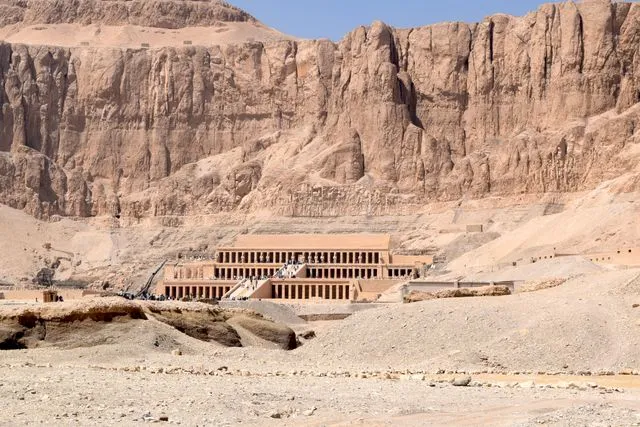
Bring more water than you think you’ll need, wear comfortable shoes that can handle uneven stone steps, and if you can, pair your morning at the Valley of the Kings with a stop at the nearby Temple of Hatshepsut or the Colossi of Memnon before the heat becomes unbearable. The West Bank rewards a slow, thoughtful morning far more than a rushed one.
And finally, give yourself a quiet moment somewhere in the valley before you head back to the tram. Away from the chatter of tour groups, just for a minute, look up at those ocher cliffs and try to imagine this place three thousand years ago—the secrecy, the workmen who spent their lives carving these chambers in the dark, the priests who sealed the doors believing no one would ever open them again. That’s the real magic of the Valley of the Kings. It isn’t just what’s painted on the walls. It’s everything those walls were built to protect, and the fact that, against all odds, we get to stand inside and see it for ourselves.