
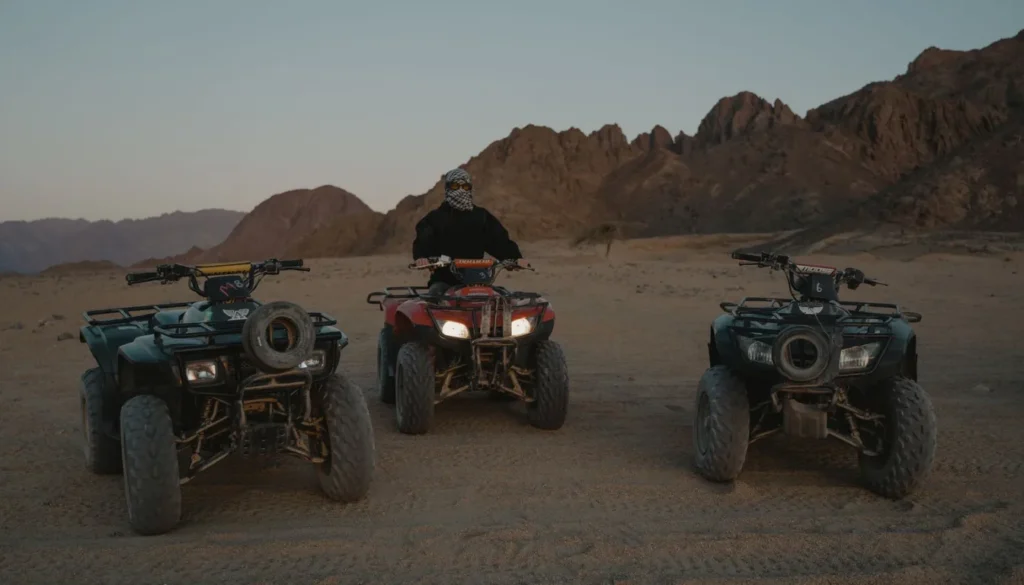
Introduction: Beyond the Reefs
Discover the best desert safari in Sharm El Sheikh with our complete guide. Compare quad biking, buggy rides, camel treks, Bedouin camps, prices, travel tips, and the best tours for an unforgettable Sinai adventure.
Ask anyone what Sharm El Sheikh is famous for, and they’ll say the same thing: the reefs. The Ras Mohammed corals, the wall dives at Shark Reef, that impossible turquoise water you’ve seen in a hundred Instagram posts. And yes, it earns every bit of that reputation.
But there’s a second Sharm that most first-time visitors don’t discover until a local, a hotel receptionist, or a friend who’s already been tells them about it — the one that starts the moment you turn your back on the sea and look inland. That’s where the Sinai Desert takes over, all rust-colored mountains, endless dunes, and silence so complete you can hear your own heartbeat. If you’re searching for the best desert safari in Sharm El Sheikh, you’re really searching for this: the other half of the trip, the one that doesn’t involve a snorkel at all.
Quick answer: A Sharm El Sheikh desert safari is a guided adventure into the Sinai Desert that usually combines quad biking or dune buggy riding, a camel ride, and a visit with a local Bedouin community — complete with tea, dinner, and stargazing. Most tours run somewhere between 3 and 5 hours, and they’re one of the most popular things to do in Sharm El Sheikh outside the water.
If you’ve got one evening free during your stay, this is the one to spend it on. Let’s walk through exactly what a Sharm El Sheikh desert safari involves, which type suits you best, what it costs, and everything else you’d want to know before you book.
Part of what makes this so special is the landscape itself. The Sinai Peninsula sits at the meeting point of Africa and Asia, and its interior looks almost otherworldly — jagged granite peaks, wadis carved by ancient floodwaters, and dunes that shift color from gold to deep orange as the sun drops. It’s the same desert that has been home to Bedouin tribes for generations, long before Sharm El Sheikh became a resort town, and that history is exactly why the cultural side of a desert safari feels so authentic rather than staged for tourists.
“Tap here and read more about The Valley of the Kings: Top Secrets Beneath the Sands.”
Which Safari Is Your Style? (Comparison)
Not every desert safari is built the same, and picking the right one makes a real difference to how much you enjoy it. Here’s a quick breakdown to help you match the experience to your travel style.
| Safari Type | Best For | Thrill Level | Highlights |
|---|---|---|---|
| Quad Biking | Adrenaline junkies, solo travelers | High 🚀 | Riding through valleys; stopping at Bedouin tents |
| Dune Buggy | Families, couples, groups | Moderate 🚙 | Side-by-side seating; automatic and stable |
| Super Safari | Culture lovers, families | Moderate | Quad + camel + dinner + show + stars |
| VIP Private | Honeymooners, VIPs | Custom | 100% private guide and custom itinerary |
| Artificial Pyramid | Photographers, unique seekers | High | Exclusive visit to the PyraSafari pyramid landmark |
If you’re still not sure which one fits, think about who you’re traveling with. Solo and want your pulse racing? Quad biking. Traveling with young kids or nervous grandparents? The buggy wins every time. Want the whole cultural package — food, music, stars, and all? Go for the Super Safari. And if you’re celebrating something and money isn’t the main concern, the VIP private option lets you set the pace entirely.
The “Classic” Desert Ride: Quad vs. Buggy
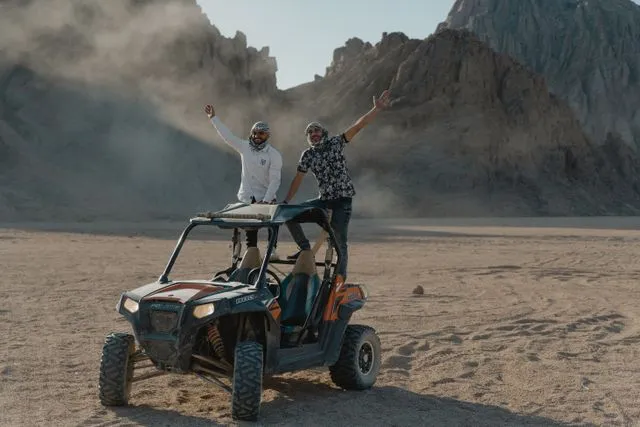
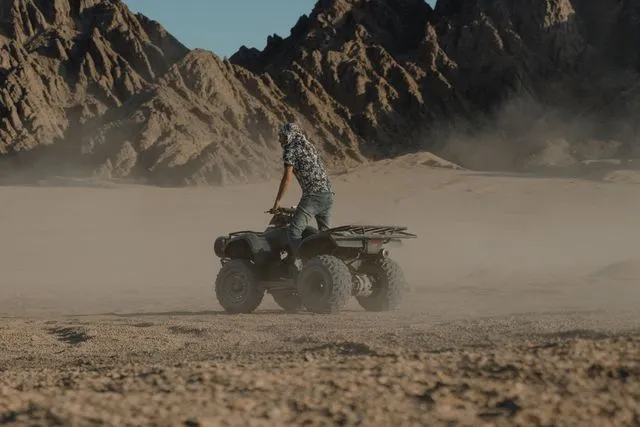
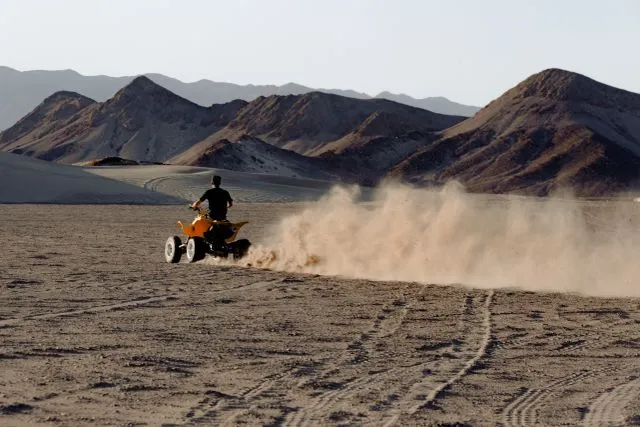
This is the question almost every traveler asks before booking a Sharm El Sheikh desert safari: quad or buggy? Both get you out into the same dramatic scenery, but the experience — and who it suits — is genuinely different.
Quad Biking (ATV) is the classic choice, and it’s still the most booked option among first-timers. You sit on the bike solo or with one passenger behind you, grip the handlebars, and follow your guide through mountain trails and open valleys. The good news for nervous riders: you don’t need a driving license, and no prior experience is required. Guides give you a short briefing before you set off, and the pace is controlled — this isn’t a race, it’s a ride. What you get in return is a real sense of freedom, the wind, the dust, and views of the Sinai mountains that you simply can’t get any other way.
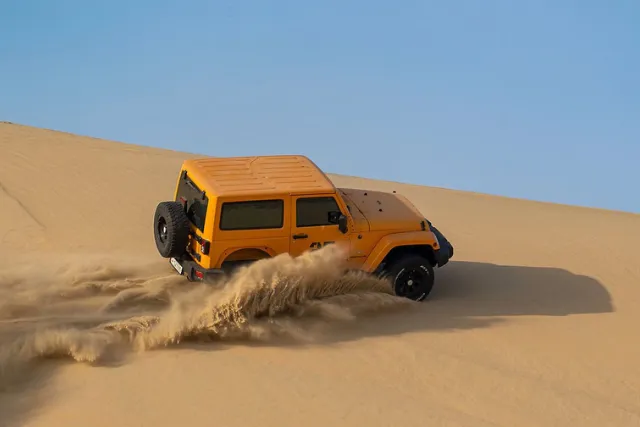
Dune Buggy (UTV) takes a different approach. Instead of straddling a bike, you sit side-by-side in a small open vehicle, usually built for two or four people. It handles more like a small car than a motorbike, which makes it noticeably more stable — a big plus if you’re traveling with children who need to sit securely next to an adult rather than balance on a bike seat behind you.
Here’s a detail worth knowing before you book: buggies generally have no weight limit, while double quads (two riders on one bike) typically cap out at a combined 150 kg. If that’s a concern for your group, the buggy is the safer bet.
Honestly, there’s no wrong answer here — it comes down to comfort versus thrill. Quads deliver more adrenaline and a closer connection to the terrain. Buggies deliver comfort, stability, and peace of mind. Some visitors even book both on separate evenings, just to compare.
One more thing worth mentioning: both options are guided, which means you’re never left to figure out the route alone. Guides ride ahead of the group, set the pace, and know exactly where the trails narrow, where the sand gets soft, and where to slow down. That guidance is a big part of why these tours feel exciting rather than risky — you get the thrill of driving through open desert without actually having to navigate it yourself.
If you’re torn between the two, ask yourself one simple question: do you want to be the driver of your own adventure, or do you want to share the ride with someone else? A solo quad puts you fully in control, handlebars and all. A buggy turns it into a shared experience — perfect for couples who want to laugh through the bumps together or parents who want their child within arm’s reach the whole time.
“Sharm El Sheikh Desert Safari with Hotel Transfer – Quad Bike, Echo Valley & Bedouin Tea.”
Cultural Magic: The Bedouin Dinner & Stargazing
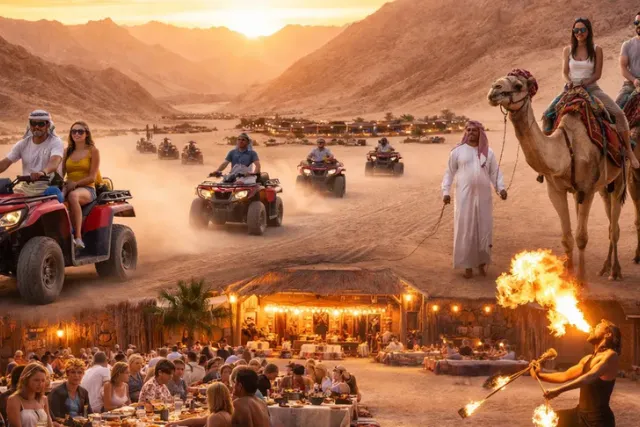
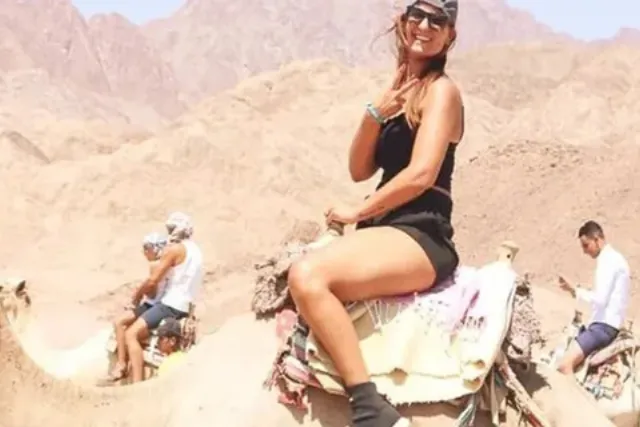
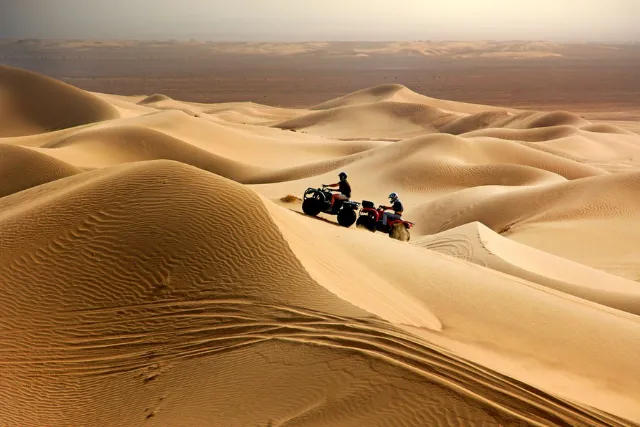
If the ride is the adventure, the Bedouin camp is the heart of it. This is the part of the desert safari that tends to stick with people long after they’ve forgotten the exact trail they rode on.
The arrival. Your guide leads the group to a traditional Bedouin village set up in the middle of the desert — string lights, low cushions, open fires. You’re welcomed the way Bedouins have always welcomed guests: with a glass of hot herbal tea (often flavored with mint or karkade) and fresh flatbread baked right there over an open flame. Watching the bread puff up on the fire is half the fun.
The feast. Dinner is typically a generous BBQ buffet — grilled chicken and meats, fragrant rice, warm flatbread, and a spread of traditional salads and dips. It’s simple, hearty food, and after a couple of hours on a quad or buggy, it tastes better than most restaurant meals back at the resort.
The entertainment. As the sky darkens, the show begins. Expect a Tanoura performance — dancers spinning in colorful layered skirts until the patterns blur — along with belly dancing and, in many camps, a fire show that lights up the whole desert floor. It’s loud, joyful, and genuinely fun to watch, even if you’ve seen a hundred travel videos of it already.
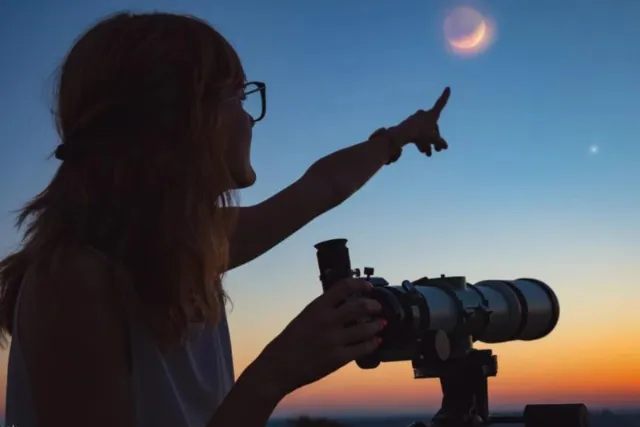
Stargazing. This is the moment that quietly wins people over. Away from any city lights, the Sinai sky turns into one of the clearest you’ll ever see. Many camps set up professional telescopes so guides can point out planets, star clusters, and constellations you’d never spot from a hotel balcony. If you’ve never really looked up at a truly dark sky, this alone is worth the trip.
What surprises most visitors is how quiet this last part feels compared to everything before it. After the noise of the engines and the energy of the dance show, the group usually settles onto rugs and cushions scattered across the sand, tea in hand, and just looks up. Guides are happy to answer questions about local Bedouin traditions too — how families still move seasonally between camps, how they read the stars for direction long before GPS existed, and what daily life looks like away from the resorts. It turns a fun evening out into something that feels a little more meaningful.
“Sharm El Sheikh Sunset Desert Safari with Hotel Transfer – Quad Bike, Camel Ride, Bedouin Dinner.”
Step-by-Step: What Happens on a Safari?
Wondering what an actual booking looks like from start to finish? Here’s the typical flow of a Sharm El Sheikh desert safari, so you know exactly what to expect.
- Pickup. Your guide or driver meets you directly at your hotel lobby, usually with the pickup time confirmed beforehand through WhatsApp. This is standard practice with most operators, and it makes coordinating the whole thing painless.
- Safety briefing. Before anyone touches a quad or buggy, you’ll get a short, clear briefing on how to handle the vehicle, the hand signals your guide will use, and basic safety rules for the ride.
- The ride. You’ll follow your guide in a convoy along marked desert trails, weaving through sand dunes, dry valleys, and rocky terrain with the Sinai mountains as a backdrop the entire way.
- The Echo Experience. Partway through, most tours stop at a natural rock formation known for its acoustic quirk — shout toward the rocks, and the desert genuinely shouts back. It’s a small, strange, and oddly magical moment that guides love showing off, and it photographs beautifully too.
- Return. Once the ride and camp portion wrap up, you’re driven safely back to your hotel, tired, a little dusty, and usually already talking about doing it again.
Survival Guide: Logistics, Prices & Packing
Before you lock in a booking, here’s the practical side of planning a Sharm El Sheikh desert safari — what it costs, what to wear, and when to go.
Price Snapshot:
- Quad Safari: From around €15 / $15 per person
- Dune Buggy: From around €35 per buggy
- Bedouin Dinner & Stars: From around €25 / $30 per person
Prices naturally shift depending on the season, the operator, and how many extras (dinner, show, private guide) you add on, so treat these as a starting point rather than a fixed number. A few practical tips that can save you money: booking directly with a local operator instead of through your hotel’s tour desk often cuts the price noticeably, since hotels typically add their own commission. Traveling in a small group also helps, as many operators offer per-person discounts once you’ve got three or more people booking together. And if you can be flexible on timing, weekday tours are sometimes slightly cheaper than weekend departures, when demand from both tourists and local visitors tends to peak.
It’s also worth asking upfront exactly what’s included. Some quad and buggy packages come bundled with hotel pickup and drop-off, bottled water, and a light snack, while others charge these as add-ons. A quick WhatsApp message to the operator before you book clears up any confusion and helps you compare prices fairly across different companies.
What to Wear?
In summer, lightweight cotton clothing is your best friend. Add long sleeves for sun protection even though it feels counterintuitive in the heat, plus sunglasses and a scarf — a Keffiyeh works perfectly — to keep dust out of your face during the ride.
In winter, layers matter more than people expect. Sinai desert temperatures drop fast once the sun goes down, often falling to somewhere between 12–17°C after dark, so a light jacket or fleece is essential even if the afternoon felt warm.
Footwear is non-negotiable: closed-toe sneakers are mandatory for both quad and buggy rides. Sandals and flip-flops aren’t allowed, and for good reason — you need real grip and foot protection out on the trails.
The Best Time to Go
Sunset tours are, hands down, the most popular option, and it’s easy to see why. You get the “golden hour” light for photos, the desert heat has eased off, and the timing flows naturally into the Bedouin dinner and stargazing as darkness falls. If photography and comfort both matter to you, aim for a sunset departure over a midday one.
FAQ: Quick Answers for Your Safari
Is it safe for children?
Yes, Desert safaris are genuinely family-friendly, but the vehicle choice matters. Families traveling with toddlers or young kids should choose a buggy rather than a quad, since the side-by-side seating keeps children secure next to an adult throughout the ride.
Do I need a license?
No, Neither quad biking nor dune buggy tours require a driving license or any prior riding experience. Guides brief every rider beforehand and keep the group at a manageable, controlled pace throughout.
Can I book via WhatsApp?
Yes, and it’s actually recommended. Booking directly through a tour operator’s WhatsApp tends to get you better prices and a smoother, faster confirmation than going through third-party platforms.
What should I NOT bring?
Leave large bags, expensive jewelry, and your original passport back at the hotel. A photo of your passport on your phone is enough for identification purposes, and traveling light just makes the whole ride more comfortable.
Final Thoughts
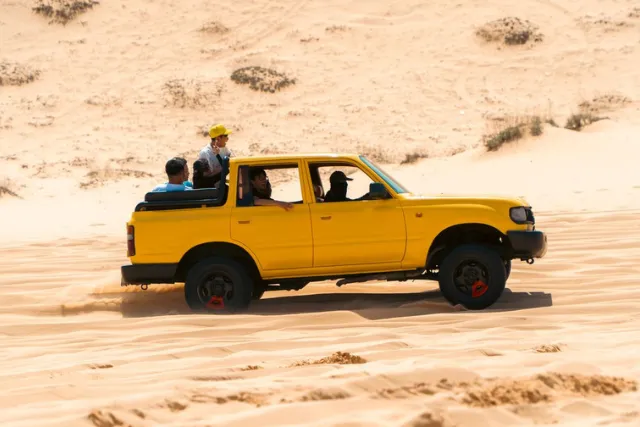
Sharm El Sheikh will always be a diving town first — that’s not changing anytime soon. But if you leave without spending at least one evening in the Sinai Desert, you’ve only seen half the story. Between the roar of a quad engine, the warmth of Bedouin hospitality, and a sky full of more stars than you knew existed, a desert safari rounds out your trip in a way the beach simply can’t.
So whether you’re chasing adrenaline on a quad, keeping things comfortable in a buggy, or going all-in with the Super Safari package, one thing’s certain: among all the things to do in Sharm El Sheikh, this is the one that will still be on your mind long after the sand’s been shaken out of your shoes.
There’s something worth remembering here too: a good desert safari isn’t just an activity you tick off a list, it’s a genuine shift in perspective. Most visitors spend their whole trip facing the sea, and it’s easy to forget that the exact same coastline is backed by one of the oldest, most storied landscapes on Earth. Stepping into the Sinai for even a few hours reminds you that Sharm El Sheikh is more than a resort strip — it sits inside a much older, much bigger story of mountains, trade routes, and communities that have called this desert home for centuries.
That’s really what separates a great trip from an average one. Anyone can lie on a sunbed and admire the reef from a boat. Far fewer people can say they’ve ridden through Sinai valleys as the sun dropped behind the peaks, shared flatbread with a Bedouin family, or picked out planets through a telescope under one of the darkest skies left in the region. Those are the moments that end up in the stories you tell months later, long after the details of which hotel pool you used have faded.
If you’re still planning your itinerary, don’t leave this until the last minute. Sunset slots fill up quickly during high season, and the best operators tend to book out a day or two in advance, especially around holidays. A quick message on WhatsApp the moment you land is often enough to lock in a good time slot without any stress.
In the end, whichever safari style you choose, you’ll come back from the desert a little dustier, a lot more sunburned around the collar, and with a phone full of photos that don’t look anything like the rest of your Sharm El Sheikh trip. And honestly, that contrast is exactly the point.