
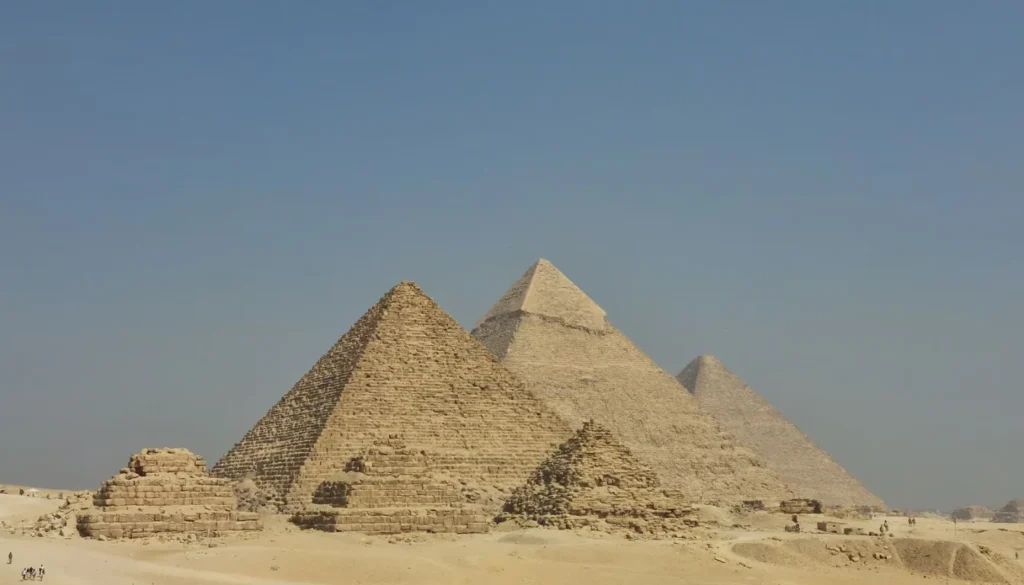
Discover the top secrets of the Pyramids of Giza, from hidden chambers and ancient mysteries to fascinating facts beyond the famous stones.
If you’ve ever stood at the edge of the Giza Plateau and looked up at 4,500 years of limestone stacked into a perfect triangle against the desert sky, you already know the feeling: it’s not just a monument, it’s a question mark the size of a mountain. Every year archaeologists chip away at that question mark a little more, and might be the year we finally get a real answer. Exploring the Pyramids of Giza has never felt more urgent, or more rewarding, than it does right now.
This guide walks you through what’s actually happening inside the Great Pyramid of Giza today, the engineering tricks that have kept it standing while empires around it crumbled, the neighboring sites most visitors skip (and shouldn’t), and a practical plan for seeing it all in person. Along the way, we’ll dig into the genuine secrets of the Pyramids of Giza — the ones backed by radar and robots, not just legend.
“Best 5 Eco-Friendly Destinations to Visit in Egypt.”
Introduction: The Archaeological Renaissance
There’s a reason Egyptologists keep calling this period a turning point. In late 2025, veteran archaeologist Zahi Hawass told an audience in Sharjah that his team had located a roughly 30-meter corridor buried deep inside Khufu’s pyramid, one that scanning technology had traced all the way to a sealed stone door. Robots have already crept through the passage, cleaning debris and beaming back footage of walls no living person has seen since the pyramid was sealed. Hawass has promised that what’s behind that door will be revealed sometime in 2026, and he’s called it a discovery that could “rewrite a chapter” of ancient Egyptian history.
What makes this moment different from the countless “pyramid mystery” headlines of the past is the method. Nobody is drilling, blasting, or guessing anymore. Teams working under the long-running ScanPyramids project are using cosmic-ray muon imaging (essentially reading the shadows cast by subatomic particles as they pass through stone) alongside thermal cameras, ground-penetrating radar, and tiny endoscopic cameras threaded through gaps barely wider than a coin. These tools have already confirmed several voids and passages that stayed hidden for millennia, including the corridor now waiting behind that door.
Quick fact: authorities working with the ScanPyramids mission are expected to disclose what lies behind the sealed door at the end of this newly mapped Great Pyramid corridor sometime in 2026, making this one of the most closely watched archaeological reveals in a generation.
Whether or not the announcement lives up to the hype, it’s a good excuse to look past the postcard image of the pyramids and into what’s actually going on beneath that limestone shell.
Inside the Great Pyramid: A Journey Through the Core
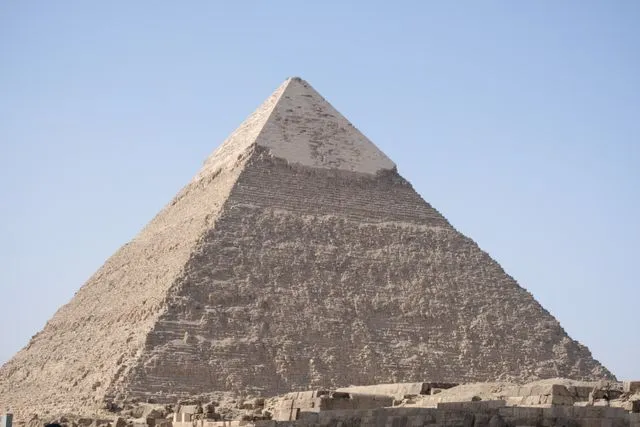
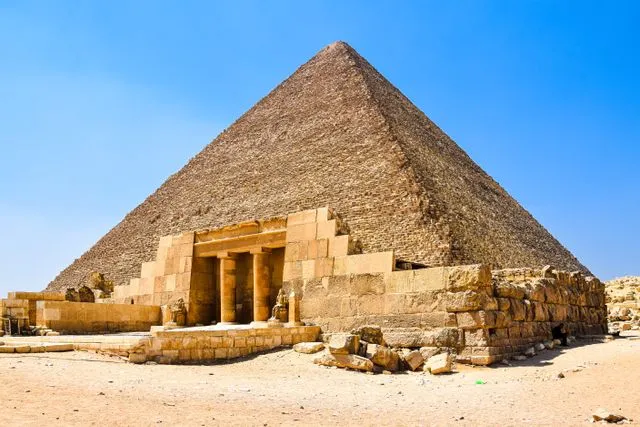
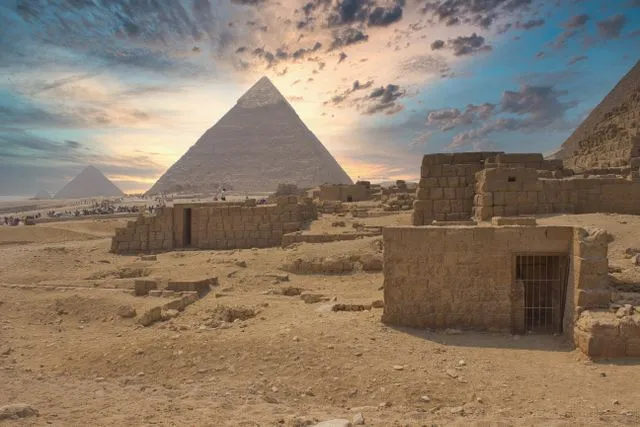
Walk through the low, narrow entrance of the Great Pyramid of Giza and you’ll quickly understand why claustrophobia and pyramid tourism don’t mix. But push past that first stretch and the space opens dramatically into the Grand Gallery, a soaring 47-meter corbelled corridor where each course of stone steps slightly inward as it rises, like an upside-down staircase carved from rock. It’s one of the finest pieces of engineering anywhere in the ancient world, built not just to be beautiful but to hold the enormous weight pressing down from above without collapsing.
At the top of that climb sits the King’s Chamber, a room lined entirely in polished red granite hauled from quarries hundreds of miles south in Aswan. Inside is a sarcophagus, also carved from granite, and it has always been empty. No mummy, no treasure, nothing but questions about what actually happened here. Two narrow shafts run from the chamber toward the exterior of the pyramid, and their alignment with specific stars (thought to relate to the pharaoh’s journey into the afterlife) has fueled decades of debate about their true purpose. Were they for ventilation, for the soul’s ascent, or something else entirely? Nobody has settled it.
Above the Grand Gallery lies one of the more genuinely startling finds of the last decade: the so-called “Big Void,” a cavity at least 30 meters long first detected in 2017 using muon radiography. It’s large enough to be architecturally significant, but to date, nobody has physically entered it. Every scrap of information researchers have comes from particles that pass through solid stone and get gently deflected by empty space. That combination — a huge unexplored chamber, hiding in plain sight above one of the most visited monuments on Earth — is exactly why the secrets of the Pyramids of Giza still feel so alive.
Engineering Secrets: Why the Pyramids Don’t Fall
Egypt sits in a seismically active region, and the pyramids have survived earthquakes that toppled far younger buildings. That’s not luck. Researchers studying the Great Pyramid’s structure have pointed to its symmetrical mass and wide, stable base as a kind of built-in shock absorber, a shape that spreads seismic energy outward rather than letting it concentrate and crack the structure. It’s the same principle modern engineers chase with base isolation systems, except the ancient Egyptians arrived at it through trial, observation, and an enormous amount of stone.
Then there’s the math. The ratio between the pyramid’s perimeter and its height comes remarkably close to 2π, meaning the builders effectively encoded a value for pi into the structure’s proportions thousands of years before the concept was formally defined by Greek mathematicians. Historians still argue about whether this was intentional or a byproduct of the construction method (using rolling drums or measured rope to lay out the base), but either way, the result is a level of precision that modern engineers still study.
Inside, above the King’s Chamber, sit five stacked “relieving chambers.” Popular explanations sometimes joke about hidden rooms or even bathrooms, but their real function is much more practical: they redistribute the crushing weight of millions of tons of stone above the burial chamber, preventing the ceiling from buckling under its own load. Combine that weight distribution with the pyramid’s seismic-dampening shape, and you start to understand why the Great Pyramid of Giza is still standing while newer structures nearby have needed constant repair.
The Grand Egyptian Museum (GEM) and Saqqara
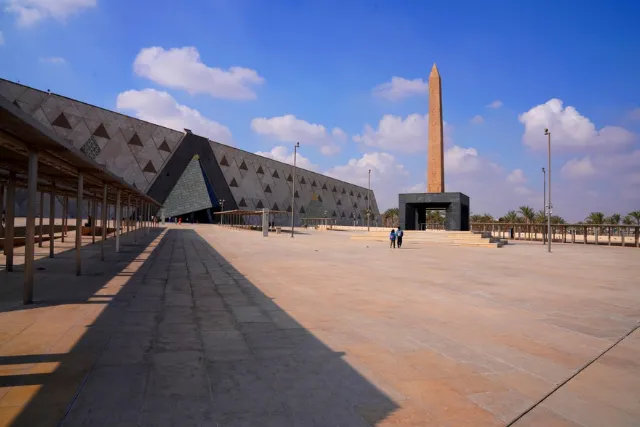
No trip to explore the Pyramids of Giza is complete without a stop at the Grand Egyptian Museum, which fully opened to the public in November 2025 after roughly two decades of construction. It sits just a couple of kilometers from the plateau, and it’s genuinely one of the largest museum complexes ever built for a single civilization.
The headline attraction is the complete Tutankhamun collection — thousands of pieces from his tomb displayed together for the first time since Howard Carter’s discovery in 1922, including the golden funerary mask, ceremonial chariots, and everyday objects meant to accompany the young pharaoh into the next life. The museum also houses Khufu’s reassembled solar boat, a 4,500-year-old vessel found buried beside the Great Pyramid.
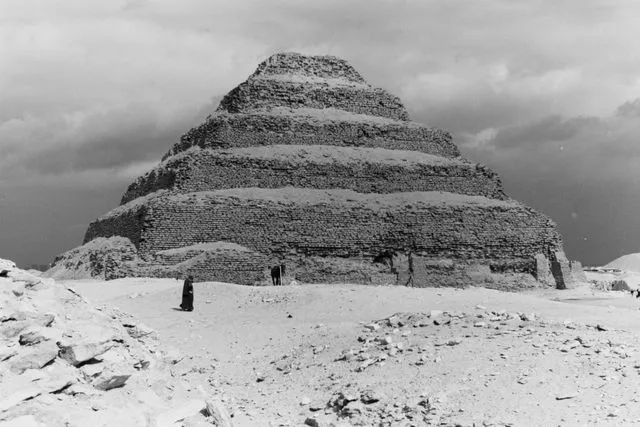
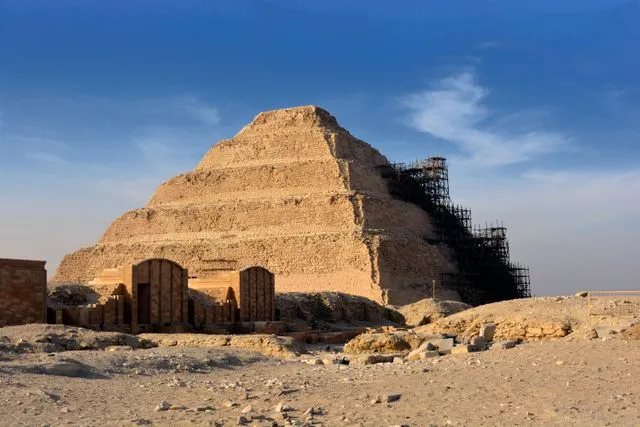
A short drive further south takes you to Saqqara, home of the Step Pyramid of Djoser, generally considered the oldest large-scale stone structure in the world and the direct ancestor of the smooth-sided pyramids at Giza. Recent excavations at Saqqara have opened mummification workshops to visitors, complete with painted walls that have kept remarkably vivid color for 2,500 years, offering a rare, intimate look at how ancient embalmers actually did their work.
And if you’re willing to get your feet wet (figuratively, at least, through a glass-bottom boat), Alexandria’s underwater ruins are worth the detour. Divers and researchers have mapped submerged remains believed to belong to Cleopatra’s royal quarters and fragments connected to the legendary Lighthouse of Alexandria, one of the original Seven Wonders, now resting quietly beneath the harbor.
“Pyramids of Giza, Grand Egypt Museum and Egyptian Museum private tour + & without tickets.”
Myth vs. Reality: What Lies Beneath the Plateau?
Every few years, a new claim surfaces about a hidden underground city beneath Giza, and the current wave centers on synthetic aperture radar (SAR) surveys that some researchers say point to massive structures roughly 2,000 feet down. It’s a striking claim, and it spreads fast online, but mainstream Egyptologists remain skeptical for a simple reason: the methodology hasn’t been peer-reviewed or independently replicated at that depth, and radar signals that far underground are notoriously difficult to interpret with confidence. Until a credible team confirms the findings using accepted archaeological standards, this stays firmly in “watch this space” territory rather than established fact.
What is confirmed, and just as strange, is the Osiris Shaft, a multi-level shaft cut into the bedrock near the Sphinx that descends roughly 30 meters and ends in a chamber that’s permanently flooded. Some researchers connect it symbolically to the myth of Osiris and his burial on a mound surrounded by water. It’s not glamorous compared to gold and sarcophagi, but it’s a real, physical space that visitors with special access can still descend into today.
Then there’s the Sphinx itself. Ground-penetrating radar surveys over the years have picked up an anomaly described as a rectangular cavity beneath the statue’s left paw, reigniting speculation about a hidden chamber, though again, without excavation, it remains an anomaly rather than a confirmed discovery. It’s a good reminder that for every wild theory floating around the internet, there’s a slower, more careful scientific process trying to catch up with the evidence.
Practical Visiting Guide
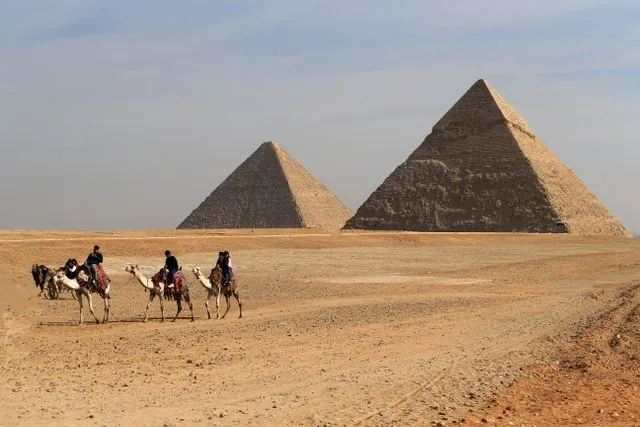
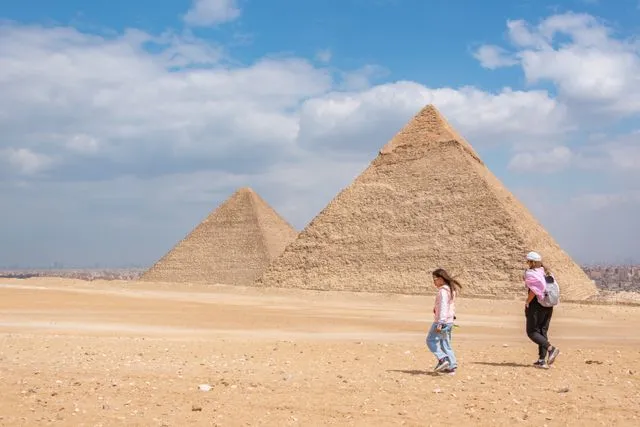
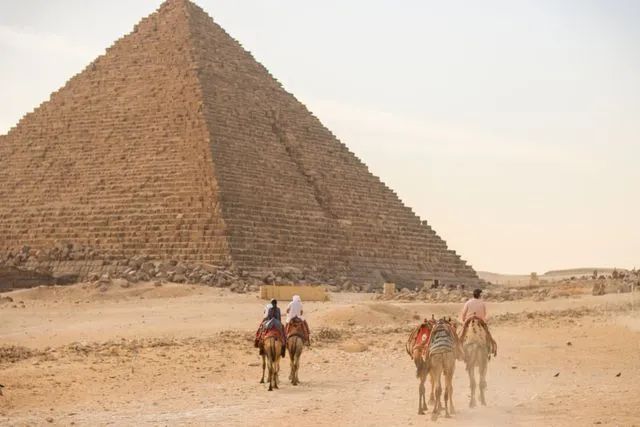
If you’re planning your own trip to explore the Pyramids of Giza, timing matters more than people expect. The window from November through February brings the mildest daytime temperatures, which makes the multi-hour walk around the plateau far more comfortable, and it also lines up with the busiest period for new archaeological announcements and site access.
Where to base yourself is a genuine toss-up. Staying in central Cairo puts you closer to the Egyptian Museum, Islamic Cairo, and a livelier restaurant scene, with the pyramids a straightforward taxi or Uber ride away. Staying in Giza itself means waking up with pyramid views from your hotel room or rooftop, which is hard to beat for atmosphere, though the immediate area around the plateau can feel more tourist-heavy after dark. Neither choice is wrong; it comes down to whether you’d rather sleep next to the monument or explore a bigger city around it.
For the best experience, look into early-access tours that let you enter the plateau between 6:00 and 7:00 a.m., ahead of the general crowds and tour buses. These slots often come with better access to restricted chambers and noticeably better light for photos, since the sun is still low and soft rather than harsh overhead. Entry ticket structures have shifted over the past couple of years, with separate fees now charged for the plateau itself, the Great Pyramid interior, and the neighboring pyramids, so it’s worth checking official pricing shortly before you travel rather than relying on numbers from an old blog post — including this one.
FAQ: Quick Answers About the Pyramids of Giza
Has a mummy ever been found inside the Great Pyramid?
No, and this trips up a lot of first-time visitors who expect a wrapped pharaoh waiting at the end of the Grand Gallery. When explorers first opened the King’s Chamber centuries ago, the granite sarcophagus inside was already empty, its lid missing entirely. No royal remains, jewelry, or funerary goods have ever been recovered from the Great Pyramid itself, which is part of why theories about a still-sealed burial chamber elsewhere in the structure refuse to go away. Whether Khufu was ever actually buried there, moved later, or laid to rest in a chamber archaeologists haven’t found yet remains one of the enduring open questions in Egyptology.
Are tourists allowed inside the pyramids?
Yes, but access is deliberately limited to protect the fragile interior air quality and structural integrity. A capped number of interior tickets are sold each day, particularly for the Great Pyramid of Khufu, and once that daily allotment is gone, it’s gone. Arriving right at opening, or booking a guided tour that reserves interior slots in advance, meaningfully improves your odds of actually getting inside rather than just walking the plateau. Keep in mind that photography is often restricted once you’re inside the narrow passages and chambers themselves.
What was the “lost golden city”?
It refers to a large, well-preserved residential and industrial settlement uncovered near Luxor, dating back roughly 3,400 years to the reign of Amenhotep III. Archaeologists found bakeries, workshops, and administrative buildings largely intact, offering an unusually detailed look at daily life during Egypt’s New Kingdom. It’s a completely separate find from the Giza corridor discussed earlier in this guide, but the two are frequently mentioned together as part of the same broader wave of headline-grabbing Egyptian archaeology reshaping how the public sees this era.
How much does it cost to enter the Great Pyramid?
Pricing is tiered and has shifted more than once in recent years, so treat any specific figure with caution. Generally, a base plateau ticket covers the exterior grounds, the Sphinx, and views of all three pyramids, while a separate, additional fee applies specifically for stepping inside the Great Pyramid’s interior chambers, with smaller fees for the neighboring pyramids of Khafre and Menkaure. Because rates shift with policy updates, seasonal demand, and currency fluctuations, it’s worth confirming the current numbers through an official Ministry of Tourism source or your tour operator right before you travel rather than relying on figures from any single blog post, including this one.
Conclusion
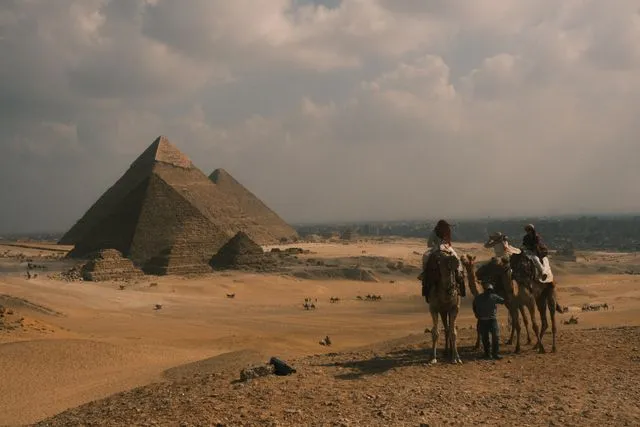
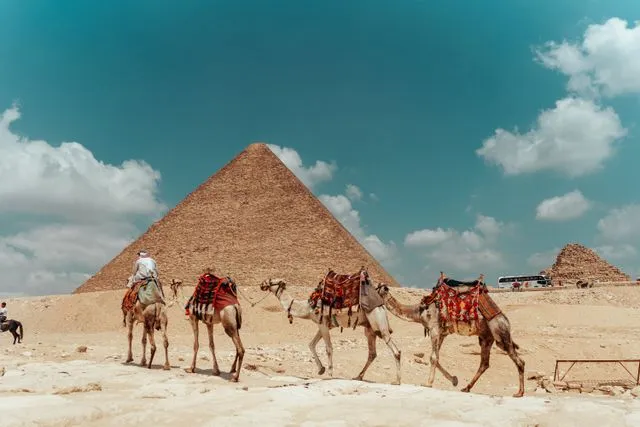
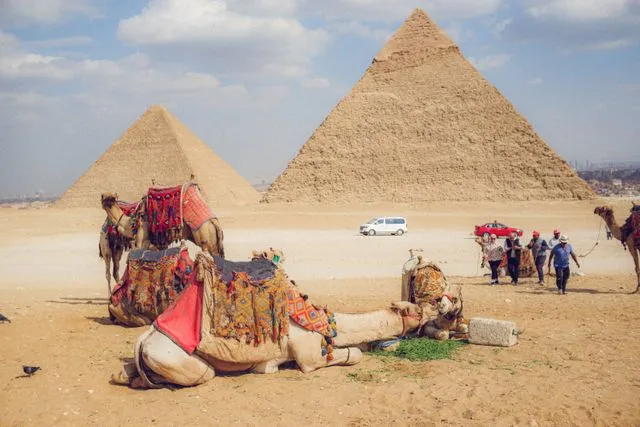
Standing at the base of the Great Pyramid of Giza, it’s easy to feel like you already know its story. It’s been photographed, filmed, painted, and printed on more postcards than almost any structure on Earth, so there’s a natural assumption that everything worth knowing about it was settled long ago. But between the muon detectors reading its hidden voids from the outside in, the robots inching down a corridor sealed for 45 centuries, and the sheer stubbornness of a shape that has outlasted empires, invasions, and thousands of years of desert wind, the truth is that we’re still, quite literally, scratching the surface.
What makes this particular moment worth paying attention to isn’t just the promise of a dramatic reveal in 2026. It’s the shift in how these discoveries are being made at all. For most of the modern era, understanding the pyramids meant physically breaking into them, drilling exploratory shafts, or relying on secondhand accounts from centuries-old expeditions.
Today, a team can map a cavity the size of a house without disturbing a single block, using nothing but particles that fall from space and pass harmlessly through solid rock. That’s not a small technical footnote; it’s a genuinely different relationship between archaeology and preservation, and it means future generations will likely inherit a Great Pyramid of Giza that’s better understood and less damaged than the one we have today.
So whatever ends up waiting behind that sealed door, whether it’s an empty passage, a forgotten chamber, or something that actually does rewrite a chapter of pharaonic history, the bigger takeaway holds either way: the secrets of the Pyramids of Giza aren’t finished being told.
If you’ve been putting off a visit, there may not be a better window than right now, with a fully reopened Grand Egyptian Museum nearby, active excavations at Saqqara, and a real chance that you’ll be standing at the plateau during the same year the world finally learns what’s behind that 4,500-year-old door. Exploring the Pyramids of Giza, it turns out, is still very much a live story, and you’re arriving right as a new chapter is about to be written.