
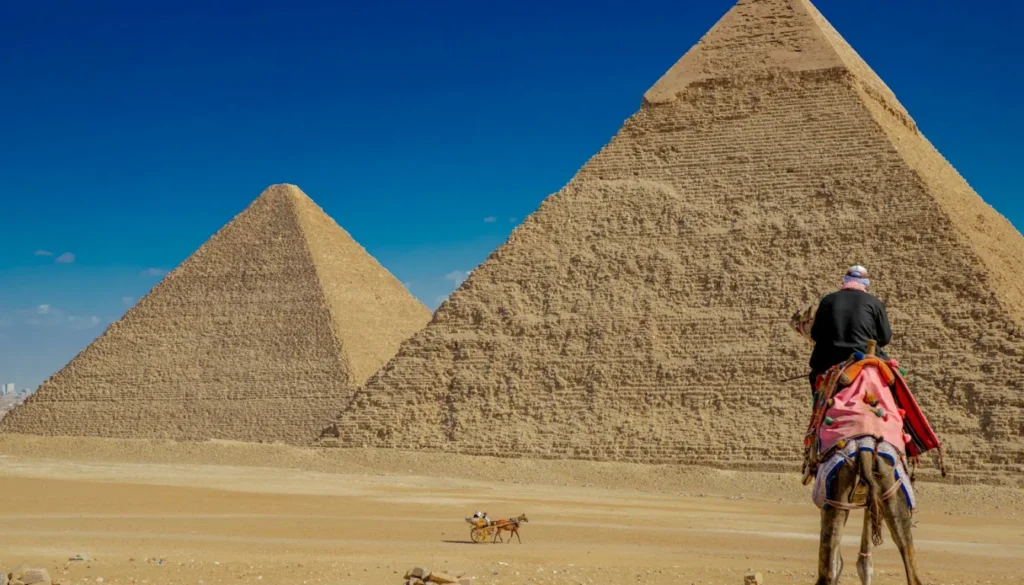
Discover Egypt’s fascinating history, a journey that spans thousands of years from the age of the Pharaohs to modern times. Explore ancient wonders, powerful civilizations, and cultural treasures that have shaped Egypt into one of the world’s most remarkable destinations.
Egypt does not simply hold history — it breathes it. Walk through Cairo’s old alleys, stand at the foot of the Great Pyramid, or sail the Nile at dusk, and you will feel something that no textbook can quite prepare you for: the unmistakable sense that time here moves differently. The history of Egypt stretches back more than 5,000 years, and yet it never feels dusty or distant. It feels alive.
For travelers planning their journey in 2026, this is genuinely the best moment in a generation to discover Egypt’s rich history. The country has undergone a quiet transformation — new infrastructure, world-class museums, and a string of breathtaking archaeological discoveries that have rewritten what we thought we knew about the ancient world. Whether you are a first-time visitor or returning after years away, Egypt in 2026 is both deeply familiar and thrillingly new.
“Tap here and learn more about Best 10 Reasons Why Egypt Should Be Your Next Travel Destination.”
Why 2026 Is Egypt’s “Golden Year”?
Something significant has shifted. Egypt’s “open museum” concept — the idea that the entire country is itself a living archaeological site — has fully come into its own. High-speed rail now connects Cairo, Alexandria, and Luxor, cutting travel times dramatically and opening up ancient sites that once required long, exhausting road trips. E-visas have simplified entry, digital payment systems work smoothly across most tourist areas, and airport upgrades have made arrivals far more comfortable than they were even five years ago.
But the single biggest change is the Grand Egyptian Museum (GEM), which reached full operational capacity in 2025. This is not just a new building — it is a statement. For the first time in history, Egypt’s greatest treasures are all under one roof, presented with the care and technology they have always deserved. For anyone serious about understanding Egypt’s rich history, GEM is now the starting point, not an afterthought.
The New Frontier: Recent Archaeological Breakthroughs
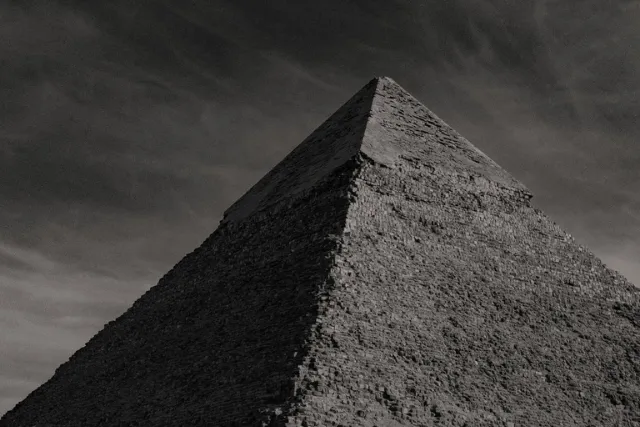
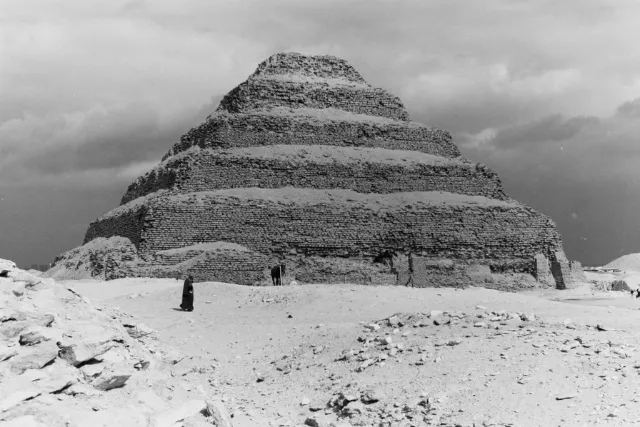
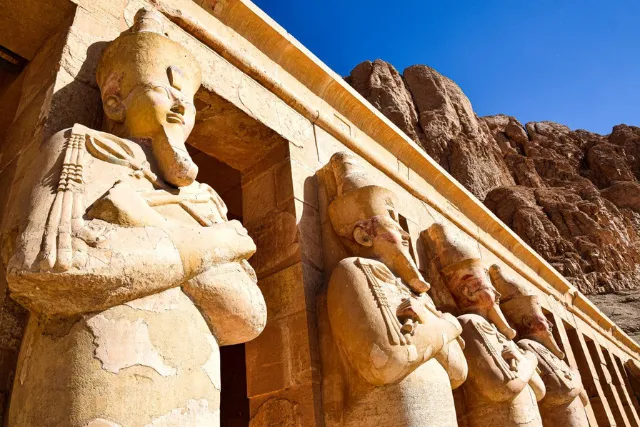
The history of Egypt is still being written. That is one of the most astonishing things about this place — after centuries of excavation, the ground keeps giving up secrets.
In 2023, a discovery at Saqqara stopped Egyptologists in their tracks. A mummy named Hekashepes was unearthed, dating back approximately 4,300 years, making it one of the oldest and most complete mummies ever found. What set this apart from other finds was the preservation: the mummy was still sealed inside its original sarcophagus and wrapped in gold. For those trying to understand early Egyptian burial practices, this single find changed the conversation.
Around the same period, researchers using non-invasive scanning technology identified a hidden corridor approximately nine meters long inside the Pyramid of Khufu at Giza. No one had known it was there. Think about that for a moment — the most studied building on earth, photographed millions of times, mapped and measured for centuries, and it still had a room no one had entered. The Egypt rich history lesson here is simple: humility. We know far less than we think.
At Abusir, excavations uncovered what is believed to be the Sun Temple of King Niuserre, one of only two such temples known to have existed from the Old Kingdom period. Sun temples were among the most sacred structures in ancient Egypt, built as direct dedications to Ra, the sun god, rather than as tombs. Finding one intact — or close to it — is the kind of discovery that reshapes how we understand the religious architecture of the era.
Meanwhile, in Luxor, colossal statues of Amenhotep III have been restored to their original positions. These are not replicas. These are the actual ancient stones, back where they stood more than 3,300 years ago. Standing before them feels like the most honest kind of time travel.
The Crown Jewel: Navigating the Grand Egyptian Museum
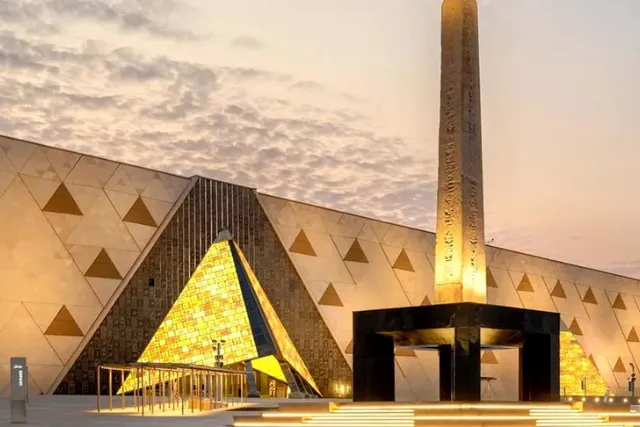
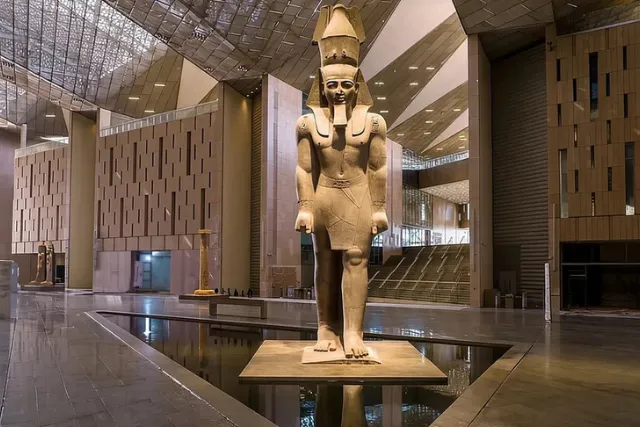
If the discover Egypt history experience has a single center of gravity in 2026, it is the Grand Egyptian Museum. Built near the Giza plateau with the pyramids visible on the horizon, GEM is the largest archaeological museum in the world, home to over 100,000 artifacts spanning every period of Egyptian civilization.
The entrance alone sets the tone: a colossal 12-meter statue of Ramses II greets you in the reception hall, carved from a single piece of stone and relocated from its previous home in Cairo’s Ramses Square. It is an immediate, physical reminder of the scale of ancient Egyptian ambition.
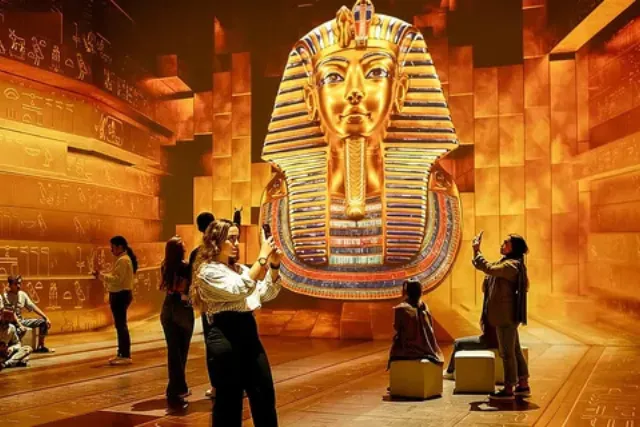
But the true heart of the museum is the Tutankhamun galleries. For the first time in history, the complete collection of the Boy King’s treasures — more than 5,000 objects discovered by Howard Carter in 1922 — is displayed in a single, purpose-built space. The golden death mask, the canopic shrine, the ceremonial chariots, the alabaster headrest, the golden throne: all of it, together, for the first time. Previous generations could only see fragments of this collection scattered across storage rooms and temporary exhibits. What GEM has done is give Tutankhamun’s legacy the context it always deserved.
The museum uses modern display technology thoughtfully — interactive panels, augmented reality stations, and spatial lighting that lets you see artifacts as they were meant to be seen, not just as objects behind glass. But it never loses sight of the main event: the objects themselves. Egypt’s rich history does not need embellishment. It just needs space to breathe.
“[Grand Egyptian Museum – Tickets] E-ticket for the New Grand Egyptian Museum in Cairo, Egypt.”
Cultural Intelligence: Beyond the Monuments
To truly discover Egypt’s history, you need to go beyond the stone and gold. Egypt’s real depth lives in its culture — in the way people greet each other, share meals, make music, and carry a sense of hospitality that traces back thousands of years.
The Legacy of Egyptian Women
One of the most underappreciated threads in Egypt rich history is the role of women. Long before the modern world began debating female leadership, ancient Egypt had already lived through it. Queen Hatshepsut ruled as pharaoh for more than twenty years in the 15th century BCE, managing one of the most prosperous periods in Egyptian history. Cleopatra VII, despite the romantic legends that surround her, was above all a brilliant political strategist who spoke nine languages and nearly succeeded in protecting Egypt from Roman annexation. This lineage continues today in Egyptian academia, law, medicine, and public life.
Hospitality as a Sacred Duty
Egyptian hospitality is not a tourism pitch — it is a cultural inheritance. In ancient Egypt, welcoming a stranger reflected directly on the moral character of the host. The concept of Ma’at, the ancient principle of harmony, truth, and balance, extended to how guests were treated. That same warmth is evident today in the way locals will offer tea to a stranger, give directions with genuine enthusiasm, or simply share a conversation. If you let yourself be present to it, the people you meet will become as memorable as any monument.
Music That Runs Through the Centuries
Egyptian music has one of the longest continuous histories of any tradition in the world. The ancient sistrum (a kind of rattle used in religious ceremonies) and the harp appear in tomb paintings dating back 4,000 years. The oud, a stringed instrument central to Arabic classical music, has been central to Egyptian sound for centuries. Walk through any neighborhood in Cairo or Alexandria in the evening and you will hear music drifting from open windows — whether it is the classical compositions of Umm Kulthum crackling from an old radio or a young musician practicing the qanun on a rooftop. Sound connects the ancient and the modern here in a way that is genuinely moving.
Practical Etiquette Tips
A few simple things will make your experience much richer. Baksheesh — small cash tips — is a normal part of daily life in Egypt, expected by guides, restroom attendants, and anyone who helps you. Budget accordingly and give generously; amounts are small but the gesture matters. Dress modestly when visiting mosques, churches, or traditional neighborhoods — covered shoulders and knees are a sign of respect, not restriction. And be aware of prayer times: five times daily, especially the midday and late afternoon calls, the pace of life shifts slightly. Embrace it rather than fight it.
Geographic Deep Dives: Your 2026 Itinerary
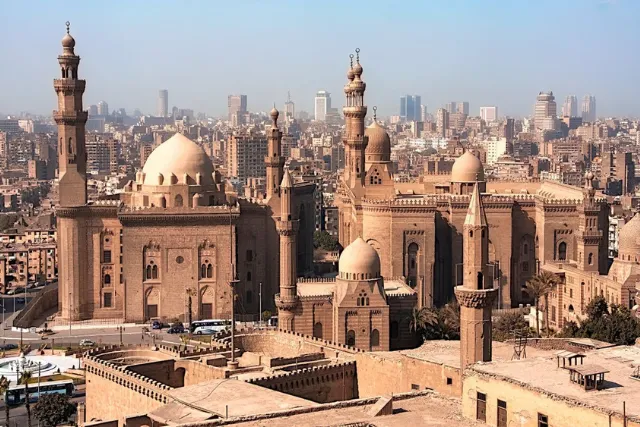
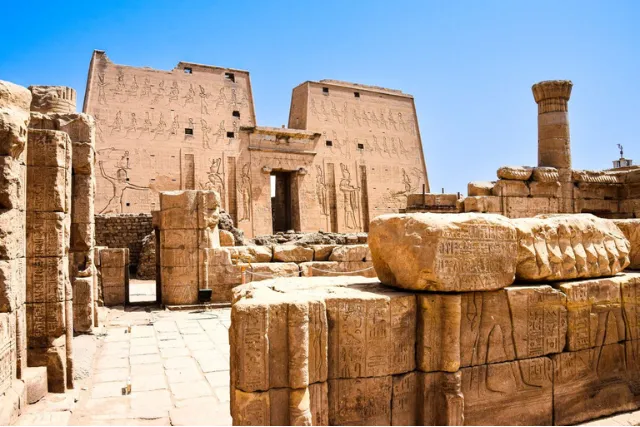

The history of Egypt is not contained in one place. It spreads across a country of extraordinary geographic variety, from Mediterranean coastlines to desert highlands to tropical coral reefs. Here is how to think about the main destinations.
Cairo and Giza are where most journeys begin and where the scale of Egypt’s ancient ambition hits you first. The pyramids at Giza need no introduction, but what surprises most visitors is how close they are to a living, breathing, chaotic, magnificent city. The Khan El-Khalili bazaar, built in the 14th century on the ruins of a Fatimid royal complex, is one of the best markets in the world — a genuine maze of copper workshops, spice stalls, fabric merchants, and coffee houses. Al-Muizz Street at night, lit by lanterns and lined with medieval Islamic architecture, is one of the most beautiful urban walks anywhere.
Luxor and Aswan are where Egypt’s ancient heart beats loudest. Luxor sits on the site of ancient Thebes, once the most powerful city in the world. The Karnak Temple Complex — expanded by pharaoh after pharaoh over 2,000 years — is so large that the entire Notre-Dame Cathedral could fit inside its hypostyle hall. Across the Nile, the Valley of the Kings holds the tombs of the New Kingdom pharaohs, cut deep into the limestone hills. Aswan, further south, has a quieter, more contemplative atmosphere. Philae Temple, relocated stone by stone to save it from the rising waters of Lake Nasser, sits on an island and is best approached by boat at dusk.
Alexandria offers a completely different face of Egypt’s history. Founded by Alexander the Great in 331 BCE, it was once the intellectual capital of the ancient world, home to the legendary Library of Alexandria and thinkers from across the Mediterranean. The modern Bibliotheca Alexandrina, opened in 2002, is a deliberate homage to that lost institution — a stunning crescent-shaped building facing the sea, housing millions of books and several museums. The Catacombs of Kom el-Shoqafa, a multilevel Roman-era necropolis that blends Egyptian, Greek, and Roman burial traditions, are among the strangest and most atmospheric sites in the country.
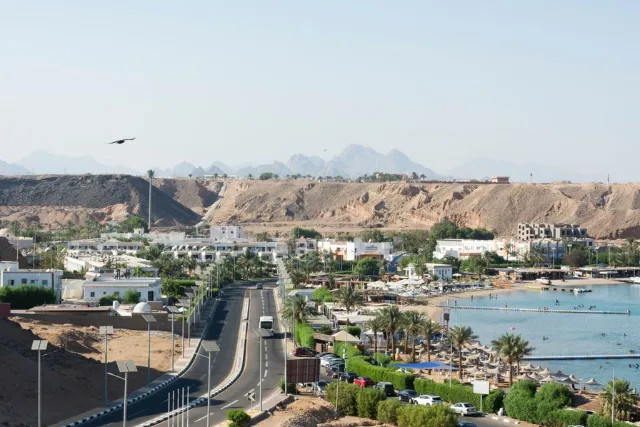

The Red Sea coast — particularly Hurghada and Sharm El-Sheikh — represents a different kind of ancient world: the underwater one. The coral reefs here are among the most biodiverse on the planet, supporting approximately 1,200 species of fish. Visibility in the water can reach 30 meters on a clear day. Even if you have dived other reefs around the world, the Red Sea has a quality of light and color that tends to stop people mid-stroke.
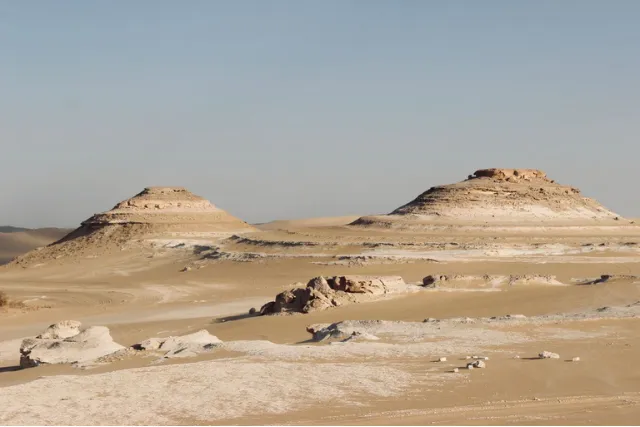
The desert interiors are where Egypt reveals its most solitary, spiritual face. Siwa Oasis, near the Libyan border, feels like a world apart — a green refuge of date palms and freshwater springs surrounded by golden desert, where Alexander the Great once came to consult the Oracle of Amun. The White Desert, in the Farafra region, is an otherworldly landscape of chalk formations sculpted by wind into shapes that look more like modern sculpture than nature. Camping there under a full moon is an experience that is very difficult to explain to someone who has not done it.
Expert Logistics and Know Before You Go
What is the best time to visit Egypt?
October through April offers the most comfortable temperatures for sightseeing — mild days, cool evenings, and manageable crowds at major sites. Summer months (June through August) are extremely hot in Cairo and Upper Egypt but are actually excellent for Red Sea diving, as the water is warm and visibility is at its peak.
How long should you stay?
A minimum of seven days allows you to cover Cairo and Giza, take an overnight train or high-speed rail to Luxor, spend two days exploring the temples and tombs, and finish with two or three nights on the Red Sea. Fourteen days opens up Aswan, a Nile cruise, and a side trip to Alexandria or the White Desert.
What should you eat?
Do not leave without trying Koshary — the national street food dish of pasta, lentils, rice, tomato sauce, and crispy onions, sold everywhere and deeply satisfying. Fatta is a celebratory dish of rice, bread, and slow-cooked lamb in a tomato-vinegar broth. Molokhia, a thick green soup made from jute leaves, is comfort food at its most ancient — versions of it were reportedly eaten in the time of the pharaohs.
Is Egypt safe to travel?
Egypt has invested significantly in tourism safety infrastructure over the past decade. Dedicated tourist police are present at all major sites, and digital communication tools make navigation and assistance easy. Like any destination, basic common sense applies: stick to well-traveled areas after dark, use licensed guides and registered transport, and keep copies of your documents. The vast majority of visitors have entirely positive experiences.
FAQ: Quick Answers for Your Egypt Research
What is the most famous landmark in Egypt?
The Great Pyramid of Giza, built around 2560 BCE as the tomb of Pharaoh Khufu. It is the only surviving structure from the original Seven Wonders of the Ancient World — a fact that never quite loses its weight.
Can you go inside the pyramids?
Yes. Tickets to enter the Great Pyramid are sold separately and in limited numbers. The interior passage is low, narrow, and warm — a genuinely claustrophobic experience for some. But the sensation of standing inside a structure built 4,500 years ago, surrounded by stone fitted together with extraordinary precision, is something entirely its own.
What is the miracle of Abu Simbel?
Twice a year — on February 22nd and October 22nd — the rising sun aligns perfectly with the entrance of the Great Temple of Abu Simbel, sending a shaft of light deep into the inner sanctuary to illuminate the statues of Ramses II and three of the four gods enshrined there. The fourth statue, representing the god of the underworld, remains in shadow. This alignment was engineered into the building’s design more than 3,200 years ago. It still works.
Conclusion
The Egypt rich history does not belong to any one era. It stretches from prehistoric settlements along the Nile to Ptolemaic Alexandria, from the Islamic Golden Age’s scholars and architects to today’s archaeologists with their radar scanners and 3D imaging tools. The story is continuous, layered, and far from finished. What makes Egypt genuinely unlike anywhere else is that you can feel all of those layers at once — standing in a 14th-century mosque built on a Roman foundation in a city named after an Arab military camp, looking out at pyramids that were already ancient when the Greeks came to marvel at them.
To discover Egypt’s history is to discover something about the scope of human time itself. And in 2026, there has never been a better moment to start.