
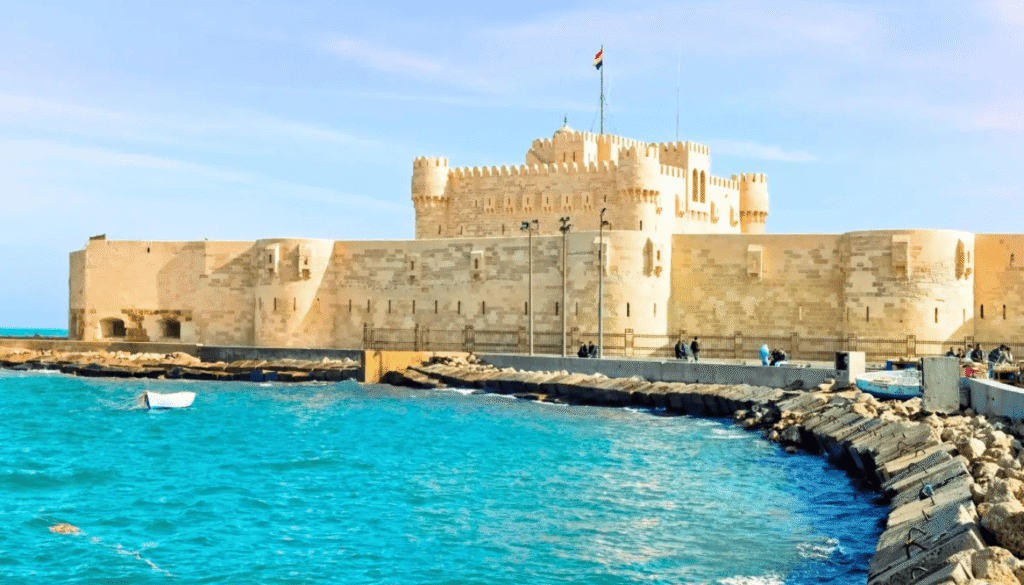
Why Alexandria’s Mediterranean Gem Deserves More Than a Day Trip?
The Citadel of Qaitbay Alexandria, often called the guardian of the Mediterranean, stands as one of Egypt’s most iconic coastal landmarks. This majestic fortress blends rich history with breathtaking sea views, making citadel-qaitbay-alexandria a must-visit destination for travelers. Built on the site of the ancient Lighthouse of Alexandria, it continues to captivate visitors with its powerful presence. Explore why this legendary citadel remains a symbol of strength, beauty, and strategic importance.
Picture this: you’re standing on a fortress wall, the Mediterranean breeze tangling your hair, waves crashing against ancient stones below. Behind you lies Alexandria—a city most travelers rush through in a day, treating it like Cairo’s afterthought. Big mistake.
I’ll be honest with you. Before my first visit to Alexandria, I’d mentally checked it off as “that place with the old library.” What I found instead was a city that refuses to be defined by a single era. Colonial-era buildings with peeling paint stand shoulder-to-shoulder with Roman ruins. Fishermen mend their nets where ancient Greek scholars once walked. And rising from the sea at the edge of the Eastern Harbour, commanding attention like it has for over 500 years, sits The Citadel of Qaitbay Alexandria: Guardian of the Mediterranean.
Here’s what makes this fortress special—it’s not just the most significant Mamluk military structure on Egypt’s Mediterranean coast. The Qaitbay Citadel Alexandria stands on the exact spot where the legendary Lighthouse of Alexandria once pierced the sky, one of the Seven Wonders of the Ancient World. You’re literally walking on history stacked upon history.
This article will take you beyond the typical tourist snapshot. We’ll explore the fortress’s fascinating Mamluk origins, examine how climate change threatens this ancient guardian, discover the cutting-edge technology preserving it for future generations, and I’ll share the practical details you actually need—how to get there, where to eat Alexandria’s freshest seafood, and yes, how to handle the occasional pushy vendor. Whether you’re planning two days or a week, you’ll leave knowing exactly why Alexandria deserves more than just a hurried day trip from Cairo.
“Tap here and learn more about Philae Temple in Aswan: Explore the magic Island of Isis.”
Qaitbay Citadel: The Fortress Built on a Wonder
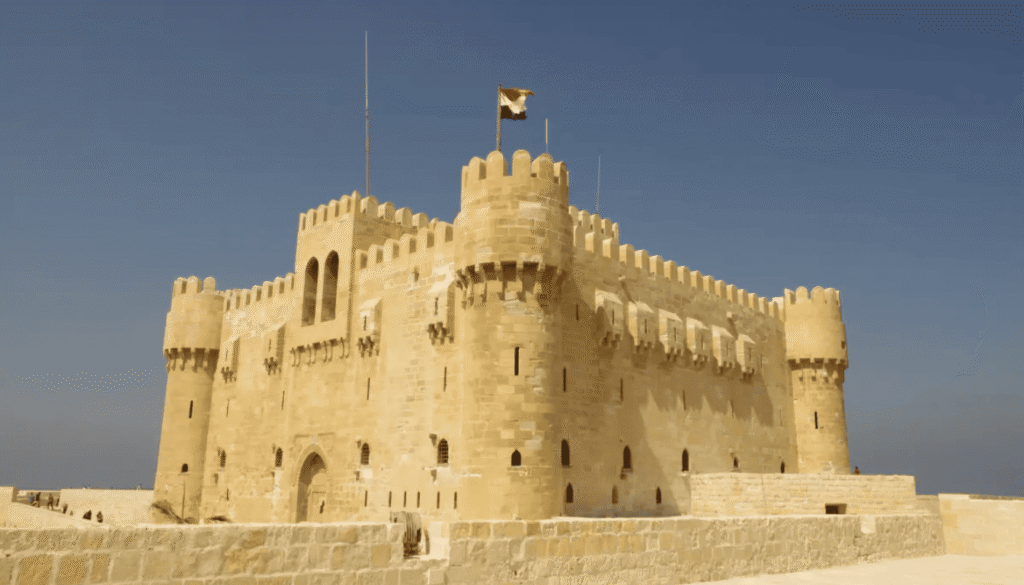
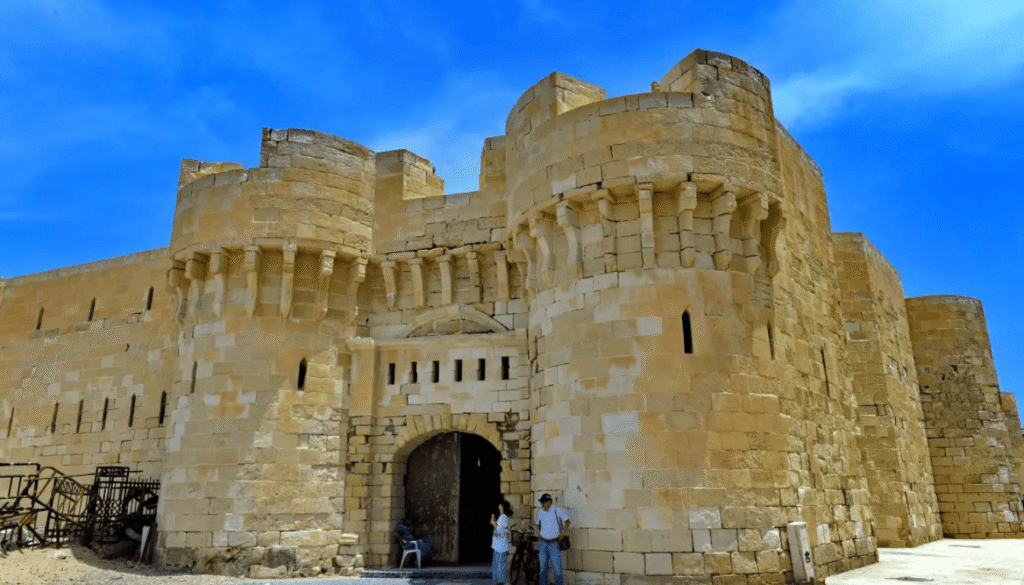
Let’s talk about what makes the Citadel of Qaitbay history so remarkable. In 1477 AD (882 AH), Sultan Al-Ashraf Sayf al-Din Qaitbay looked at the crumbling remains of the Pharos Lighthouse and saw opportunity. The Ottoman Empire was expanding aggressively. Portuguese ships prowled the Mediterranean. Alexandria’s harbour—one of the ancient world’s busiest ports—sat dangerously exposed.
The Sultan’s solution? Build an impregnable fortress on the lighthouse’s ruins, turning a symbol of lost glory into a weapon of defense.
He put Qagmas Al-Eshaqy in charge—the Edifices Mason and Viceroy of Alexandria, basically the best military architect money could buy. Al-Eshaqy had two years and over 100,000 gold dinars (an astronomical sum) to create something extraordinary. What he delivered was a masterpiece of medieval military engineering that still stands strong today.
Walking through the fortress now, you get a real sense of its scale. The complex sprawls across 17,550 square meters—roughly three American football fields. Massive external walls, reinforced with defensive towers at strategic points, encircle a central courtyard. But the real showstopper is the main tower on the courtyard’s north side: a three-story cubic fortress-within-a-fortress that looks like it could shrug off a cannon bombardment.
Each floor had a specific purpose that tells you everything about Mamluk military life. The ground floor wasn’t just storage—it housed a working mosque (because faith and warfare went hand-in-hand for the Mamluks), a grain mill for making bread, and barracks for the garrison. Underneath, cisterns collected rainwater, ensuring the defenders could outlast any siege.
The two upper floors were pure military function: more barracks for troops, and on the second floor, an elegant Iwan (a vaulted hall) where the commander could survey the courtyard and issue orders. From the roof, guards watched for enemy ships, able to spot sails on the horizon long before they became a threat.
Now, here’s the part that gives me chills every time I visit. When archaeologists excavated beneath one of the citadel’s walls, they found ancient foundations—massive granite blocks that likely belonged to the original Lighthouse of Alexandria. The fortress isn’t just built near where the Lighthouse stood. It’s constructed on top of it, incorporating the Wonder’s bones into its own structure. It’s like Qaitbay was saying to the ancient world: “Your lighthouse fell, but we’re still here, still guarding this harbor.”
The location itself tells a strategic story. Pharos Island (now connected to the mainland by a narrow land bridge) juts into the Mediterranean at the entrance to Alexandria’s Eastern Harbour. Any fleet trying to attack the city would have to sail past the citadel’s cannons—a gauntlet no captain wanted to run.
For travelers today, visiting the Qaitbay Alexandria attractions is refreshingly affordable. Entrance costs vary depending on your source, but expect to pay around EGP 200 for adults or EGP 100 if you’re a student (some older sources list it as low as EGP 70, but recent Ministry of Tourism rates are higher—best to bring extra pounds just in case). That’s roughly $2-6 USD or €2-6, less than a coffee in most Western cities, for access to a 500-year-old fortress built on a 2,300-year-old Wonder.
Inside, you can climb narrow stone staircases worn smooth by centuries of soldiers’ boots, explore the mosque where Mamluk warriors prayed before battle, and stand on the rooftop where those same warriors watched for Ottoman sails. On a clear day, the view across the Mediterranean is absolutely spectacular—the water stretches endlessly blue, and you understand exactly why this spot was so important for so long.
Vulnerability and Digital Preservation
Here’s the uncomfortable truth that tour guides don’t usually mention: the Citadel of Qaitbay is living on borrowed time.
I learned this from a research project that should honestly get more attention. Scientists studying the fortress discovered it faces multiple threats that would terrify any conservationist. Sea level rise from global warming is the big one. The Mediterranean is gradually reclaiming land, and the citadel sits right at the waterline. Add in the possibility of earthquakes and tsunamis—both very real risks in this seismically active region—and you start to understand why experts are worried.
Remember, the original Lighthouse of Alexandria wasn’t conquered or demolished by human hands. It was destroyed by earthquakes and tsunamis in 1303 CE, the same forces that now threaten its successor. History has a dark sense of irony.
The fortress’s construction materials make things worse. It’s built from limestone, wood, and burnt brick held together with mortar containing ash. These materials don’t handle humidity and salt spray well—and the citadel is surrounded by seawater. Over time, salt crystals displace the mortar. Moisture dissolves the ashy binding. Wood fibers lose their strength. The fortress is essentially being slowly eaten by the very sea it was built to defend against.
So what’s being done? This is where the story gets genuinely exciting.
A team of researchers has pioneered a brilliant preservation approach for the Qaitbay Fort that combines accessible technology with sophisticated results. Instead of using expensive, complex 3D scanning equipment that requires specialists to operate, they used iPad LiDAR scanning combined with 360° imaging. Think about that—the same technology in a consumer tablet is being used to create detailed 3D models of a medieval fortress.
The project, focused on Disaster Risk Reduction, aims to capture every architectural detail digitally. If—when—the physical structure faces damage from storms, earthquakes, or rising seas, these 3D models will serve as a blueprint for restoration. It’s like creating a backup save file for a 540-year-old building.
But here’s what I find most impressive: they’re not hoarding this data in some academic archive. The project uses ArcGIS StoryMaps, an accessible online platform that anyone can explore. These interactive maps combine 3D models, photographs, historical information, and multimedia content to tell the citadel’s story. You can virtually walk through the fortress from anywhere in the world, rotating 3D models to examine architectural details, reading historical anecdotes, and viewing visual reconstructions of how the site looked in different eras.
This digital preservation work accomplishes something remarkable: it enhances rather than replaces the physical visit. Imagine standing in the fortress courtyard with your phone, accessing overlays that show you what this same space looked like in 1480, seeing virtual reconstructions of damaged sections, or reading about the specific battle that created that cannonball scar in the wall you’re touching. Virtual reality and augmented reality technologies are being integrated to create these immersive experiences.
The broader implication hits hard when you consider how many vulnerable heritage sites exist worldwide. Climate change doesn’t care about historical significance. Rising seas threaten coastal monuments from Venice to Indonesia. The techniques pioneered at Qaitbay—affordable, accessible, effective—offer a scalable model for protecting cultural heritage globally.
It’s a race against time, but at least it’s a race we’re running with the right tools.
Alexandria’s Archaeological Core
The Qaitbay Citadel Alexandria is undoubtedly the star, but treating it as Alexandria’s only attraction is like visiting Paris and only seeing the Eiffel Tower. The city’s archaeological heart, concentrated in what locals call Area 2, contains sites that honestly left me more impressed than some of Cairo’s more famous monuments.
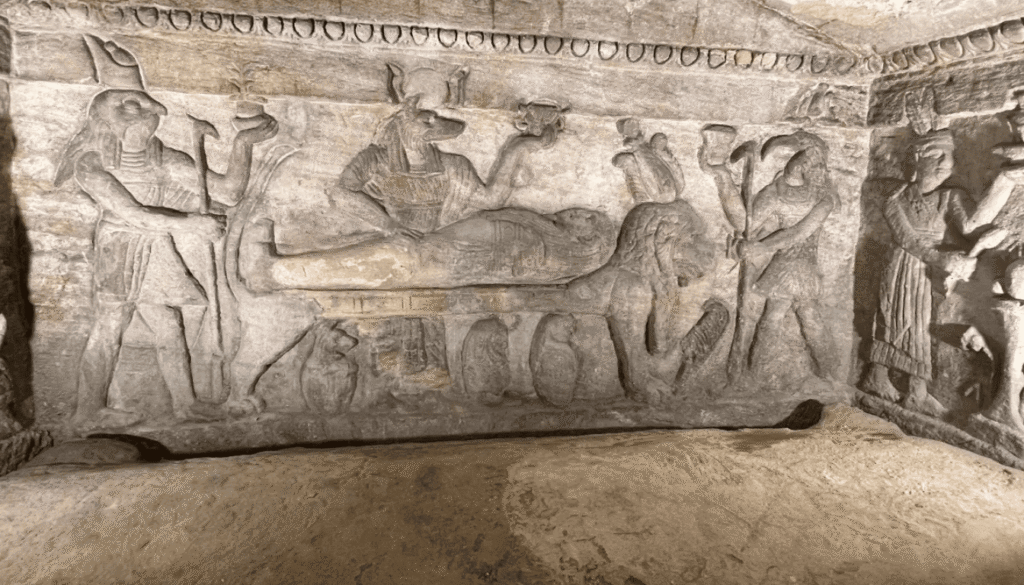
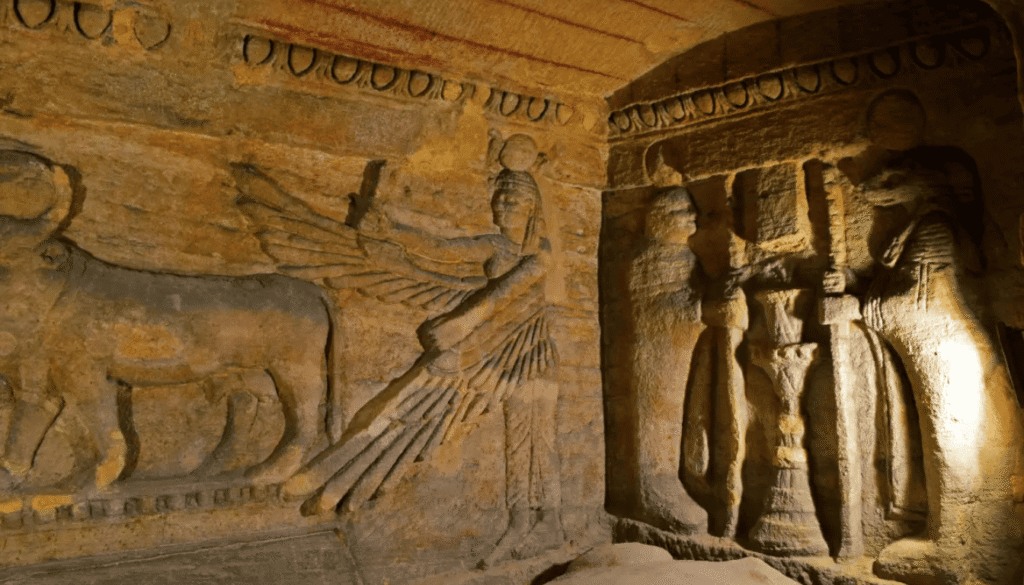
Start with the Catacombs of Kom el Shoqafa—the Mound of Shards. Of all the historical sights I visited in Alexandria, this was the one that made my jaw drop. You descend a spiral staircase into an extensive underground necropolis that feels like stepping into three civilizations at once. The architecture is this fascinating mishmash of Pharaonic Egyptian motifs, Hellenistic Greek styling, and early Imperial Roman construction techniques. Chambers branch off in every direction. Carved statues blend Egyptian gods with Roman armor. Burial niches line the walls like ancient apartment buildings for the dead.
The catacombs were accidentally discovered in 1900 when a donkey fell through a shaft opening—which somehow makes them even better. Entry costs EGP 80 (about $2.60 or €2.50), and honestly, they’re worth ten times that. Bring a light jacket; it gets genuinely cool underground, a welcome relief from Alexandria’s summer heat.
A short ride away sits one of history’s great misnomers: Pompey’s Pillar Here’s the thing—this massive 27-meter red granite column has absolutely nothing to do with Pompey. Zero. It was erected between 298 and 302 AD to honor Roman Emperor Diocletian. The name comes from a damaged Greek inscription that Crusaders mistranslated centuries later, and somehow “Pompey’s Pillar” stuck despite being completely wrong.
I love that nobody bothered to change it. There’s something very Alexandria about that—a city so layered with history that even its historical mistakes become historical themselves.
What makes the site truly worth visiting isn’t just the pillar. The surrounding area contains the remains of the Serapeum of Alexandria, an ancient Greek temple dedicated to Serapis (a deity that blended Greek and Egyptian religious traditions—very on-brand for Alexandria). More importantly, the Serapeum housed an offshoot collection of the legendary Library of Alexandria. You can explore excavated tunnels from the underground section, walking through spaces where ancient scholars once studied texts that are now lost forever. It’s haunting in the best way.
The Roman Theatre site nearby completes this archaeological trifecta. Unlike the other two sites, this one doubles as a genuinely pleasant park—a rare pocket of green calm in Alexandria’s urban chaos. The theatre itself is modest but well-preserved, with curved seating rows overlooking the performance area. Next to it, you’ll find an ancient bathhouse (hamman) and the Villa of the Birds, which contains a gorgeous collection of mosaics that have survived remarkably intact.
I ended up spending way longer here than planned, just sitting in the shade watching families picnic while cats—Alexandria has SO many cats—prowled the ancient stones looking for handouts. Sometimes the best travel moments aren’t about the monuments themselves but the way modern life flows around them, indifferent to their age.
These three sites sit close enough together that you can easily visit all of them in half a day, leaving your afternoon free for the citadel or the corniche. Just start early before the midday heat gets oppressive.
The Modern & Spiritual Center
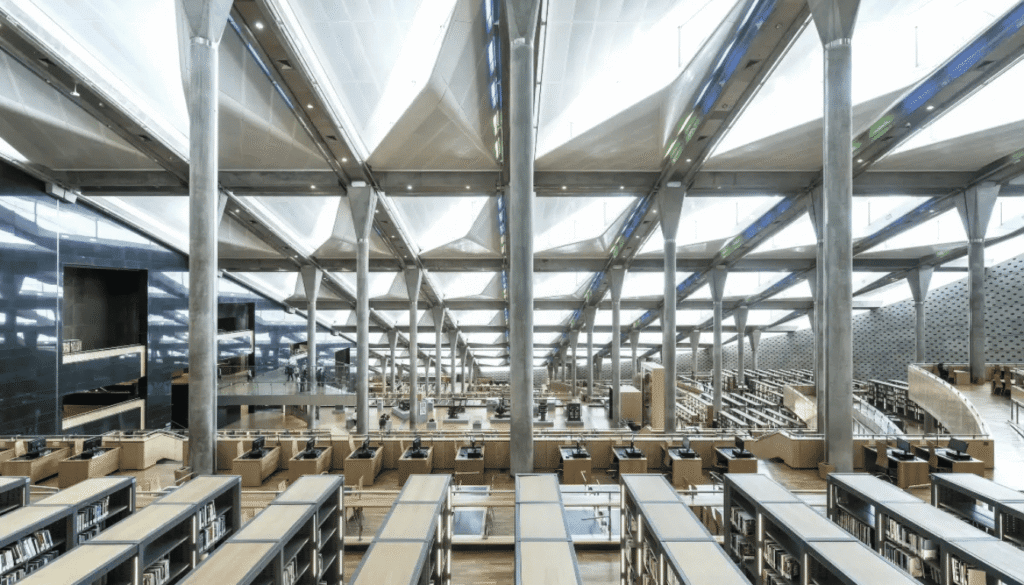
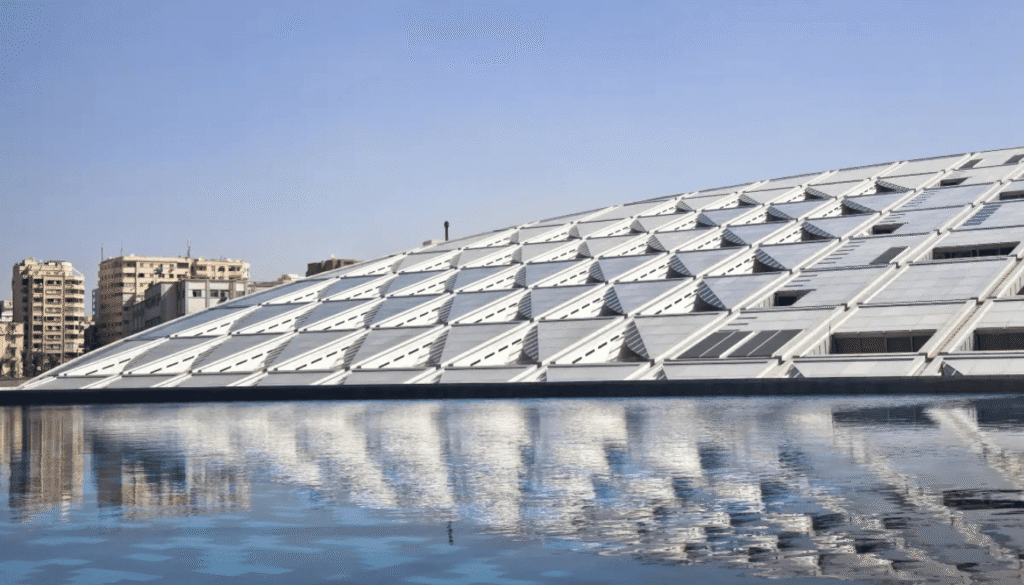
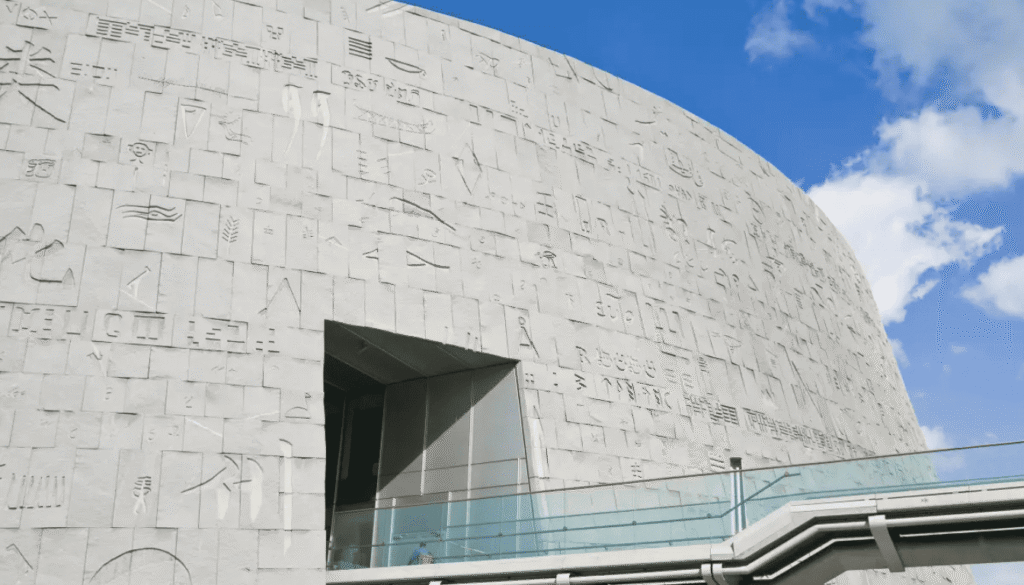
After days of exploring ruins and fortresses, Alexandria’s modern face offers a refreshing contrast. The Bibliotheca Alexandrina, completed in 2002, stands as the city’s bold attempt to reclaim its ancient intellectual legacy.
Walking toward it for the first time, I was struck by the scale. It’s absolutely huge—a tilted disc of glass and aluminum that looks like a sun rising from the Mediterranean. The facade is covered in characters from 150 different writing systems from around the world, a deliberate echo of the ancient Library’s universal ambitions. Inside, the main reading room can accommodate over 2,000 researchers across multiple terraced levels that descend like an amphitheater.
The library houses over 8 million books (and counting), a planetarium that’s worth visiting on its own, and several specialized museums covering everything from manuscripts to antiquities to science. The EGP 70 entrance fee includes an optional guided tour in English, Arabic, or French—definitely take it. The guides are genuinely knowledgeable and passionate about the building’s architecture and mission.
Does the modern library match the intellectual impact of its ancient predecessor? Of course not—nothing could. But that’s not really the point. The Bibliotheca Alexandrina represents something equally important: Alexandria’s refusal to be defined solely by its past. It’s a working library and cultural center, hosting conferences, exhibitions, and educational programs. Students actually study here. Researchers actually use the collections. It’s history actively being written, not just preserved.
A few blocks away, the Abu al-Abbas al-Mursi Mosque offers a completely different but equally worthwhile experience. Named after a 13th-century Sufi saint, it’s one of the most beautiful mosques I’ve visited anywhere in Egypt. The interior is decorated with rings of ornate lanterns that create this incredible golden glow during evening prayers.
Here’s what surprised me: unlike mosques in many countries, foreign visitors are genuinely welcome here, and both men and women can enter the main prayer chamber. The mosque opens around midday and stays open until late evening. There’s no entrance fee, but you should tip the man who watches the shoe boxes at the entrance (he asked me for EGP 1, which is literally three cents—hardly a burden).
I visited during a quiet afternoon between prayer times and ended up having a long conversation with a local worshipper who was happy to explain the mosque’s architectural features and the saint’s significance. These unplanned interactions are often the best part of travel—moments when a building becomes more than just a photo opportunity and connects you to the living culture around it.
Cap off your cultural day at Farouk Café 1928, supposedly one of Alexandria’s oldest continuously operating tea houses. The highlight is watching them prepare tea and coffee the traditional way: the pot sits in hot sand heated by coals beneath, gradually bringing the water to a boil. It’s slower than modern methods but produces a distinctly smooth, less bitter flavor. The café itself is wonderfully worn, filled with old men playing backgammon and arguing about football. No one will rush you. Order a mint tea, claim a table, and just watch Alexandria life flow past the windows.
Practical Logistics, Dining, and Security
Let’s talk about the practical details that travel blogs often bury in the fine print but that actually make or break a trip.
Getting to Alexandria from Cairo: You have two main options—bus or train. The bus is generally more reliable. while buses stick closer to schedule. Companies like Go Bus offer comfortable coaches with air conditioning for around $5.50. The journey takes roughly 2.5 to 3 hours depending on traffic.
That said, if you prioritize comfort over punctuality, the train wins. Second-class tickets cost $15-20, first-class runs $20-25, and you get significantly more legroom than a bus plus the ability to walk around. I’ve done both; my preference is the morning train there and an evening bus back, giving me the comfort when I’m fresh and the reliability when I’m tired and just want to reach my Cairo hotel.
Getting around Alexandria: The city sprawls along the coast for miles, so you’ll need transport. Ride-hailing apps—Uber and Careem—both operate here and are a godsend if you don’t want to haggle with traditional taxis (which aren’t metered and require negotiating every fare). A ride across the city rarely costs more than a few dollars.
Alexandria’s minibuses and trams offer dirt-cheap transport, but they require local knowledge to navigate. I’d save that adventure for a longer visit when you’re not on a tight sightseeing schedule.
Where to eat: Fish Market restaurant, located inside Alexandria’s actual working fish market along the corniche, is hands-down the best seafood experience I’ve had in Egypt. The concept is brilliant: you walk through the ground-floor market, point at whatever fish or seafood looks good, and they cook it for you upstairs. The second-floor seating offers beautiful views over the Eastern Harbour—you can see the Qaitbay Citadel from your table.
A meal for two with multiple dishes rarely exceeds $20. Get the grilled sea bass. Get the calamari. Get the shrimp cooked in spicy tomato sauce. Get everything. You’re right there at the source, so it’s absurdly fresh.
A City of Resilience: From Pharos to Digitization
Standing on the Citadel of Qaitbay Alexandria ramparts, watching the Mediterranean waves crash against stones that have witnessed five centuries of history, you understand that resilience is Alexandria’s defining characteristic.
This is a city built in layers. The Ptolemaic Greeks constructed the legendary Lighthouse, one of the ancient world’s technological marvels. Earthquakes destroyed it. The Mamluks took those ruins and built a fortress that guarded Egypt’s coast through centuries of conflict. Colonial powers came and went, leaving their architectural mark. Modern Egypt struggles and rebuilds, creating new institutions like the Bibliotheca Alexandrina to reclaim lost intellectual glory.
The Citadel of Qaitbay embodies all of this. It stands as a vulnerable yet defiant monument—threatened by the same seismic and climate forces that destroyed its predecessor, but now armed with digital immortality through 3D scanning and virtual preservation. Its unique Mamluk design, its strategic military history, its connection to one of the Seven Wonders—all of this can now be studied and experienced globally, even if the physical structure someday succumbs to rising seas.
The archaeological sites surrounding the citadel tell the same story of layered civilization. The Catacombs of Kom el Shoqafa blend Pharaonic, Greek, and Roman elements because that’s what Alexandria has always done—absorb, adapt, synthesize. The misnamed Pompey’s Pillar stands above the ruins of the Serapeum, which once housed books from the Library of Alexandria, which itself was built to gather all human knowledge in one place. It’s history stacked on history stacked on history, and somehow it all still resonates today.
If you’re planning a visit, give Alexandria the time it deserves. The rushed day-trippers from Cairo miss the city’s soul. Spend 2-3 days minimum. Organize your time around three geographical areas: the Western Harbour (where the citadel commands the waterfront), the ancient archaeological sites (Catacombs, Serapeum, Roman Theatre), and the modern cultural center (Bibliotheca Alexandrina and the mosques). This way you’re not crisscrossing the city wasting time in traffic.
Walk the corniche at sunset when the Mediterranean turns copper and gold. Eat fresh fish while watching fishing boats return to harbor. Climb the citadel’s stone steps worn smooth by countless soldiers’ boots. Descend into ancient catacombs where three civilizations merged their death rituals. Stand in a modern library that dares to echo ancient ambitions.
Alexandria has survived everything history could throw at it—conquest, earthquake, fire, neglect. The Guardian of the Mediterranean stands as proof that some things, some places, refuse to fade away. They adapt. They endure. They remain worth the journey, no matter how many people mistakenly treat them as an afterthought to Cairo’s pyramids.
Don’t make that mistake. Alexandria is waiting, and it has stories to tell that you won’t find anywhere else on Earth.
“Tap here and enjoy with Ultimate Alexandria Experience: Full-Day Tour from Cairo or Alexandria.”
Pingback: Ras Mohammed Sharm El Sheikh: 6 Tips on How to Experience Its Magic - Discover Egypt Now