
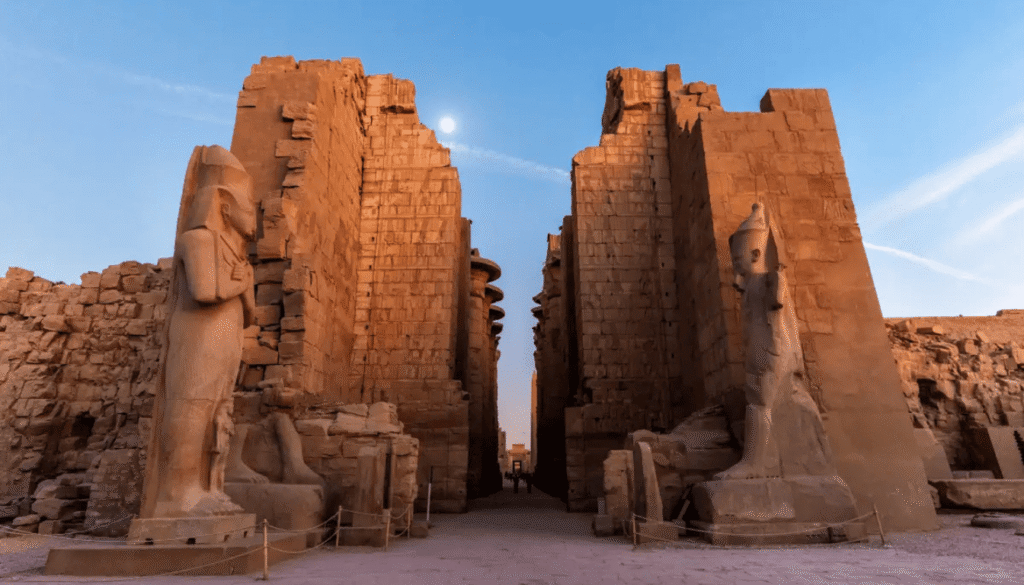
Picture yourself standing before towering columns that seem to pierce the sky, each one decorated with hieroglyphs so intricate they make you wonder how human hands carved them thousands of years ago. The air feels heavy with history, and the limestone still holds warmth from the afternoon sun. You’re not at the Pyramids—you’re somewhere even more extraordinary.
While the Pyramids of Giza steal the spotlight in most Egypt travel guides, the ancient temples of Upper Egypt tell a different story altogether. The Karnak Temples Egypt complexes, along with their neighbors in Luxor and Aswan, offer something the Pyramids simply can’t match: breathtaking preservation, vivid colors that have survived millennia, and architectural artistry that speaks directly to anyone who walks through their gates.
Throughout this journey, we’ll explore the temples that defined ancient Egyptian civilization: Karnak Temple with its forest of columns, Luxor Temple glowing at sunset, the relocated marvels of Philae and Abu Simbel, the cliff-carved magnificence of Hatshepsut’s temple, the vivid hieroglyphics at Medinet Habu, and the perfectly preserved Temple of Horus at Edfu. These aren’t just ruins—they’re living testimonies to human ambition, divine worship, and architectural genius.
“The Egyptian Museum in Cairo: A Treasure of Ancient Artifacts 2025.”
The East Bank Axis: Karnak and Luxor (Cosmic Alignment & Island Origins)
The Sacred Heart of Ancient Thebes
When ancient Egyptians referred to the Karnak Temples in Egypt, they didn’t use that name at all. They called this sacred precinct “Ipet-Sut,” which translates to “The Most Select of Places.” That reverent title wasn’t an exaggeration. Stand at the entrance today, and you’ll understand why this was considered the dwelling place of Amun-Ra himself, the king of gods.
The numbers alone are staggering. Karnak Temple isn’t just another ancient Egyptian temple—it’s the largest religious building ever constructed by human hands. Spanning roughly 200 acres (1.5 kilometers by 0.8 kilometers), this massive complex ranks as the world’s second-largest religious site, surpassed only by Angkor Wat in Cambodia. But size tells only part of the story.
Recent geoarchaeological surveys have revealed something fascinating about Karnak’s location. The temple wasn’t randomly placed here. Ancient builders chose a natural island of elevated ground formed where Nile channels diverged, creating what they saw as a sacred geography. This wasn’t mere convenience—it was theological architecture. The island setting mirrored Egyptian creation myths, where the creator god emerged from the primordial waters. Every brick and stone was placed with cosmic intention.
When the Sun Worships at Karnak
The ancient Egyptians didn’t just build monuments; they built calendars in stone. From its earliest construction phases, the Temple of Amun at Karnak was deliberately aligned with the winter solstice sunrise. Imagine being a priest standing in the sanctuary on that sacred morning, watching as the sun’s first rays traveled through the temple’s axis, illuminating the innermost shrine where Amun’s statue resided. The architecture wasn’t just impressive—it was a conversation between earth and heaven.
This astronomical precision appears throughout the best temples to visit in Egypt, but Karnak demonstrates it on an almost overwhelming scale. The builders understood that temples were more than houses for statues; they were cosmic machines designed to connect the human realm with divine forces.
Walking Through the Stone Forest
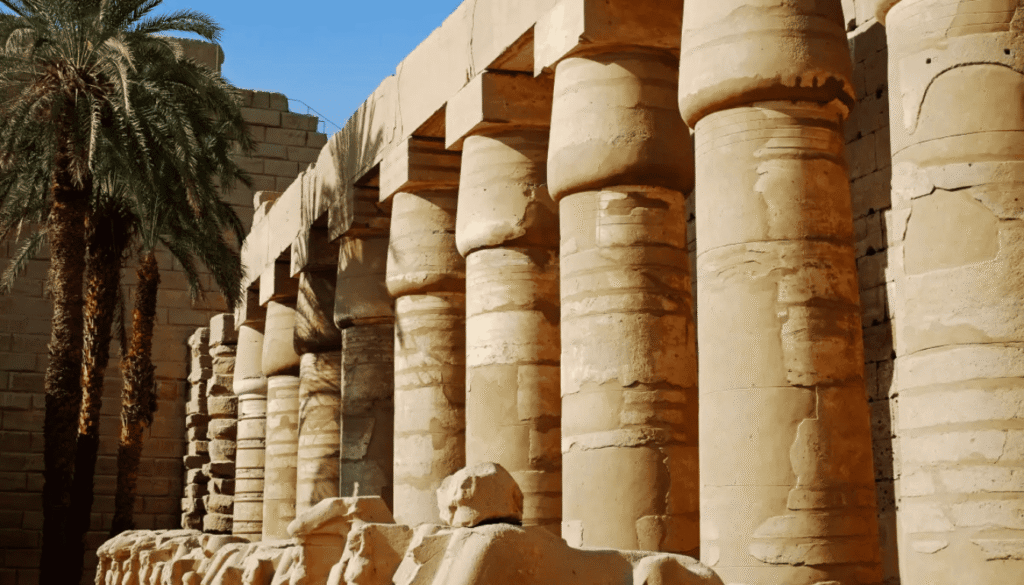
Nothing quite prepares you for your first glimpse of the Great Hypostyle Hall. Even after seeing countless photos, the reality hits differently. You’re suddenly surrounded by 134 massive columns rising from the stone floor like a fossilized forest. The central columns tower 21 meters (about 69 feet) above you—that’s roughly equivalent to a seven-story building—and the entire hall covers more than 50,000 square feet.
Walking between these columns feels surreal. The afternoon sun filters through gaps in the ruined roof, casting dramatic shadows across hieroglyphs that have watched millennia pass. Your neck aches from looking up, trying to take it all in. Every surface is carved: pharaohs making offerings to gods, battle scenes frozen in stone, sacred texts that were already ancient when Rome was founded.
This architectural marvel was primarily the work of two ambitious pharaohs: Sety I and his son Ramesses II. Father and son poured resources and labor into decorating this hall during their reigns in the 13th century BCE. Their names and deeds cover the columns, a permanent record of their devotion—or perhaps their egos. Probably both.
The Sacred Walkway Between Worlds
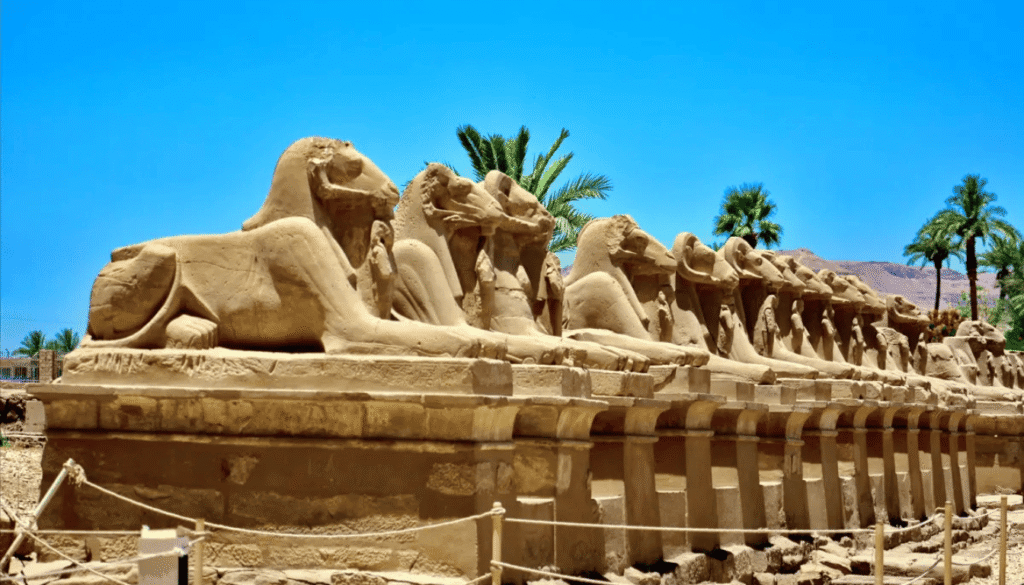
The connection between Karnak and Luxor Temple isn’t just geographical—it’s spiritual and physical. These two ancient Egyptian temples are linked by the Avenue of Sphinxes, a nearly 3-kilometer (almost two-mile) ceremonial walkway lined with 1,057 statues. Some are traditional sphinxes with human heads and lion bodies, others are criosphinxes (human bodies with ram heads), and still others are complete ram statues.
This wasn’t just decoration. During the annual Opet Festival, priests would carry sacred barques (ceremonial boats) containing the statues of Amun, Mut, and Khonsu along this avenue from Karnak to Luxor Temple. The procession could take days, with ordinary Egyptians lining the route, celebrating the gods’ journey. Recently restored sections of the avenue now allow visitors to walk in those ancient footsteps, experiencing a piece of the sacred geography as pilgrims once did.
Experiencing Luxor Temple at Its Finest
While Karnak impresses through sheer scale, Luxor Temple enchants through atmosphere. If you can only visit at one time of day, make it sunset. Tour groups typically finish their visits by late afternoon, leaving the temple quieter as golden hour approaches. Then, as twilight deepens, the lighting system activates, bathing the columns, obelisks, and statues in warm illumination.
There’s something almost otherworldly about Luxor Temple at night. The stone seems to glow from within. Shadows dance across the reliefs. The modern city fades away, and for a moment, you can imagine what it felt like when these spaces were active centers of worship, filled with incense smoke and chanting priests. The ticket price is the same regardless of when you visit, but the experience at sunset is worth planning your entire day around.
The West Bank Narrative: Queens, Kings, and Sharp Hieroglyphics
The Temple Carved Into Forever
Cross the Nile to the West Bank, the ancient realm of the dead, and you’ll encounter one of Egypt’s most photographed monuments. The Mortuary Temple of Hatshepsut rises in three terraces against the limestone cliffs of Deir El-Bahari, creating a visual harmony between human architecture and natural geology that modern architects still study.
This is widely considered the most iconic temple in Egypt from a design perspective, and once you see it, you’ll understand why. The horizontal lines of the terraces contrast dramatically with the vertical cliff faces. Colonnaded porticos create rhythmic shadows. Ramps connect each level, guiding visitors upward toward the mountain itself. The integration of architecture and landscape is so seamless it looks almost inevitable, as if the temple grew naturally from the stone.
But the temple’s story involves more than aesthetics. Hatshepsut herself was the longest-ruling female pharaoh of ancient Egypt, reigning for about 22 years during the 15th century BCE. After her death, her stepson Thutmose III apparently couldn’t let her memory stand. He systematically went through temples—including this one—chiseling away her images and erasing her cartouches (the oval frames containing her name). He was trying to erase her from history itself.
It didn’t work. Hatshepsut’s temple still stands, her story has been recovered, and her reign is now recognized as one of ancient Egypt’s most prosperous and peaceful periods. The damaged reliefs actually make the story more compelling—they’re evidence of ancient political vendettas, reminding us that these monuments witnessed very human dramas.
Where Hieroglyphics Come Alive
Most visitors to Luxor focus on Karnak and the Valley of the Kings, which means many skip Medinet Habu. That’s their loss. This mortuary temple of Ramesses III sits slightly off the main tourist circuit, but it’s one of the best-preserved complexes in Egypt—and the quality of the artwork inside is genuinely exceptional.
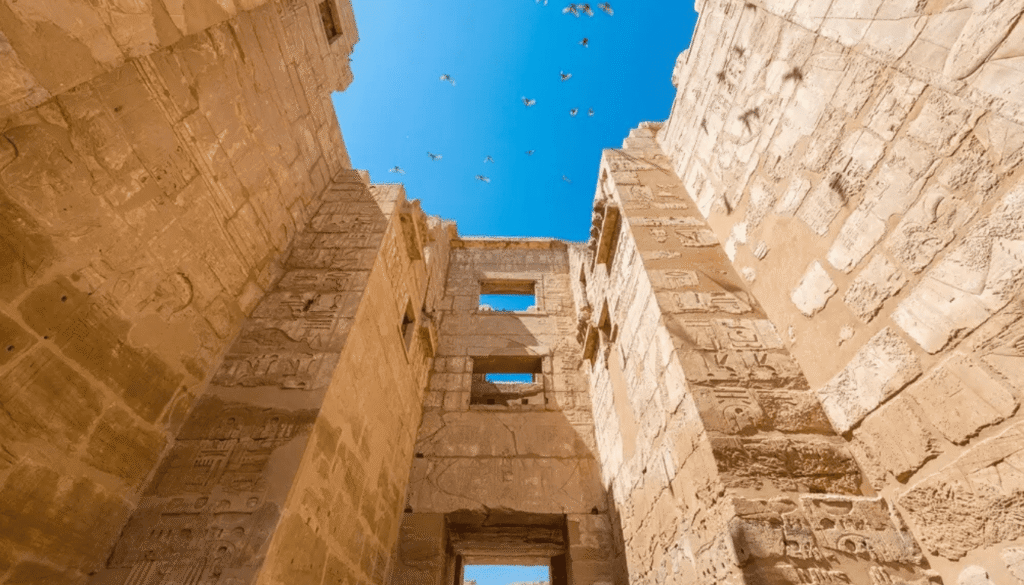
The hieroglyphics and reliefs at Medinet Habu are sharper, more vivid, and better preserved than those at either Karnak or Luxor Temple. Colors that have faded elsewhere remain vibrant here: reds, blues, yellows, and greens that look fresh enough to have been painted last century rather than over three millennia ago. The preservation allows you to see details that are lost elsewhere: the individual feathers on a bird, the expression on a pharaoh’s face, the intricate patterns on clothing.
The battles scenes are particularly impressive. One wall shows Ramesses III’s naval battle against the Sea Peoples in extraordinary detail—ships colliding, warriors falling into the water, chaos captured in stone. These aren’t sterile historical records; they’re dynamic narratives full of action and drama.
Visiting Medinet Habu requires a separate ticket (200 EGP for foreign adults), and it’s typically included on West Bank tour packages along with the Temple of Hatshepsut (160 EGP). If you’re exploring independently and need to prioritize due to time or budget, this is one site worth making room for.
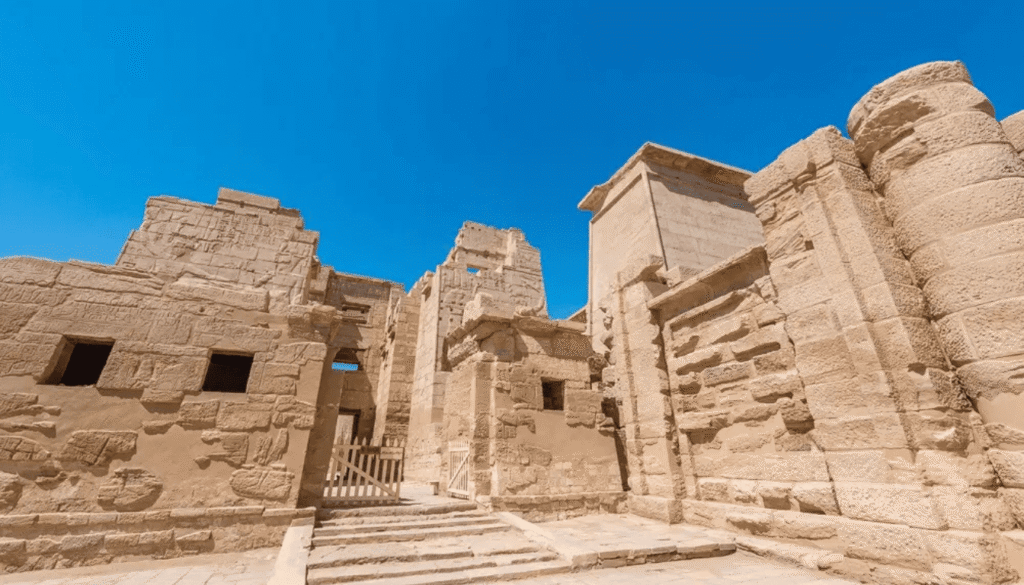
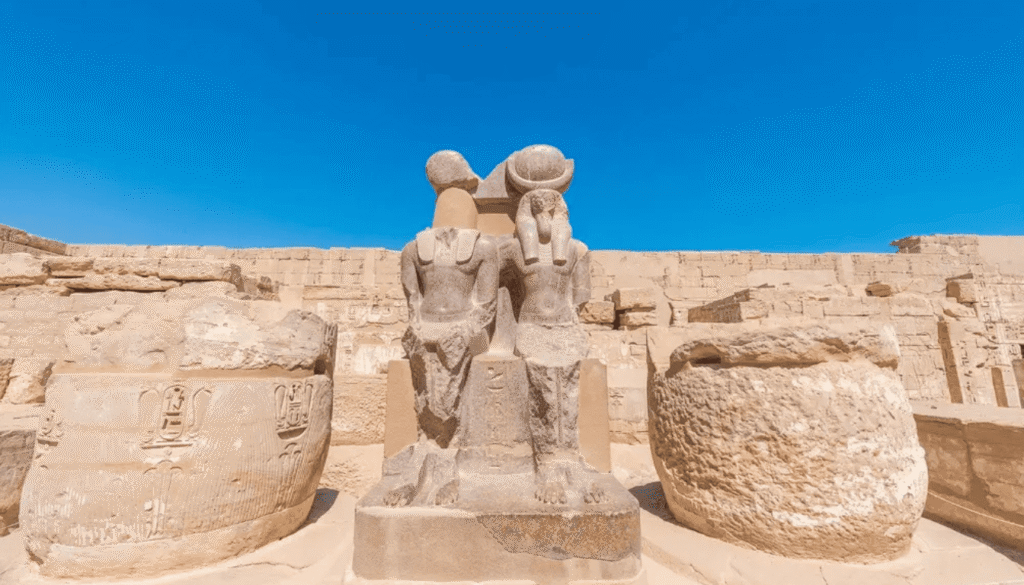
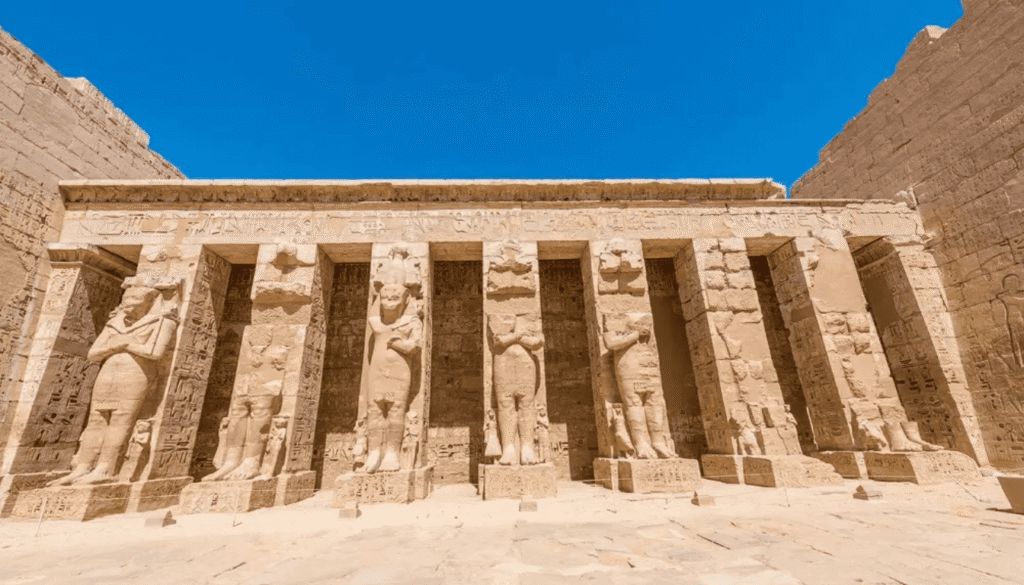
“Tap here and book your visit now to (Medinet Habu), Luxor.”
The Reality of the Valley of the Kings
The Valley of the Kings often appears on bucket lists because it sounds so mysterious: the secret burial place of pharaohs, hidden in a desert valley. The reality is somewhat different from the romantic fantasy, but still fascinating.
First, the good news: historic sites in Upper Egypt, including the Valley of the Kings, are generally far less crowded than the Pyramids at Giza. You’re not fighting through masses of people. The experience feels more contemplative, more connected to the ancient past.
However, you need to manage your expectations. The valley itself is a barren, rocky landscape without much shade. During summer months, temperatures can exceed 40°C (104°F), making the experience genuinely uncomfortable. Arriving early in the morning isn’t just about avoiding crowds—it’s about surviving the heat.
The tombs themselves vary dramatically in size, preservation, and interest. Your standard ticket includes entry to three tombs, and some are definitely more impressive than others. Tour guides aren’t allowed to accompany you inside the tombs, a rule designed to minimize time spent inside and preserve the delicate decorations. This means you’ll be exploring on your own or with your group, which some visitors prefer anyway.
The Truth About King Tut’s Tomb
Speaking of tombs, let’s address King Tutankhamun’s resting place. Thanks to the extraordinary discovery of his intact burial in 1922, Tut is probably the most famous pharaoh in popular culture. But his actual tomb is surprisingly modest—even disappointing if you’re expecting grandeur.
The interior is small and lacks the elaborate decoration seen in many other tombs. This isn’t because Tut wasn’t important; it’s because his death was sudden and his burial was rushed. He was young when he died, and the tomb prepared for him wasn’t ready. They used what was available, which happened to be a relatively small tomb, probably originally intended for someone else.
The legendary treasure that made the tomb famous—the golden mask, the jewelry, the furniture, the chariots—isn’t there anymore. The bulk of Tut’s priceless cache of riches is now housed at the Grand Egyptian Museum near Cairo. What remains in the valley is the painted tomb itself and Tut’s mummy, which was returned to its original resting place. It’s worth seeing for the historical significance, but don’t expect it to be the highlight of your West Bank visit.
“1-day tour in Luxor, Egypt: Valley of the Kings + Karnak + Luxor Temple.”
Aswan and Edfu: Stories of Relocation and Preservation
The Temples That Traveled
The 1960s brought a crisis to Egypt’s ancient monuments. The construction of the Aswan High Dam would create Lake Nasser, one of the world’s largest artificial lakes, and rising waters threatened to submerge some of Egypt’s most important temples forever. What followed was one of the most ambitious archaeological rescue operations in history.
Both Philae Temple and Abu Simbel Temple were meticulously relocated to higher ground. Engineers cut the temples into massive blocks—some weighing up to 30 tons—numbered each piece, and reassembled them at new locations that matched their original orientations as closely as possible. Philae was moved to nearby Agilkia Island, while Abu Simbel’s four colossal statues of Ramesses II were reconstructed on an artificial hill about 200 meters from their original site.
The scale of this achievement is hard to overstate. These weren’t simple structures; they were complex temples carved into solid rock, covered in detailed reliefs and hieroglyphics. Every cut had to be precise to preserve the artwork. Every block had to be oriented correctly during reconstruction. The international effort, coordinated by UNESCO, set a precedent for cultural heritage preservation that continues today.
Walking through these temples now, knowing their history, adds another layer of wonder to the experience. You’re not just seeing ancient Egyptian architecture; you’re seeing modern dedication to preserving it.
When the Sun Pays Homage to the Pharaoh
Abu Simbel offers one of Egypt’s most spectacular astronomical alignments. Twice each year—around February 22 and October 22, dates that correspond roughly to Ramesses II’s coronation and birthday—the sun aligns perfectly with the entrance of the Great Temple. At dawn on these days, sunlight penetrates 60 meters into the mountain, illuminating three of the four statues in the sanctuary: Ramesses II himself, flanked by Amun-Ra and Ra-Horakhty. The fourth statue, representing Ptah (associated with darkness and the underworld), remains in shadow.
The precision required to achieve this effect is extraordinary. The architects had to calculate angles accounting for the sun’s position at specific times of year, the temple’s orientation, and the length of the corridor leading to the sanctuary. They succeeded so completely that, 3,200 years later, the alignment still works.
Well, almost. Due to the temple’s relocation in the 1960s, the solar phenomenon now occurs one day later than originally intended. Even with all our modern technology and careful measurements, engineers couldn’t perfectly replicate the original astronomical alignment. It’s a humbling reminder of ancient Egyptian architectural sophistication.
If you’re planning a trip to Egypt and can time your visit to coincide with these solar festivals, do it. The temples are crowded on these specific days, but witnessing this ancient astronomical spectacle in person is a once-in-a-lifetime experience. Book your accommodations well in advance, as Aswan fills up during these events.
The Temple That Time Forgot to Ruin
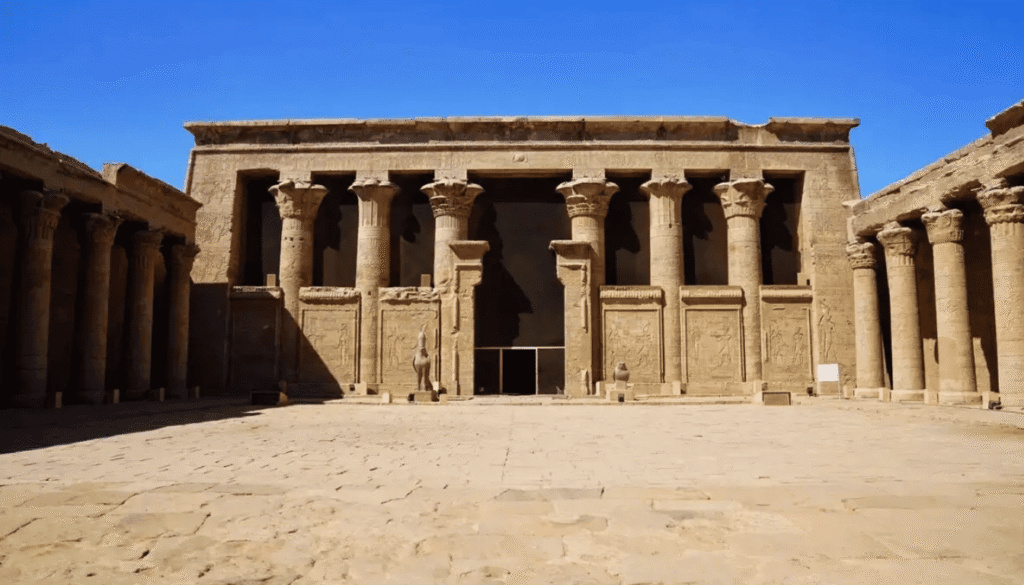
Between Luxor and Aswan, the small city of Edfu guards what many archaeologists consider the best-preserved ancient Egyptian temple: the Temple of Horus. While the Karnak Temples Egypt complexes impress through scale and Abu Simbel through spectacle, Edfu wins through completeness.
The temple’s exceptional preservation is largely due to timing and sand. Built during the Ptolemaic period (237-57 BCE), it’s significantly younger than most of the temples we’ve discussed. After ancient Egyptian religion declined and the temple was abandoned, desert sand gradually buried the entire structure, protecting it from weathering, vandalism, and stone robbers. When archaeologists excavated it in the 19th century, they found a nearly intact temple, complete with its massive pylon gateway, columned courts, halls, and sanctuary.
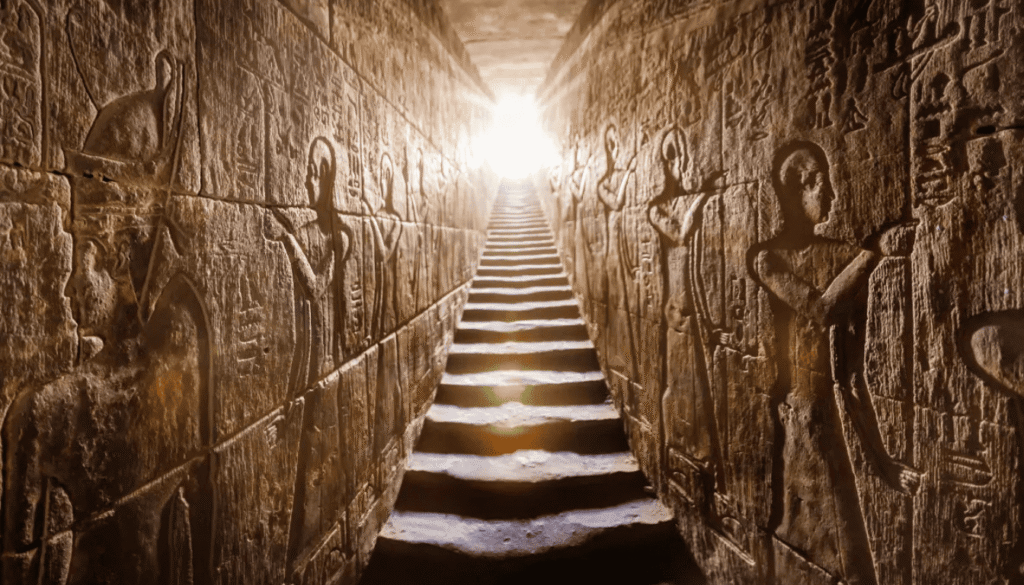
Walking through Edfu gives you the clearest sense of how these temples actually functioned. You can trace the progression from the public outer courtyards to increasingly restricted inner spaces, understanding how the architecture controlled access and created a journey from the earthly realm to the divine presence. The walls are covered with texts describing religious rituals, offering formulas, and mythological scenes—a comprehensive record of temple practices.
The size is impressive without being overwhelming. The pylon towers are 36 meters high, decorated with reliefs showing Ptolemaic pharaohs smiting enemies in classic ancient Egyptian style. Inside, the Hypostyle Hall features 18 columns with elaborate floral capitals. Every surface tells a story.
If you’re traveling between Luxor and Aswan by Nile cruise—one of the most relaxing ways to experience Upper Egypt—Edfu is typically included as a stop. Even if you’re not on a cruise, the temple is worth the short detour. Entry fees are reasonable (450 EGP for foreign adults), and the town itself offers a glimpse of everyday Egyptian life away from major tourist centers.
“Private Day Trip To Kom Ombo And Edfu Temples From Aswan.”
The Stellar Temple of Isis
Near the town of Qena, about 60 kilometers north of Luxor, the Dendera Temple complex offers another astronomical wonder. The Temple of Isis within this complex (not to be confused with Philae’s Temple of Isis near Aswan) demonstrates the ancient Egyptians’ obsession with celestial alignments.
This temple is believed to be deliberately oriented toward the rising position of Sopdet—the star we now call Sirius. For ancient Egyptians, Sopdet was one of the celestial manifestations of the goddess Isis, and its heliacal rising (first visible appearance in the dawn sky after a period of absence) marked the beginning of the Inundation season when the Nile would flood, bringing fertility to the land.
The most famous feature at Dendera is actually in a different temple within the complex: a ceiling decorated with the Dendera Zodiac, one of the best-preserved examples of ancient Egyptian astronomy. The original is now in the Louvre, but a plaster replica occupies its original position, allowing visitors to look up and see the same constellations ancient priests observed.
Dendera is slightly off the main tourist trail, requiring either a taxi from Luxor or inclusion on a specialized tour. The trip takes about an hour each way, but if you’re interested in Egyptian astronomy and cosmology, it’s absolutely worth the journey. The temple’s roof is accessible, offering panoramic views of the surrounding agricultural landscape—the same green fields ancient Egyptians depended on, still fed by the Nile after all these centuries.
The Unending Tale of Ancient Thebes
The Pyramids of Giza may be Egypt’s most recognizable symbols, but the temples of Upper Egypt tell a deeper, richer story. The Karnak Temples Egypt alone would justify a trip to Luxor, but they’re just the beginning. Add Luxor Temple glowing at sunset, the cliff-face drama of Hatshepsut’s monument, the vivid hieroglyphics of Medinet Habu, the relocated marvels of Philae and Abu Simbel, and the perfect preservation of Edfu, and you have an archaeological landscape that’s literally unmatched anywhere in the world.
These temples are timeless, prominent, and worth seeing—not just as tourist attractions, but as testaments to human creativity, devotion, and engineering genius. The ancient Egyptians weren’t just building monuments; they were constructing theology in stone, creating spaces where the divine and earthly realms could meet.
The architecture itself communicates meaning. The solar alignments at Karnak and Abu Simbel, the Sopdet orientation at Dendera, the island setting of Karnak on the ancient Nile—none of this was random. Every architectural decision choreographed the journey from the outer, earthly world to the inner sanctuaries where gods dwelt. To walk through these spaces is to follow a path designed to transform ordinary humans into pilgrims moving toward divine presence.
Modern visitors rarely think about the temples this way. We photograph the columns, marvel at the preservation, calculate the weight of the stones, and move on. But take a moment—maybe in the Hypostyle Hall at Karnak when the afternoon sun creates dramatic shadows, or at Luxor Temple as sunset colors the stone, or standing before Abu Simbel as dawn light begins to creep toward the inner sanctuary—to consider what these spaces meant to the people who built them and worshiped here.
They were investing everything—wealth, labor, artistic talent, engineering knowledge—into creating permanent homes for the gods. They were trying to make the divine visible and accessible. They were, in their own way, reaching for immortality. And they succeeded. We’re still here, thousands of years later, in awe of what they accomplished.
Your Journey Through Ancient Thebes
If this article inspires you to visit—and it should—plan to spend several days in Upper Egypt. This isn’t a destination for a quick day trip. Luxor alone deserves at least three full days: one for the East Bank (Karnak and Luxor Temple), one for the West Bank (Valley of the Kings, Hatshepsut, Medinet Habu), and one for either Dendera and Abydos to the north or Edfu to the south.
Aswan merits at least two days: one for Philae, the Unfinished Obelisk, and exploring Aswan itself, and one for the day trip to Abu Simbel. If you’re taking a Nile cruise between Luxor and Aswan (highly recommended), you’ll stop at Edfu and Kom Ombo along the way, adding those temples to your experience.
Take your time. These aren’t sites to rush through. Sit in the Hypostyle Hall and really look at the columns. Walk the Avenue of Sphinxes slowly, imagining the ancient processions. Watch the sunset from Luxor Temple. Let yourself absorb the weight of history and the artistry of the ancient Egyptians.
The Avenue of Sphinxes, recently restored and reopened, deserves special mention as a walking open-air museum. This isn’t just a path between two temples; it’s a 3-kilometer journey through sacred geography, lined with statues that have witnessed 3,400 years of human history. Walking it at your own pace, pausing to examine individual sphinxes and criosphinxes, stopping to photograph the way the avenue frames views of both temples, transforms the experience from simple sightseeing into something approaching pilgrimage.
Bring water, wear comfortable shoes, embrace the heat and the history, and prepare to have your expectations exceeded. The best temples to visit in Egypt aren’t just historical sites—they’re invitations to wonder, to question, and to connect with the boundless ambition of ancient human civilization.
Ancient Thebes awaits. The gods may be long gone, but their houses remain, as magnificent as the day they were completed, ready to tell their stories to anyone willing to listen.
“From riverside elegance to boutique stays, Luxor is your gateway to history.”
Pingback: Philae Temple in Aswan: Explore the magic Island of Isis - Discover Egypt Now