
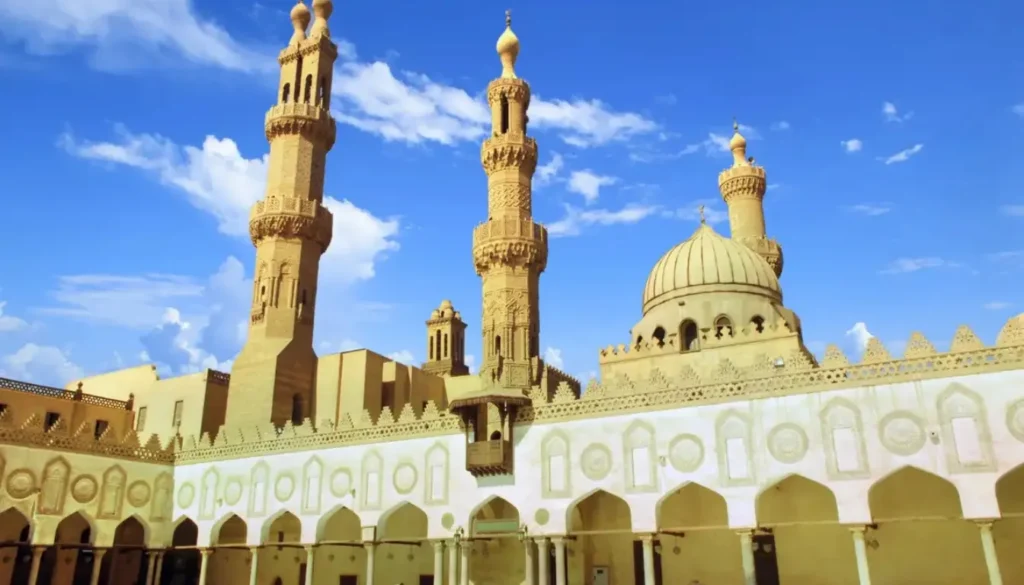
Introduction: The City of a Thousand Minarets
Discover the rich heritage of About Egypt through this complete Islamic Cairo Guide, where ancient mosques, vibrant bazaars, and stunning historic architecture reveal the timeless beauty of Egypt’s Islamic history. Explore the landmarks, stories, and cultural treasures that make Islamic Cairo a must-visit destination.
There’s a moment that happens to almost everyone who walks into Islamic Cairo for the first time. The traffic noise from Downtown fades, the air smells faintly of cardamom and dust, and suddenly you’re standing under a thousand-year-old minaret while a donkey cart rattles past a phone repair shop. That contradiction — ancient and alive at the same time — is basically the whole appeal of this place.
Islamic Cairo, sometimes called Medieval Cairo, has been recognized as a UNESCO World Heritage Site since 1979, and honestly, it earns that title. It packs one of the densest concentrations of historic Islamic architecture found anywhere in the world into a relatively small stretch of the city. If you want the quick version for your notes: Islamic Cairo was founded in 969 AD by the Fatimids, and it’s a sprawling district east of Downtown that carries over 1,300 years of architectural evolution, from the early Abbasid period all the way through to the Ottoman era.
This guide is built around exactly that — the mosques, the markets, and the architecture that make up Cairo’s Islamic heritage, and how to actually see them without burning out on your first afternoon.
Logistics: The “Cluster” Strategy for Navigating Cairo
Here’s the thing nobody tells you before you go: Islamic Cairo covers about 5.23 square kilometers, and it is not a compact, stroll-through-in-an-hour kind of neighborhood. Try to walk the whole district in one go and you’ll end up trudging along busy highways in the midday heat, wondering why your “quick visit” turned into a three-hour slog.
The fix is simple — stop thinking of Islamic Cairo as one big walk and start thinking of it as three separate zones. Hop between them using Uber or InDrive, which are cheap, reliable, and take the guesswork out of Cairo traffic.
- Cluster 1 (The Citadel Hub): Cairo Citadel, Sultan Hassan Mosque, and Ibn Tulun Mosque.
- Cluster 2 (The Heritage Heart): Moez Street, Khan el Khalili, and Al-Azhar Mosque.
- Cluster 3 (The Green Escape): Al-Azhar Park, which gives you sweeping views over the city’s rooftops and minarets.
Plan on one cluster per half-day, and you’ll actually enjoy what you’re looking at instead of just checking boxes.
“Discover Egypt’s Rich History: From the Pharaohs to Modern Times.”
Cluster 1: Grandeur and Ancient Wonders
Cairo Citadel & Muhammad Ali Mosque
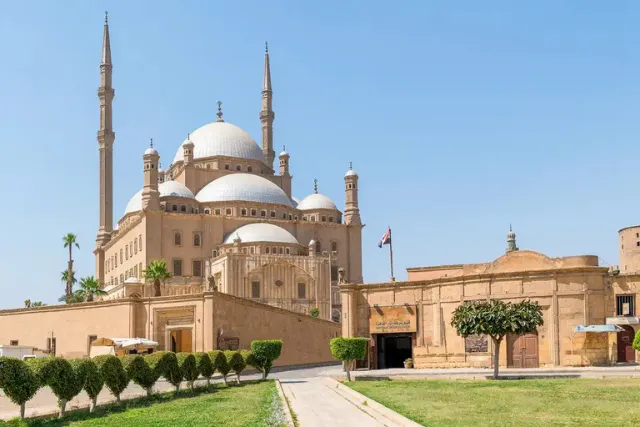
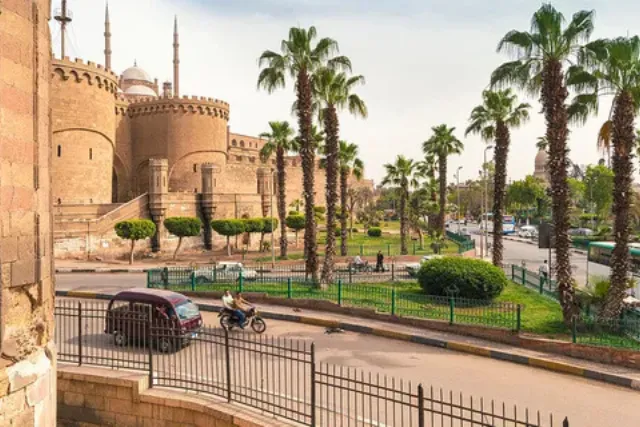
Sitting up in the Muqattam Hills, the Cairo Citadel dominates the skyline, and its centerpiece is the unmistakable Muhammad Ali Mosque, built between 1830 and 1848 in an Ottoman style that deliberately echoes the great mosques of Istanbul. It’s grand in a very different way from the older Mamluk buildings nearby — all soaring domes and slender pencil minarets.
Insider tip: Make your way to the Citadel’s terrace. On a clear day, you can actually spot the Pyramids of Giza in the distance, which is a genuinely surreal way to connect two completely different chapters of Egyptian history in a single view.
Mosque-Madrasa of Sultan Hassan
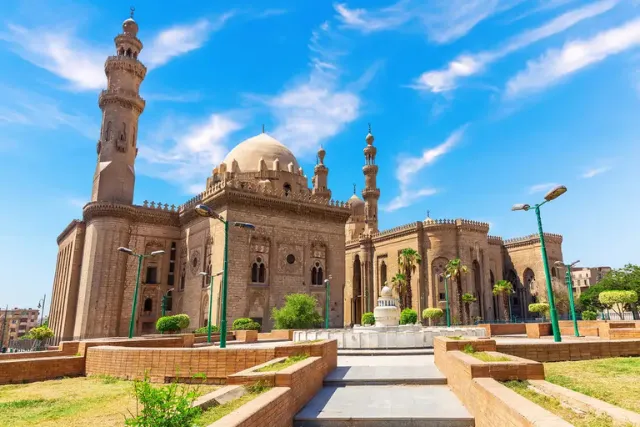
Right below the Citadel stands one of the true showstoppers of Cairo — the Mosque-Madrasa of Sultan Hassan. Built in the 14th century, this Mamluk masterpiece is often described as a “wonder of construction,” and once you’re standing inside its massive vaulted chambers, you’ll understand why. The minaret alone reaches 81.5 meters, and the scale of the whole complex feels closer to a fortress than a place of prayer.
Ibn Tulun Mosque
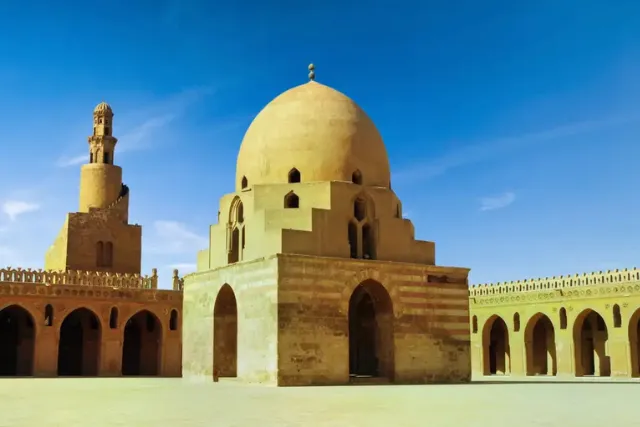
If you only have time for one truly ancient site, make it Ibn Tulun. Established in 876 AD, it holds the distinction of being the oldest mosque in Egypt that still retains its original structure — no major rebuilds, no modern replacements, just thirteen centuries of continuity. Its spiral minaret, inspired by the Great Mosque of Samarra in Iraq, looks unlike anything else in the city, and climbing it for the 360-degree rooftop views over Islamic Cairo is genuinely one of the best free experiences in the neighborhood.
The Gayer-Anderson Museum
Tucked right against Ibn Tulun’s walls, the Gayer-Anderson Museum is easy to miss and shouldn’t be. These interconnected 16th- and 17th-century houses give you something the mosques can’t: a look at how ordinary, wealthy Cairenes actually lived during the medieval and Ottoman periods, complete with carved wooden screens, courtyards, and antique furnishings.
Cluster 2: Walking the “Open-Air Museum”
Moez Street (Al-Muizz)
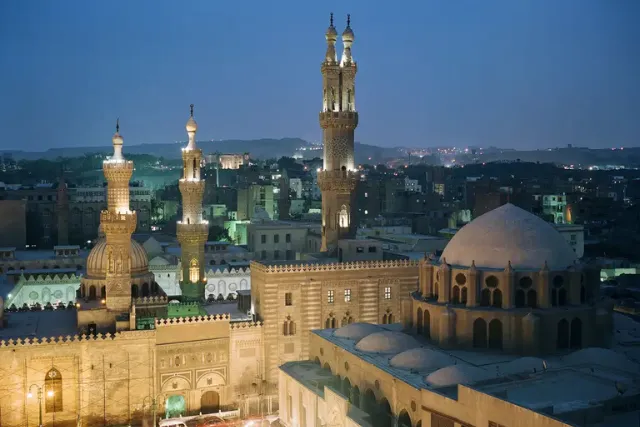
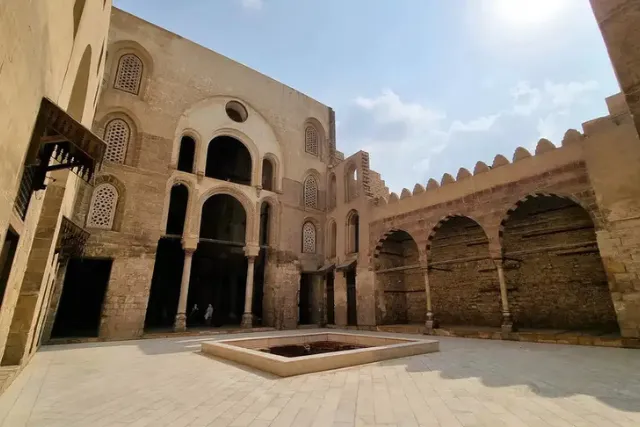
Moez Street is where Islamic Cairo really shows off. This kilometer-long pedestrian corridor holds the greatest concentration of medieval architectural treasures anywhere in the Islamic world — mosques, mausoleums, fountains, and old merchant houses packed shoulder to shoulder along a single road. Walk it slowly, ideally in the late afternoon when the light turns gold and the street lamps start flickering on.
Al-Azhar Mosque & University
Founded in 970 AD, Al-Azhar isn’t just a beautiful mosque — it’s attached to the world’s second-oldest continuously operating university and remains one of the most important centers for Sunni Islamic theology on the planet. Students in traditional dress still cross its courtyards today, which gives the whole site a living, breathing quality that a lot of historic monuments simply don’t have.
Qalawun Complex
A little further down Moez Street, the Qalawun Complex is less about a single building and more about an entire 13th-century institution rolled into one — a mosque, a madrasa, and a hospital, all built under Sultan Qalawun. It’s a reminder that these medieval complexes were often civic infrastructure as much as they were religious spaces.
Aqsunqur Mosque (The Blue Mosque)
Cairo’s own “Blue Mosque” gets its nickname from the striking blue interior tilework added during a 1652 renovation. It’s quieter than the big-name sites nearby, which honestly makes it a nice place to slow down and take in the details without the crowds.
The Khan el Khalili Survival Guide
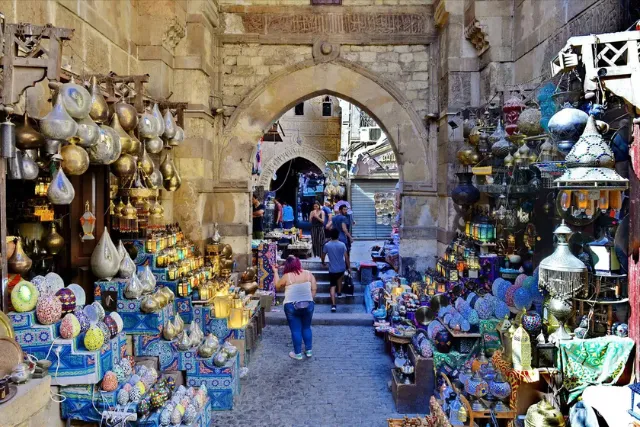
No trip through Islamic Cairo attractions is complete without Khan el Khalili, and it deserves its own section because shopping here is basically a skill you build in real time.
History: The bazaar started life in the 14th century as a caravanserai, built directly over what’s known as the “Saffron Tomb” — the burial site of Fatimid caliphs. That layer of history under your feet is easy to forget once you’re being pulled into a shop to look at scarves, but it’s part of what makes the market so distinct.
Shopping strategy: Skip the stalls selling obvious Chinese-made kitsch — the mass-produced pyramids and keychains that look identical from shop to shop. Instead, look for authentic alabaster lamps, mother-of-pearl inlaid boxes, and Khayamiya, the vividly patterned appliqué textiles traditionally made by Cairo’s tentmakers.
Bargaining: The unwritten rule here is to offer roughly half of whatever price you’re quoted, then negotiate from there. Don’t be afraid to walk away and pretend you’ve lost interest — more often than not, a lower offer will follow you out the door.
The ritual: However your shopping trip goes, end it the way generations of Cairenes and visitors have — with tea or coffee at Al Fishawy Cafe. This 250-year-old institution has hosted literary giants like Naguib Mahfouz, and sitting under its mirrored walls with a glass of hibiscus tea is arguably as important a part of the Khan el Khalili experience as the shopping itself.
Mosque Etiquette: The Visitor’s Code
A little preparation goes a long way when visiting active mosques in Islamic Cairo, and getting it right shows respect for a place that’s still very much in use.
- Dress code: Cover your shoulders and knees. Women should bring a lightweight scarf that can double as a head covering when entering prayer halls.
- Shoes: Always take your shoes off before stepping onto carpeted prayer areas. Most mosques have a shoe storage area near the entrance, and it’s customary to leave a small tip of around 5–10 LE for the attendant.
- Timing: Try to avoid visiting right around Friday midday prayers (Jumu’ah), since access is generally restricted to worshippers during that window.
Pricing & Practicalities
Here’s a quick-reference table so you can plan your budget and schedule without digging through five different websites.
| Site | Entry Fee (Approx.) | Hours |
|---|---|---|
| Cairo Citadel | 450 EGP | 8 AM – 5 PM |
| Sultan Hassan + Al-Rifa’i | 220 EGP (Combined) | 9 AM – 5 PM |
| Al-Azhar Park | 40 EGP | 9 AM – 10 PM |
| Ibn Tulun | Free (tips for minaret access) | 9 AM – 5 PM |
| Al-Azhar Mosque | Free | 9 AM – 5 PM |
Prices do shift, so it’s worth double-checking closer to your travel date, but this gives you a solid baseline for budgeting a day (or two) through the district.
FAQ: Frequently Asked Questions
Is it safe to visit Islamic Cairo alone?
Yes, generally speaking, it’s safe for solo travelers. That said, it’s smart to stick to the cluster strategy outlined above so you’re not wandering long stretches between sites, and using Uber or InDrive to move between neighborhoods cuts down on both stress and unnecessary walking.
What is the oldest mosque in Africa?
That title technically belongs to the Mosque of Amr ibn al-As, founded in 641 AD in the old district of Fustat. However, if you’re looking for the oldest mosque that has kept its original structure intact, that distinction goes to Ibn Tulun.
Can non-Muslims visit all mosques?
Most mosques across Islamic Cairo welcome visitors of all faiths, including some of the most important ones on this list. A few specific shrines, such as the Midan Hussein Mosque, remain closed to non-Muslims, so it’s worth checking ahead if a particular site is on your must-see list.
How do I pay for tickets?
As of 2024/2025, many of the major sites have shifted toward online booking systems and card payments, which makes life easier at the gate. That said, it’s still wise to carry small cash denominations — 5, 10, and 20 LE notes — for tips to shoe attendants, minaret guides, and other small services along the way.
How much time should I set aside for Islamic Cairo?
If you want to see it properly rather than just rushing past the highlights, plan on two full days at a minimum. One day works well for Cluster 1 — the Citadel, Sultan Hassan, and Ibn Tulun — since those sites alone can easily eat up four or five hours once you factor in the climbing, the photography stops, and the inevitable slow wandering through the Gayer-Anderson Museum. The second day suits Cluster 2 and Khan el Khalili, especially if you want to actually browse the shops rather than just walk past them. Trying to squeeze the whole district into a single afternoon usually means you leave feeling like you’ve seen a highlight reel rather than the place itself.
What’s the best time of day to visit?
Early morning is your best friend here, particularly between 8 and 10 AM. The light is softer for photos, the heat hasn’t built up yet, and the crowds at places like Moez Street and Khan el Khalili are noticeably thinner. Late afternoon, closer to sunset, is the other sweet spot — especially for Moez Street, which takes on a completely different atmosphere once the shop lights start turning on and the call to prayer echoes down the pedestrian corridor. Midday, especially in summer, tends to be uncomfortably hot for walking between clusters, so it’s worth building in a break or a cafe stop if you’re visiting between June and September.
Do I need a guide, or can I explore Islamic Cairo on my own?
Both approaches work, and it really depends on how you like to travel. A local guide can add a lot of value at sites like Sultan Hassan or the Qalawun Complex, where the architectural details and historical context aren’t always explained on posted signage. Guides can also help you navigate Khan el Khalili’s back alleys, which branch out well beyond the main touristy strip into quieter lanes selling spices, fabric, and copperware. That said, the cluster strategy in this guide is designed specifically so independent travelers can navigate confidently without one — the sites within each cluster are close enough together that getting lost isn’t really a risk.
Final Thoughts
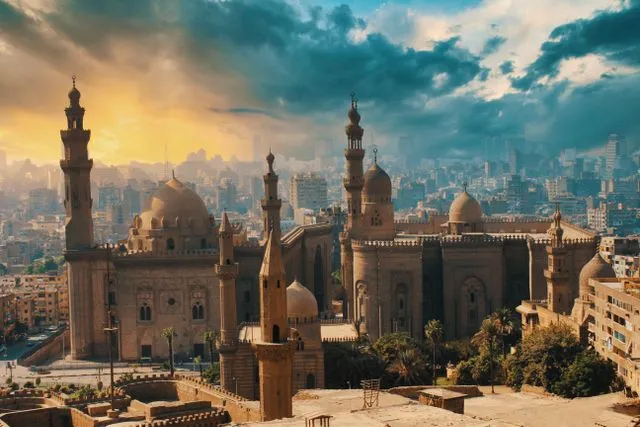
About Egypt: Islamic Cairo rewards patience more than speed. You could technically rush through the highlights in a single overloaded day, but the neighborhood is at its best when you let it breathe — a mosque here, a wander down Moez Street there, a long, unhurried tea at Al Fishawy in between. Between the mosques, the bazaars, and the sheer density of historic architecture packed into every corner, this is one of the few places in the world where a thousand years of history isn’t behind glass — it’s just part of the everyday street.
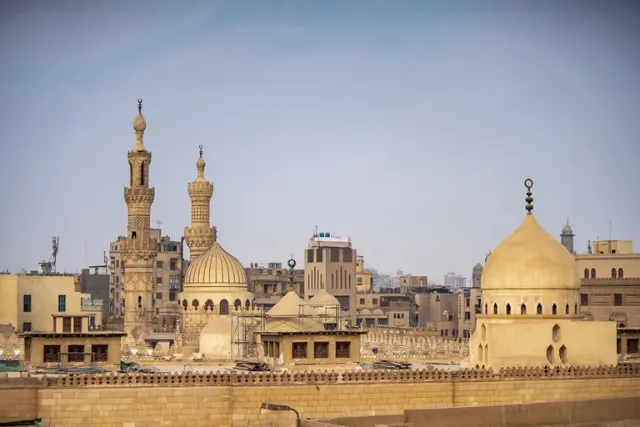
What makes this district different from a lot of other historic sites around the world is that nothing here has been frozen in time for the sake of tourists. Al-Azhar Mosque is still an active center of learning, not a museum piece. Shopkeepers in Khan el Khalili are running real businesses, not performing a version of one for cameras. Families still live in the buildings tucked behind Moez Street’s grand facades, hanging laundry between minarets that have stood since the Mamluk era. That layering of ordinary daily life over extraordinary history is really the heart of what you’re visiting, and it’s easy to miss if you’re moving too fast between checklist items.
If there’s one piece of advice worth repeating from everything above, it’s this: don’t try to see all of Islamic Cairo in one go. The cluster strategy exists for a reason, and travelers who try to cram the Citadel, Ibn Tulun, Moez Street, and Khan el Khalili into a single day usually end up exhausted and unable to appreciate any one of them fully.
Split it across two days if you can, build in breaks at a cafe or in Al-Azhar Park, and give yourself permission to skip a site if you’re running low on energy. There will always be more mosques to see than hours in the day, and that’s sort of the point — this is a district built to be explored gradually, over repeat visits, rather than consumed all at once.
It’s also worth remembering that Islamic Cairo isn’t a static backdrop for photos — it’s a living neighborhood where people pray, shop, teach, and raise families every single day. Showing up with a bit of cultural awareness, dressing modestly near the mosques, and being patient during the inevitable haggling in Khan el Khalili all go a long way toward making your visit feel less like tourism and more like a genuine exchange with the place and its people.
For first-time visitors, a reasonable approach is to treat your first trip as a foundation rather than a finish line. Cover Cluster 1 and Cluster 2 thoroughly, leave Al-Azhar Park for a quieter afternoon when your legs need a break from climbing minarets and cobblestones, and accept that you probably won’t get to everything — the Qalawun Complex might get a shorter visit than Sultan Hassan, or you might not make it inside the Blue Mosque before it closes. That’s fine. Islamic Cairo has survived more than a thousand years of dynasties, invasions, and renovations; it isn’t going anywhere, and it’ll be just as remarkable on your second trip.
In the end, what you’ll likely remember isn’t a single mosque or a single purchase from Khan el Khalili — it’s the accumulation of small moments. The call to prayer echoing off stone walls as the sun sets over Moez Street. The smell of incense and leather drifting out of a shop doorway. The view from Ibn Tulun’s minaret, with the entire district spread out below you in a haze of domes and rooftops. Those are the details that make Islamic Cairo one of the most rewarding places to explore in the whole of Egypt, and honestly, in the entire region.