
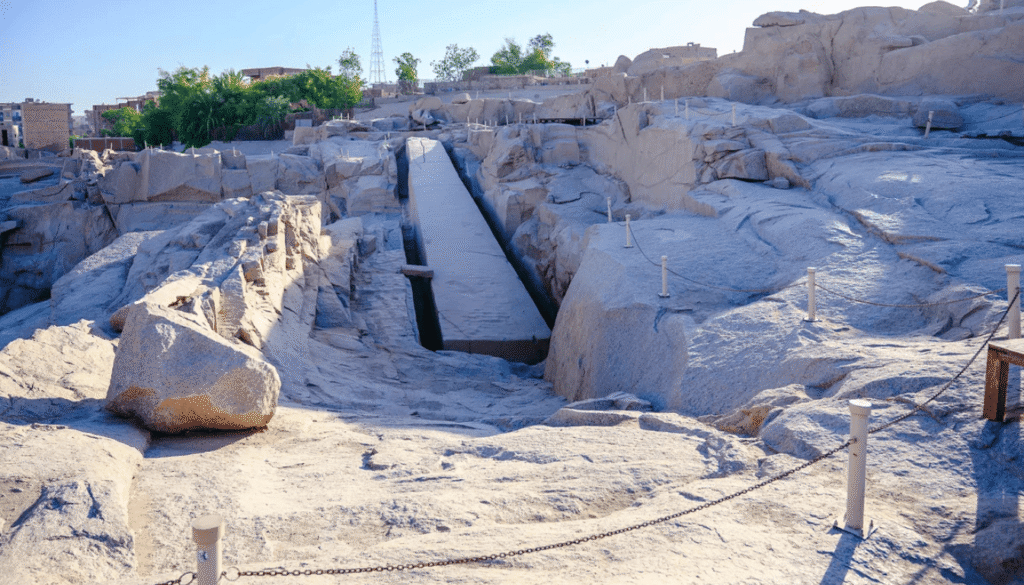
The Monument to Human Ambition
Hidden in the heart of Aswan, the Unfinished Obelisk offers a rare window into the brilliance of ancient Egyptian craftsmanship. This massive monument reveals how obelisks were carved directly from solid granite. From unfinished tool marks to fascinating history, it’s one of Egypt’s most intriguing archaeological sites. Discover the best 5 reasons why this landmark deserves a spot on your travel itinerary.
Walk through any Egyptian temple and you’ll find yourself surrounded by triumphs—towering columns that have defied gravity for millennia, perfectly aligned statues, and obelisks that pierce the sky with mathematical precision. But tucked away in Aswan’s northern quarries lies something different, something arguably more honest: a magnificent failure frozen in time.
The Unfinished Obelisk Aswan isn’t your typical tourist attraction. There’s no glittering tomb, no painted hieroglyphs telling tales of divine kingship. Instead, you’re standing at the birthplace of Egypt’s most ambitious monuments, staring at a 3,500-year-old work site that ancient craftsmen abandoned mid-project. And here’s the beautiful irony—this “failed” monument teaches us more about ancient Egyptian engineering than a hundred polished temples ever could.
If those ancient workers had managed to finish what they started, we’d be looking at the largest single piece of stone ever carved in antiquity. Picture this: 42 meters of red granite stretching toward the sun, weighing roughly 1,200 tons—that’s about the weight of 200 African elephants, carved from one continuous piece of bedrock. Queen Hatshepsut, one of Egypt’s most powerful female pharaohs during the 18th Dynasty, commissioned this giant to dwarf every other obelisk in the empire.
Quick Facts:
- Location: Northern Quarries, Aswan
- Commissioned By: Queen Hatshepsut (18th Dynasty)
- Dimensions: 42 meters tall; approximately 1,200 tons
- Status: Part of UNESCO “Nubian Monuments” World Heritage site
The Unfinished Obelisk Egypt offers something rare in archaeology—a snapshot of ancient technology caught in the act, like stumbling upon a Renaissance artist’s studio with wet paint still on the canvas.
“Tap here and learn more about Luxor Temple: The Symbol of Eternal Beauty on the Nile.”
The “Backstage” of Ancient Egypt: How the Giant Was Carved
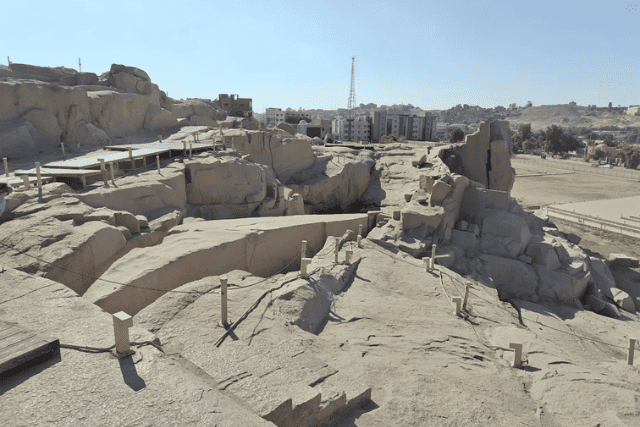
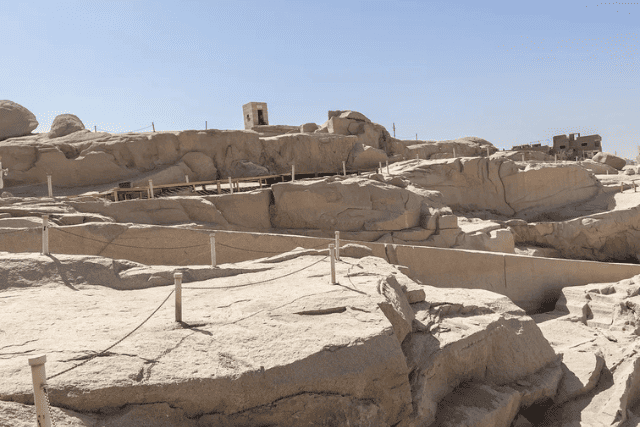
Stand at the edge of the Unfinished Obelisk and look down. You’re staring into an ancient construction site, and suddenly all those polished monuments across Egypt start making sense. This is where the magic happened—or rather, where the backbreaking, patient, methodical work happened.
The ancient Egyptians didn’t have dynamite or jackhammers. What they had was something better: patience, precision, and remarkably clever physics. Their primary tool? Dolerite pounding balls—softball-sized chunks of igneous rock that happen to be harder than granite. Workers would grip these dense stones and pound them against the bedrock in a rhythmic, almost meditative motion. Hour after hour, day after day, pulverizing the granite grain by grain.
Archaeological studies have calculated the mind-numbing pace of this work: roughly 5 to 10 cubic centimeters removed per hour. That’s about a teaspoon’s worth of granite dust for an hour’s worth of pounding. When you realize the obelisk would require removing thousands of cubic meters of stone, the scale of ancient patience becomes humbling.
But the pounding was just the beginning. Look closely at the trenches surrounding the obelisk and you’ll spot small rectangular slots carved into the granite. This is where the workers inserted wooden wedges, then soaked them with water from the Nile. As the wood swelled, it generated enough pressure to fracture the granite along predetermined lines—nature’s hydraulic splitter, courtesy of workers who understood material science without ever calling it that.
Even more fascinating are the ochre-colored lines still visible on the obelisk’s surface. These weren’t decorative; they were the ancient equivalent of blueprint markings, guiding lines that told workers exactly where to pound, where to wedge, and how deep to carve. The precision is startling—these lines run true across dozens of meters, planned by engineers who couldn’t exactly run to the hardware store for measuring tape.
Walking around the site, you can actually trace the work progression. The northern side is nearly finished, smooth and refined. The southern trenches show rougher work, indicating the carvers were still removing bulk material when disaster struck. It’s like reading a construction timeline written in granite.
The Heartbreak of 1500 BCE: Why Was It Abandoned?
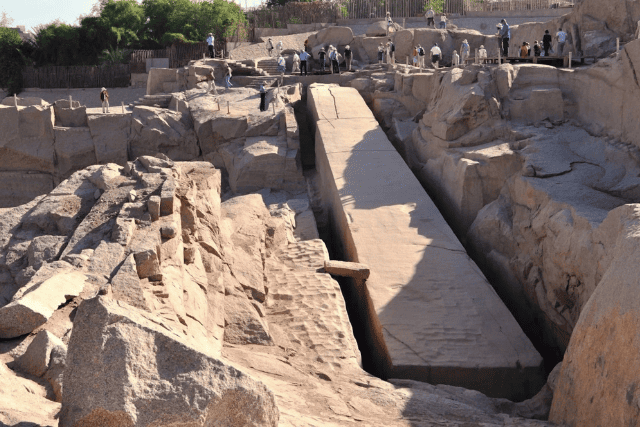
Here’s where the story gets properly dramatic. Imagine being the foreman on this project. Months, maybe years have passed. Your teams have pounded away mountains of granite dust. The obelisk is taking shape, nearly ready to be extracted from the bedrock. You’re probably already imagining the royal celebration when this colossus stands triumphant at Karnak Temple.
Then someone spots it—a crack. Not a small one, but a massive fissure running through the bedrock beneath the obelisk’s body.
In that moment, 1,200 tons of royal ambition became 1,200 tons of expensive deadweight. The crack rendered the entire monolith structurally unstable. Even if workers managed to extract it from the quarry (itself a Herculean task involving wooden sledges, lubricated tracks, and hundreds of laborers), the flawed stone would never survive the journey to Thebes, let alone stand upright for eternity.
The decision to abandon the Unfinished Obelisk Aswan demonstrates something we often forget about ancient engineers—they were ruthlessly practical. Egyptian monuments weren’t just religious statements; they were eternal declarations of power meant to outlast dynasties. A pharaoh’s reputation rested on these projects. Better to cut losses on a flawed stone than risk a catastrophic public collapse during installation.
But here’s the twist that makes archaeologists positively giddy: this abandonment was one of history’s happiest accidents. A finished obelisk would have been transported, erected, and polished smooth, erasing nearly all evidence of how it was made. The abandonment preserved a complete technological record—tool marks, carving sequences, splitting techniques, and planning methods all frozen in time.
The Unfinished Obelisk became an accidental time capsule, holding secrets that finished monuments took to their graves. Every chisel mark, every pounding depression, every wooden wedge slot tells part of the story. It’s as if the ancient quarry workers left us a detailed instruction manual carved in granite.
Aswan’s Northern Quarry: More Than Just One Stone
While the Unfinished Obelisk rightly steals the spotlight, the surrounding northern quarries deserve their moment too. This wasn’t just one failed project site—this was ancient Egypt’s industrial powerhouse, the Home Depot of the pharaonic world.
Aswan’s red granite is geologically special. It’s extremely hard, takes a brilliant polish, and features that distinctive rose-pink color that looks spectacular when sunlight hits it just right. More importantly, it’s durable enough to last millennia, which is exactly what pharaohs shopping for eternity needed.
The granite that built the facing of the Great Pyramid at Giza? Quarried here. The massive columns at Luxor Temple? Here. Countless statues, sarcophagi, and monuments scattered across Egypt? Aswan granite. This quarry complex supplied premium building material to construction sites hundreds of kilometers away, long before modern logistics made such transportation routine.
Wander beyond the main obelisk and you’ll find the quarries are essentially an open-air museum of abandoned projects. There are partially carved obelisk bases, experimental cuts that didn’t work out, and workshop areas where workers refined their techniques. Some fragments show sophisticated carving in progress—a royal cartouche half-finished, decorative elements barely outlined.
Recent archaeological attention has started recognizing these “quarryscapes” as valuable heritage sites in their own right. For too long, quarries were considered the boring support acts to glamorous temples and tombs. But these industrial landscapes tell crucial stories about ancient economy, labor organization, technological innovation, and the sheer logistical complexity of building an empire.
The Northern Quarries show us that not every ancient Egyptian worker was painting hieroglyphs or wrapping mummies. Many were quarry workers, engineers, and logistics specialists running what amounted to a massive stone industry. They solved problems most of us can’t even comprehend—how do you move a 1,200-ton stone using Bronze Age technology? The quarry itself is the answer sheet.
Visitor’s Playbook: Logistics & Survival Tips
Alright, let’s talk practicalities. You’re convinced the Unfinished Obelisk is worth seeing (and it absolutely is), but Aswan isn’t exactly Oslo in terms of climate. Planning your visit properly makes the difference between a fascinating experience and a sweaty ordeal.
Planning Your Visit:
The site operates from 7:00 AM to 4:00 PM daily, though these hours can shift during Ramadan, so double-check if you’re visiting during the Islamic holy month. Ticket prices hover around 100-120 Egyptian pounds for adults—reasonable considering you’re accessing a UNESCO World Heritage site. The actual visit doesn’t require hours; 30 to 60 minutes gives you enough time to walk around the obelisk, examine the tool marks, read the informational signs, and snap plenty of photos.
The “Pro” Timing:
Here’s insider knowledge that’ll save you considerable discomfort: Aswan is hot. Like, genuinely hot. Summer temperatures routinely exceed 40°C (104°F), and even in winter, midday sun gets intense. The granite quarry offers zero shade—it’s literally a giant heat-absorbing rock amphitheater.
Your best strategy? Arrive early morning between 8:00 and 10:00 AM when the temperature is manageable and the tour buses haven’t yet descended in force. Alternatively, late afternoon after 3:00 PM works well—the sun is lower, the heat is breaking, and the lighting for photography improves dramatically.
Avoid the 11:00 AM to 2:00 PM window unless you’re training for a desert survival course.
Essential Gear:
The quarry floor is uneven bedrock with trenches, steps, and irregular surfaces. Leave the flip-flops at the hotel. You want comfortable, non-slip shoes with good ankle support. The walking isn’t extreme, but twisted ankles are both painful and embarrassing.
Bring water—more than you think you’ll need. Aswan’s dry heat is deceptive; you’ll dehydrate faster than you realize. There aren’t vendors inside the quarry complex, so pack your own supplies.
Sunscreen is non-negotiable. The Egyptian sun doesn’t mess around, and sunburn happens fast. A hat helps too, preferably one that covers your neck.
One underrated item: binoculars or a camera with good zoom. Some of the most interesting tool marks and ochre guidelines are easier to examine with magnification, especially on the obelisk’s far side where you can’t get close.
Expanding Your Aswan Itinerary
The Unfinished Obelisk sits conveniently within Aswan’s constellation of Aswan tourist attractions, making it easy to build a full day of exploration without backtracking across the city.
Perfect Pairings:
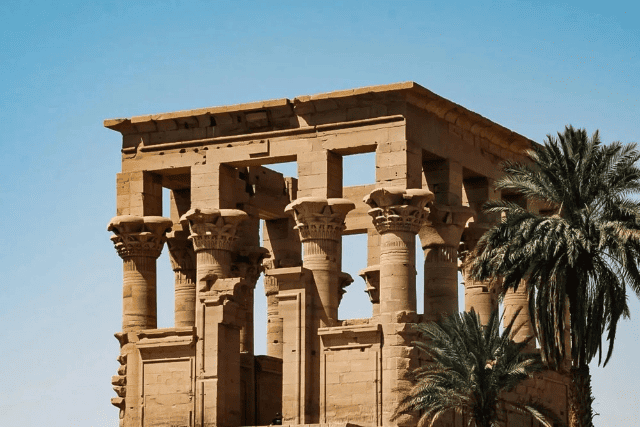
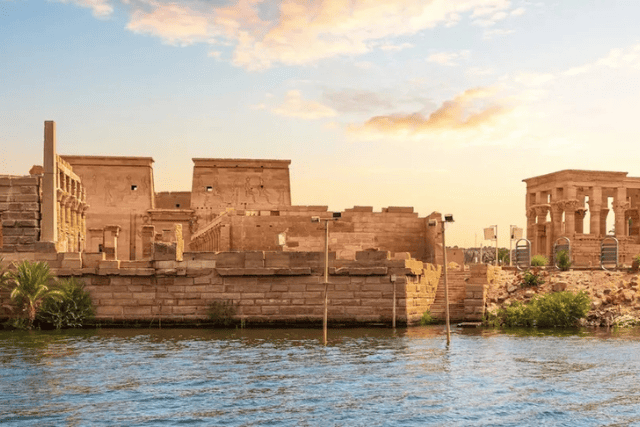
Start your morning at the obelisk, then head to Philae Temple—an island sanctuary dedicated to Isis that was literally dismantled and relocated stone by stone when the Aswan High Dam was built. The contrast is striking: the obelisk shows you raw, unfinished craftsmanship, while Philae demonstrates what those same techniques produced when everything went right.
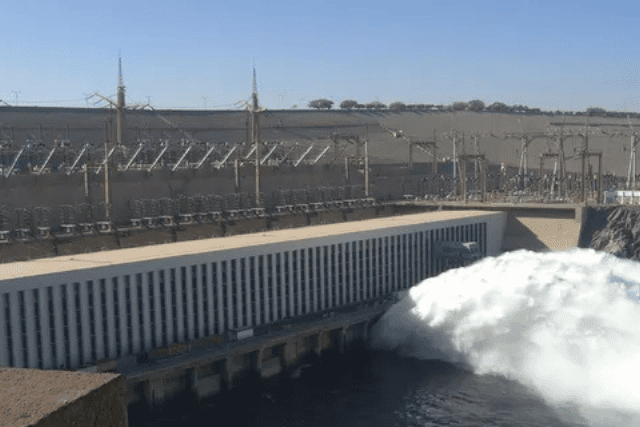
The Aswan High Dam itself deserves a stop, particularly the viewing platform that lets you grasp the sheer scale of modern engineering. There’s something poetic about seeing ancient and modern Egyptian engineering ambitions in the same afternoon.
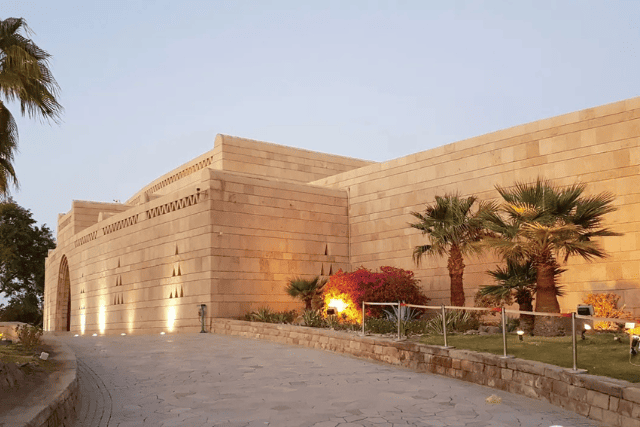
Cap your day at the Nubian Museum, which provides crucial cultural context. Aswan sits at the historical border between Egypt and Nubia, and the museum’s collection helps you understand the workers and communities who actually carved these monuments. The exhibitions on Nubian history, language, and traditions add depth that most Egyptian museums focused solely on pharaonic grandeur miss entirely.
Local Experience:
If you’ve got time and energy remaining, Elephantine Island offers a completely different pace. Take the short ferry ride and wander through Nubian villages where houses are painted in vibrant blues, yellows, and oranges. The island has its own archaeological sites, including the ruins of ancient Yebu and a nilometer that measured flood levels for millennia.
The Aswan Old Souq provides genuine local shopping rather than tourist-trap papyrus and pyramids. Here you’ll find spices, textiles, and Nubian handicrafts. The vendors are generally friendlier and less aggressive than their Cairo counterparts, and haggling feels more like cultural exchange than combat.
Nubian hospitality is legendary—stop at a café for hibiscus tea (karkadeh) and you’ll likely end up in conversation with locals happy to share stories about Aswan, answer questions, and offer travel advice you won’t find in guidebooks.
FAQ: Quick Answers
Q: Who ordered the construction of the Unfinished Obelisk?
A: Most historians attribute the commission to Queen Hatshepsut during the 18th Dynasty of the New Kingdom (approximately 1473-1458 BCE). Hatshepsut was one of ancient Egypt’s most prolific builders, and this obelisk would have been her crowning achievement—literally the tallest monument in the empire.
Q: How big would it have been if finished?
A: The Unfinished Obelisk would have stood 42 meters (approximately 137 feet) tall and weighed up to 1,200 tons. To put that in perspective, it would have been roughly one-third taller than any other obelisk ever successfully erected in ancient Egypt. The closest competitor is the Lateran Obelisk in Rome (originally from Karnak), which stands at 32 meters.
Q: Can you see the tools used at the site?
A: Yes, absolutely. Dolerite pounding stones are scattered throughout the quarry, and you can clearly see the pounding depressions, chisel marks, and wooden wedge slots carved into the granite. The site essentially functions as an open-air museum of ancient quarrying technology. You can even pick up some of the dolerite balls (though please put them back where you found them).
Q: Is the Unfinished Obelisk worth visiting?
A: Without question. While it might seem counterintuitive to visit a “failed” monument, the Unfinished Obelisk offers something finished temples cannot—transparency. You see exactly how these incredible structures were made, the tools used, the techniques employed, and the human decisions involved. It’s like getting backstage access to ancient Egypt’s greatest engineering show. Plus, it’s less crowded than Valley of the Kings or Karnak, giving you actual space to explore and think without being trampled by tour groups.
Conclusion:
The Unfinished Obelisk Aswan stands as a monument to both human ambition and human limitation. It reminds us that even the greatest civilizations faced setbacks, made mistakes, and had to abandon projects. But in abandoning this particular project, ancient Egyptian workers inadvertently gifted us something more valuable than another polished obelisk—they gave us truth.
Truth about how these “impossible” monuments were actually built. Truth about the patience, skill, and sheer determination required. Truth about the pragmatic decision-making that balanced ambition with reality.
When you stand in that quarry, looking at 1,200 tons of partially carved granite, you’re not seeing failure. You’re seeing honesty carved in stone, a 3,500-year-old lesson that sometimes the things we leave unfinished teach more than anything we complete.
Visiting the Unfinished Obelisk in Aswan is more than a sightseeing stop—it’s a journey into the heart of ancient innovation. This remarkable site brings you closer to the skills, ambitions, and challenges of ancient Egyptian builders. Whether you love history or unique travel experiences, it’s a destination that leaves a lasting impression. Add it to your Aswan itinerary and experience history where it was carved.
“Wake up to breathtaking Nile views and explore the timeless beauty of Aswan.”
Pingback: Best 5 Reasons to Visit The Bibliotheca Alexandrina: A Modern Wonder of Knowledge. - Discover Egypt Now