
Why Luxor is the World’s Greatest Open-Air Museum
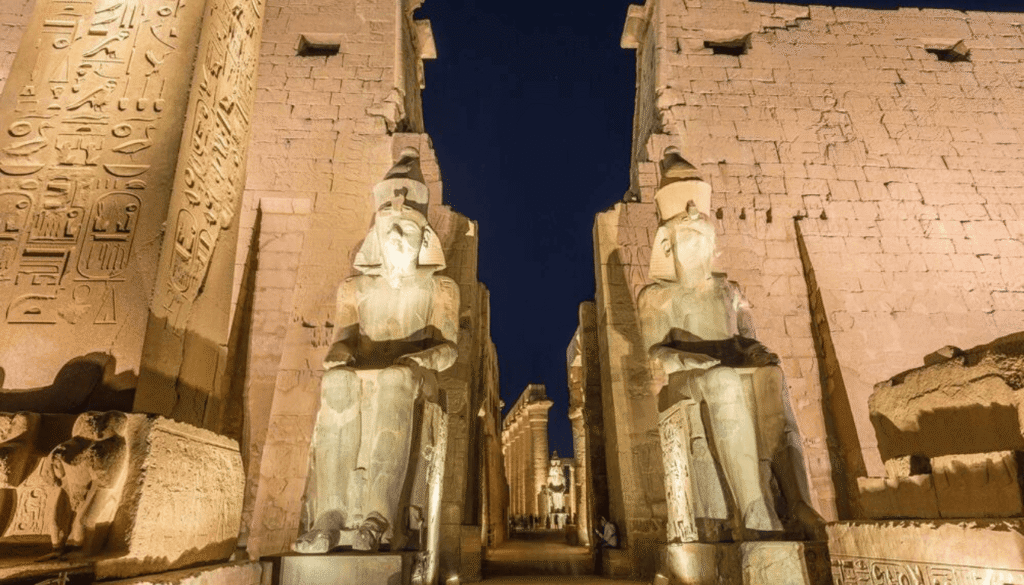
Picture this: you’re standing on the eastern shore of the Nile, watching the sun dip below the desert horizon, painting the sky in shades of amber and rose. Behind you, colossal statues of Ramesses II emerge from the shadows, their stone faces catching the last golden rays of daylight. This is Luxor—a city where 3,000 years of history aren’t locked away in glass cases but spread out beneath your feet, towering above your head, and whispering through every weathered hieroglyph.
What sets Luxor Temple apart from every other ancient monument you’ll encounter along the Nile is how it transforms after dark. While most archaeological sites grow quiet and close their gates at sunset, Luxor Temple Egypt comes alive under a carefully orchestrated display of artificial lights that turn the sandstone columns into glowing pillars of honey and gold. The temple doesn’t just sit there like a relic—it performs, casting dramatic shadows that dance across courtyards where pharaohs once walked.
This guide takes you beyond the typical tourist checklist. We’re exploring the architectural philosophy that makes this temple unlike any other Egyptian sanctuary, uncovering the secrets of the legendary Opet Festival that once brought the entire city to a standstill, and sharing the practical logistics you’ll need for visiting in 2026. Whether you’re a history enthusiast planning your first trip to Egypt or a seasoned traveler looking to understand what you’re actually seeing, you’re about to discover why Luxor Temple remains one of the most enchanting structures ever built.
“Amazing Local’s Guide to Khan El Khalili Bazaar How to Visit in 5 Steps.”
The Enigma of Kingship: Why Was Luxor Temple Built?
Here’s where Luxor Temple breaks every rule you thought you knew about ancient Egyptian religion. Walk into almost any other temple along the Nile—Karnak, Edfu, Dendera—and you’ll find shrines dedicated to specific gods. Hathor gets her temple. Horus gets his. But Luxor Temple? It’s dedicated to something far more abstract and, frankly, more fascinating: the very concept of kingship itself.
The temple served as the physical embodiment of the Royal Ka, that divine spark of life-force that supposedly flowed through every legitimate pharaoh. Think of it as the spiritual DNA that gave kings the right to rule the Two Lands and maintain Ma’at—that delicate cosmic balance between order and chaos that obsessed the ancient Egyptians. Without the Royal Ka, you were just another guy with a crown. With it, you were a living god responsible for keeping the universe from unraveling.
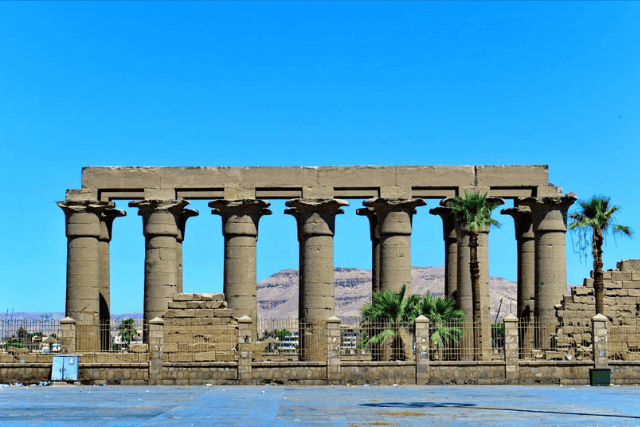
So who actually built this extraordinary monument? The story spans centuries. While archaeological evidence suggests some Middle Kingdom structures might have existed on this spot, the temple we see today was primarily the vision of Amenhotep III, one of Egypt’s most prolific builders during the 18th Dynasty. He constructed the sanctuary, the stunning colonnade, and the sun court that still takes your breath away when you first glimpse it.
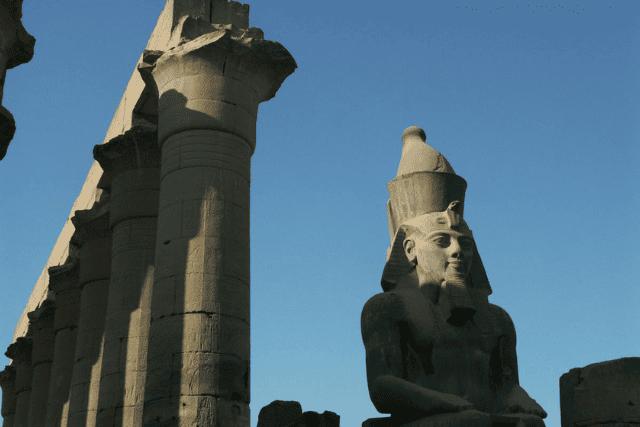
But Amenhotep didn’t get to finish his masterpiece. The boy-king Tutankhamun later decorated the colonnade with those magnificent Opet Festival reliefs we’ll discuss in a moment. Then came Ramesses II—never one to miss an opportunity for self-promotion—who added the massive forecourt, the towering pylons at the entrance, and, of course, those six colossal statues of himself that greet every visitor. Only two remain standing today, but trust me, they’re more than enough to make you feel small.
What’s particularly intriguing is how even foreign conquerors recognized the temple’s legitimizing power. Alexander the Great built a shrine here after conquering Egypt, essentially saying, “See? The Royal Ka accepts me too.” Later, the Romans converted one chamber into a chapel, covering ancient Egyptian scenes with Christian frescos. They understood that controlling Luxor Temple meant controlling the symbolic heart of Egyptian kingship.
This brings us to one of the temple’s most politically charged chapters. During the 19th Dynasty, Egypt faced what historians call a “legitimacy crisis.” Kings like Horemheb and Ramesses I had seized power without royal bloodlines—they were military commanders, not princes. How do you convince an entire nation that you’re divinely chosen when everyone knows you’re not?
The answer was Luxor Temple. These new pharaohs used elaborate rituals here to propagandize the idea that the Royal Ka had been mystically transferred to them, that they were spiritually reborn as legitimate rulers. The temple became a stage for political theater, where commoners and nobles alike could witness the “proof” of divine approval. It’s a reminder that even in ancient times, architecture was often about power and perception as much as devotion.
“Private Tour Luxor : Luxor Temple and Karnak Temple.”
The Opet Festival: Re-Creating the Cosmos
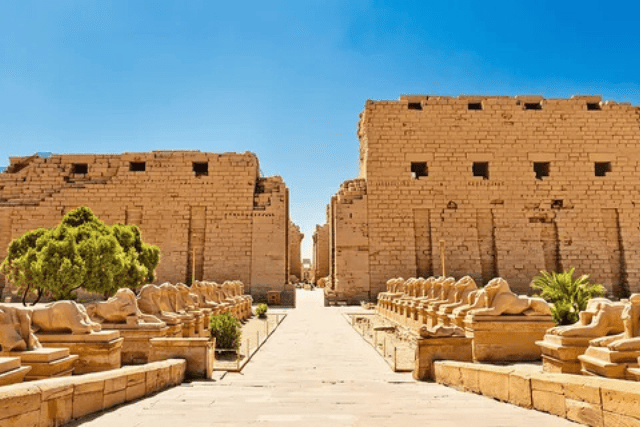
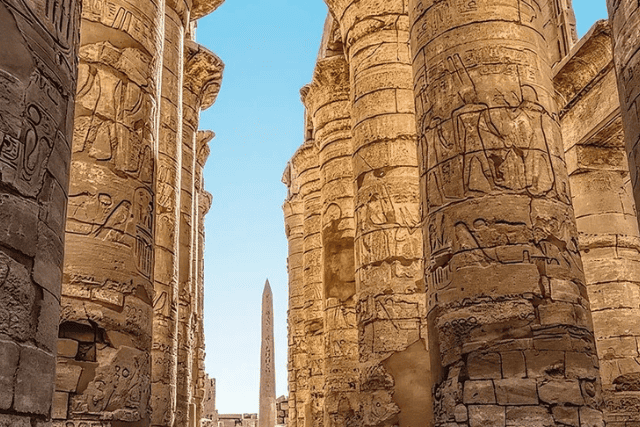
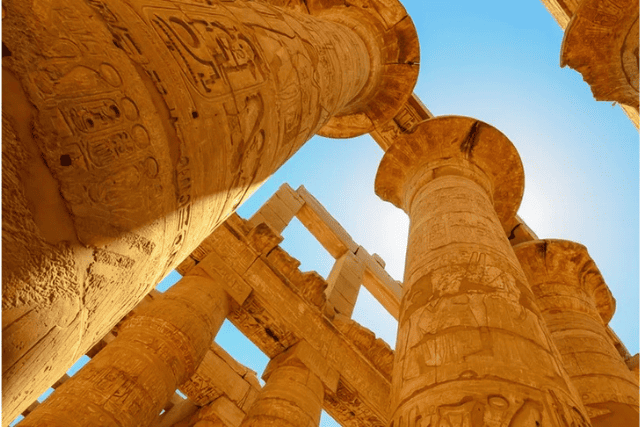
If you want to understand what Luxor Temple was really for, you need to understand the Opet Festival—the most important annual celebration in ancient Thebes. This wasn’t some quiet religious ceremony tucked away from public view. We’re talking about a massive, weeks-long extravaganza that brought the entire city together in a riot of color, music, and sacred ritual.
The festival celebrated two things simultaneously: the annual Nile inundation that brought life-giving floodwaters to Egypt’s fields, and the mystical rebirth of the pharaoh through his union with Amun-Re, the king of the gods. Think of it as part religious procession, part carnival, and part cosmic reset button that renewed the divine contract between the gods, the king, and the people.
Here’s how it worked. The sacred Theban Triad—statues of Amun, his consort Mut, and their son Khonsu—were removed from their shrines at Karnak Temple and placed inside elaborate barques, which were basically portable wooden shrines covered in gold and precious stones. Then the real spectacle began.
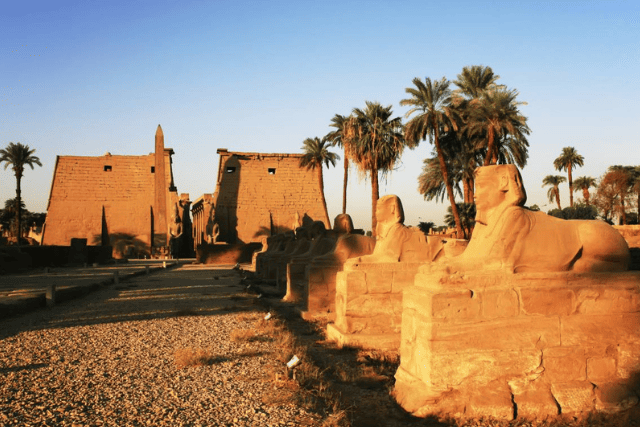
The procession had two possible routes, and both were equally magnificent. The overland route followed the Avenue of Sphinxes, that incredible 2.7-kilometer pathway lined with hundreds of sphinx statues that connected Karnak to Luxor Temple. The procession would stop at six way stations along the route, each a mini-temple where priests performed rituals and the crowd pressed in to catch a glimpse of the sacred barques.
But the alternative route was even more dramatic. The barques were loaded onto decorated Nile River temples—floating shrines mounted on colorful boats that sailed upstream from Karnak to Luxor, accompanied by smaller vessels filled with musicians, dancers, and singing priests. Can you imagine the scene? Incense smoke drifting across the water, the beating of drums echoing off the riverbanks, thousands of people lining the shores to witness this floating pageant of divine power.
The festival lasted anywhere from 11 to 27 days depending on the dynasty, and everyone participated. The pharaoh himself led the ceremonies, but soldiers, craftsmen, farmers, and merchants all joined the procession. It was one of the few times when the rigid social hierarchies of ancient Egypt loosened up a bit, when commoners could feel directly connected to the cosmic drama unfolding before them.
Where can you see all this depicted today? Head straight to the Colonnade of Tutankhamun inside Luxor Temple. The walls are covered with incredibly detailed reliefs showing every aspect of the Opet Festival—the barques being carried by priests, the musicians with their harps and drums, the rows of soldiers in precise formation, even the ordinary people celebrating in the streets. These aren’t just decorative carvings; they’re a visual documentary of ancient Egypt’s most important public ritual.
Walking through that colonnade at night, with the reliefs illuminated by carefully placed lights, you can almost hear the ancient celebrations echoing through time. It’s one of those rare moments where the gap between past and present seems to collapse entirely.
Luxor at Night: A Masterclass in Atmosphere
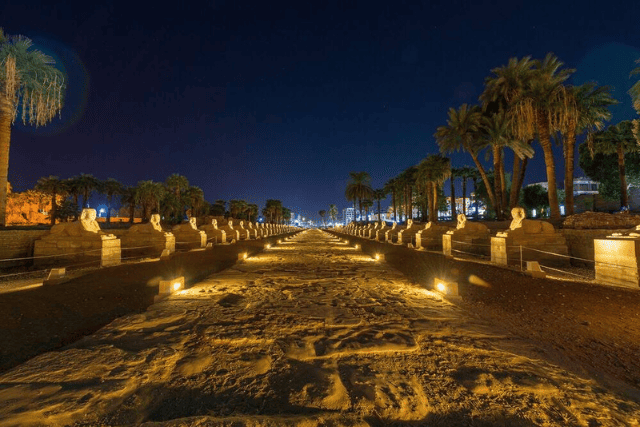
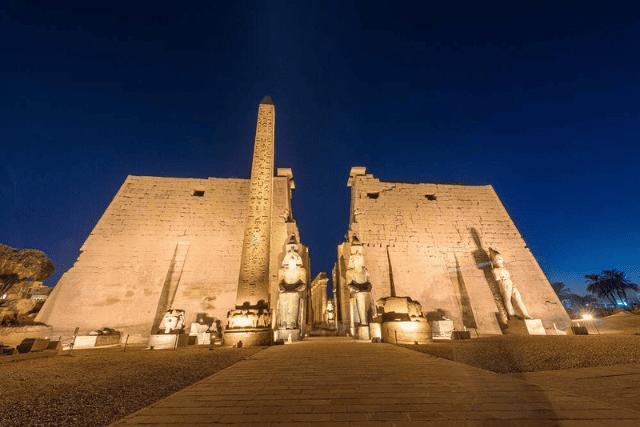
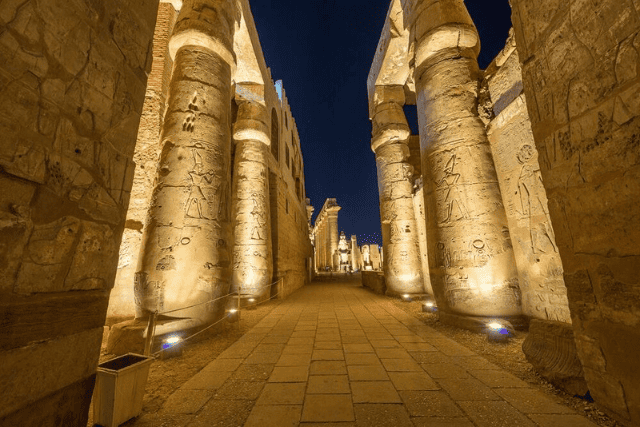
Let’s settle a debate that every Egypt traveler eventually faces: should you visit Luxor Temple during the day or at night? The honest answer is both, but if you only have time for one, the nighttime experience is absolutely unforgettable.
Here’s the thing about Karnak Temple—it’s massive, sprawling across 200 acres with forests of columns and chambers that seem to go on forever. You need bright daylight to appreciate that immense scale, to see the delicate hieroglyphs carved into every surface, to understand the sheer architectural ambition of the pharaohs. Karnak demands sunlight.
But Luxor Temple is different. It’s more compact, more intimate, and at night it becomes something else entirely—a theatrical masterpiece where shadows and golden light transform sandstone into something magical. The temple stays open later than most sites, with last entry at 7 PM, giving you plenty of time to experience it both at twilight and in full darkness.
The lighting design is remarkably subtle compared to some of the more garish illumination you’ll find at other tourist sites. Instead of harsh floodlights, the temple is bathed in warm amber tones that highlight the natural color of the sandstone and create pools of shadow in the courtyards. The result is atmospheric rather than flashy—you feel like you’re sneaking through an ancient sanctuary after hours, not watching a Las Vegas show.
Now, about the Karnak Sound and Light Show—this is where opinions get divided. The show costs somewhere between $51 and $76 depending on your group size and which language presentation you choose. It offers a captivating audio-visual journey through Egyptian legends, with different sections of the temple lighting up as a narrator tells stories of gods and pharaohs.
Some visitors absolutely love it, finding the combination of lights, music, and storytelling to be an emotional highlight of their trip. But others—and I’m being honest here—find the LED lighting a bit tacky and prefer experiencing Karnak’s grandeur in natural daylight where you can actually see the fine architectural details that get washed out by colored lights. If you’re a serious photographer or architecture enthusiast, you’ll probably fall into the second camp.
Speaking of photography, let me share some hard-won night photography tips for capturing Luxor Temple. The absolute best spot is the Hypostyle Hall at Karnak if you can catch it in late afternoon when shafts of light stream through the clerestory windows, creating those magical dusty beams that photographers dream about. But for Luxor Temple specifically, arrive just before sunset to catch the twilight hour—that brief window when there’s still blue in the sky but the temple lights have been turned on.
Technical settings matter here. Use a small f-stop (around f/8 to f/11) to keep both the foreground and background sharp, and don’t be afraid to push your ISO up to 1600 or even 3200 on modern cameras. The grain will be minimal, and you’ll get those atmospheric shots without needing a tripod—though if you have one, bring it. And please, turn off your flash. It destroys the natural play of shadows and light that makes these nighttime scenes so compelling.
One last tip: the view from the Luxor Corniche looking back at the temple is spectacular at night, with the illuminated pylons reflecting in the Nile if the water is calm. It’s about a 10-minute walk from the temple entrance, and absolutely worth it for that postcard-perfect shot.
The “Crowd-Beat” Strategy: Logistics & Timings
Let me share something that most guidebooks won’t tell you: timing is everything when it comes to actually enjoying Luxor’s monuments instead of fighting through crowds of tour groups. I’ve learned this through trial and error, and these strategies will save your sanity.
The sweet spot for visiting Luxor Temple is between 2 PM and 3 PM. Here’s why: the massive coach tours that arrive from Hurghada and other Red Sea resorts typically hit the temple in the morning, between 9 AM and noon. They have lunch, then head to Karnak or the West Bank. Meanwhile, the afternoon tour groups haven’t arrived yet—they’re still finishing lunch or visiting other sites. That 2-3 PM window is remarkably peaceful, especially on weekdays.
For the Valley of the Kings on the West Bank, you want to be there right when it opens at 6 AM. Yes, it’s early, and yes, it means cutting breakfast short at your hotel. But by 9 AM, that valley becomes an oven—both temperature-wise and crowd-wise. The tour buses arrive in waves, filling the already-hot tombs with bodies that make the temperature even more unbearable. Get there early, see three tombs while you’re fresh and the air is still relatively cool, and be back at your hotel for a swim by 10 AM.
But here’s the real insider knowledge: Luxor has several incredible sites that never get crowded because they’re slightly off the main tourist circuit. The Valley of the Nobles features tombs with some of the most vivid, well-preserved paintings in Egypt—scenes of daily life, farming, fishing, and feasting that are far more relatable than the religious iconography in royal tombs. You’ll often have entire tombs to yourself.
Deir el-Medina, the workers’ village where the craftsmen who built the royal tombs lived, offers fascinating insights into ordinary ancient Egyptian life. The tombs here are smaller but exquisitely decorated, and because it requires a separate ticket and a bit of extra driving, most tour groups skip it entirely.
Then there’s Medinet Habu, Ramesses III’s memorial temple, which rivals Karnak in architectural sophistication but sees maybe 10% of the visitors. The reliefs depicting naval battles are unlike anything else in Egypt, and you can wander the enormous complex in blessed solitude.
And my personal favorite underrated site? The Ramesseum, Ramesses II’s memorial temple. It’s Luxor’s most underrated attraction, featuring a partially collapsed colossus that inspired Shelley’s “Ozymandias” poem, beautiful astronomical ceilings, and—here’s the kicker—it’s technically open 24 hours.
Getting around Luxor requires different strategies for the East and West Banks. The East Bank (where Luxor Temple and Karnak are located) is compact enough to walk, though it’s hot. For the West Bank, where sites are spread across miles of desert, you have options. The local ferry crossing from the East Bank is an adventure in itself—it costs about 5 Egyptian pounds, takes 10 minutes, and gives you beautiful Nile views. Once on the West Bank, hire a taxi for the day (negotiate a price of around 400-600 EGP for 4-5 hours), use Uber or Careem (both work in Luxor now), or rent a bicycle if you’re feeling adventurous and it’s not summer.
Luxor Survival FAQ
What are the current entry fees for foreigners?
As of the latest updates heading into 2026, expect to pay approximately 500 EGP for Luxor Temple and 600 EGP for Karnak Temple. These prices have been subject to increases, so budget a bit extra just in case. Student discounts are available with valid international student ID cards. The Valley of the Kings is separate and costs around 500 EGP for access to three tombs; special tombs like Tutankhamun’s require additional tickets.
What are the best seasonal months to visit?
The ideal windows are February through April and late September through early November. During these months, temperatures are manageable—warm but not scorching—and you avoid both the peak summer heat and the winter crowds.
Summer (June through August) sees temperatures regularly exceeding 40°C (104°F), which makes exploring temples genuinely dangerous during midday hours. December through January brings cooler weather but also the biggest crowds, as European visitors escape winter and prices increase accordingly.
The shoulder seasons give you that perfect balance: smaller crowds, reasonable prices, and weather that lets you actually enjoy standing in ancient courtyards without feeling like you’re melting into the sandstone.
Connecting the Dots of Ancient Thebes
Standing in the Court of Ramesses II at Luxor Temple, surrounded by columns that have witnessed the rise and fall of empires, you start to understand something profound. This isn’t just a collection of old stones arranged prettily along the Nile. It’s a complete theological and political statement carved into the landscape, a physical manifestation of how the ancient Egyptians understood power, divinity, and the delicate balance required to keep civilization running.
To truly grasp Luxor—the city the Greeks called Thebes, the heart of the New Kingdom’s power—you need to visit both temples. Karnak shows you the monumental religious ambition of the pharaohs, that relentless drive to build higher, grander, more elaborate shrines to the gods. It’s about scale and accumulation, each pharaoh trying to outdo his predecessors.
But Luxor Temple tells a different story. It’s about the intimate connection between the divine and the earthly, about the annual renewal of cosmic order through ritual, about how the concept of legitimate kingship was literally built into stone and ceremony. It’s smaller, more focused, and perhaps because of that, more emotionally resonant.
What makes Luxor Temple the symbol of eternal beauty on the Nile isn’t just its physical grace—though those illuminated columns reflected in the river at night are genuinely breathtaking. It’s how the temple has remained woven into the fabric of life here for three millennia. A mosque still functions inside the temple complex, built centuries ago when the temple was buried in sand. Modern Egyptians walk past it daily on their way to work. Children play in the squares nearby, just as they did when this place was new.
The temple hasn’t been frozen in time like a museum piece. It’s adapted, survived, and continues to tell its story to anyone willing to listen.
So here’s my final recommendation: book a nighttime Nile cruise. It doesn’t have to be fancy—a simple felucca sailboat will do, though the modern cruise ships offer their own charms. But get out on the water after dark, when Luxor Temple and Karnak are both illuminated, and drift between them on the same river that brought the sacred barques during the Opet Festival.
From that perspective, with the cool breeze off the water and the monuments glowing on both banks, you’ll understand why this place has captivated travelers for thousands of years. The Nile flows past, just as it always has, and Luxor Temple stands eternal on its shore—a symbol of beauty, power, and the enduring human need to create something that outlasts us all.
Pack your camera, bring your curiosity, and prepare to be astonished. Luxor Temple is waiting.
“From riverside elegance to boutique stays, Luxor is your gateway to history.”
Pingback: Best 5 Reasons to Visit The Unfinished Obelisk Aswan: A Glimpse into Ancient Craftsmanship. - Discover Egypt Now