
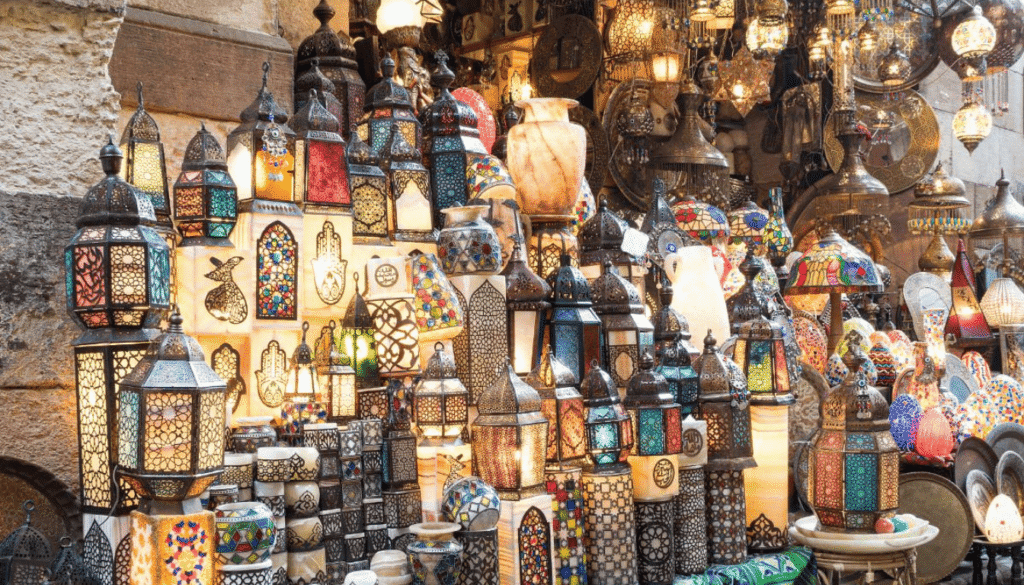
Stepping Into 600 Years of Living History
Picture this: narrow alleyways where sunlight barely reaches the ground, the scent of jasmine mixing with freshly ground coffee, vendors calling out prices in Arabic while tourists haggle in broken English, and the constant rhythm of metalworkers hammering copper sheets into intricate lanterns. This is Khan El Khalili—Cairo’s beating commercial heart that’s been pulsing since 1382.
A Local’s Guide to Khan El Khalili Bazaar starts with understanding what you’re actually stepping into. This isn’t your sanitized shopping mall or curated tourist attraction. Khan El Khalili is a living museum where the medieval and modern collide in the most chaotic, beautiful way possible. Established during the Mamluk era by Emir Djaharks el-Khalili, this sprawling marketplace has survived plagues, earthquakes, political upheavals, and the occasional tourist meltdown over fake papyrus.
The bazaar sits within Historic Cairo, a UNESCO World Heritage Site that contains the highest concentration of medieval Islamic architecture anywhere on Earth. But here’s the thing—Khan El Khalili isn’t some roped-off monument you observe from a distance. It’s a massive hodgepodge where grandmothers buy their vegetables next to tourists hunting for souvenirs, where centuries-old mosques share walls with shops selling Chinese-made “Egyptian” trinkets, and where the line between authentic and replica blurs like Cairo’s perpetually dusty horizon.
When you visit Khan El Khalili, you’re not just shopping. You’re participating in a commercial tradition older than the discovery of America. The same trade routes that brought spices from India and silk from China six centuries ago now bring tour buses from Germany and backpackers from Australia. The methods have changed, but the essence remains: Khan El Khalili Cairo shopping is still about connection, negotiation, and the thrill of finding something unique in the controlled chaos.
“Tap here and learn more about Amazing Abu Dabbab Bay: Swim with Sea Turtles and Dugongs.”
The Shopping Hit List: 8 Treasures Worth Your Baggage Space
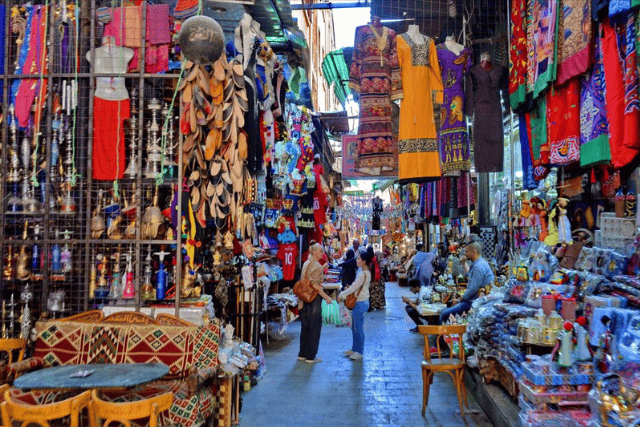
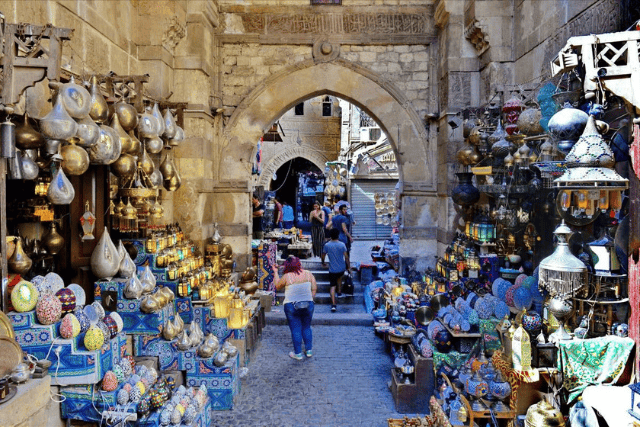
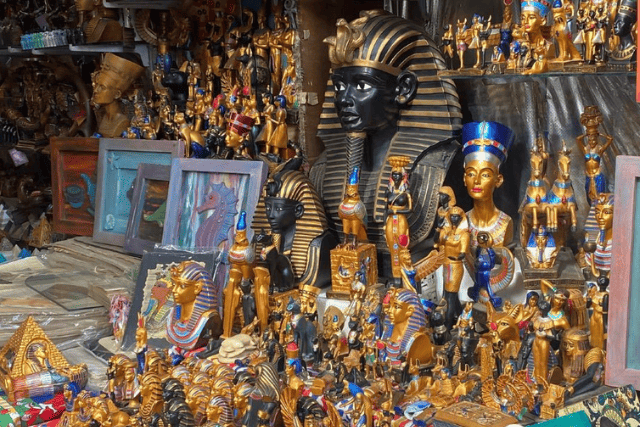
Let’s be honest—most of what you’ll see in Khan El Khalili is forgettable tourist fodder. Plastic pyramids, machine-made scarves with questionable hieroglyphics, and those bizarre light-up Sphinx figurines that make you question humanity’s collective taste. But dig deeper, ask the right questions, and you’ll uncover genuine treasures that justify the extra baggage fees.
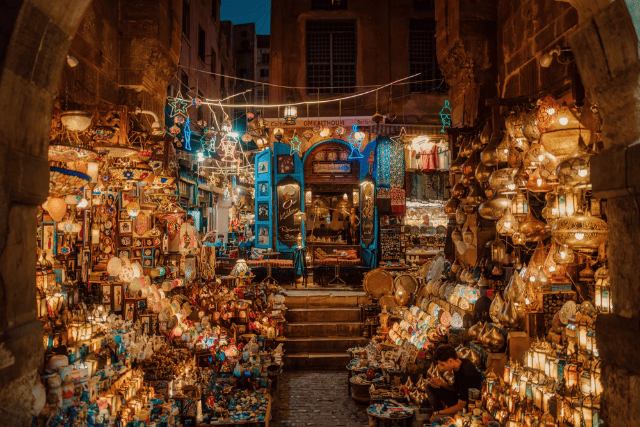
Metal Lamps & Lanterns: Head to Bab al-Ghuri, the southern section of the bazaar, where metalworkers have been hammering copper and brass for generations. The sound alone is worth the walk—a metallic symphony that’s been playing the same tune since the Fatimid dynasty. Look for the traditional fanoos (the iconic Ramadan lantern with colored glass panels). Real ones are heavy, slightly irregular, and expensive. If it’s lightweight and perfect, it was probably made in a Chinese factory last month. A genuine hand-hammered lantern runs between 500-1,500 EGP depending on size and intricacy. The craftsmanship involves heating, hammering, cooling, and repeating—sometimes for days—to create those geometric patterns that catch light like frozen fire.
Wooden Mother-of-Pearl Boxes: These aren’t just pretty containers; they’re the product of painstaking artistry. Craftsmen cut tiny pieces of natural mother-of-pearl by hand and embed them into beech wood using white resin. The process takes hours for a single small box. Run your fingers over the surface—authentic pieces have slight irregularities where the pearl sits in the wood, and the patterns tell stories: geometric designs representing Islamic art principles, or floral motifs borrowed from Ottoman influences. Expect to pay 300-800 EGP for a quality piece.
Personalized Leather Journals: Forget those mass-produced notebooks. The 80-year-old Abd El-Zaher Bookshop (ask any vendor for directions—everyone knows it) offers genuine leather journals with on-the-spot name stamping. Watch the owner heat the metal stamps over a small flame and press your name into the leather with practiced precision. These journals run 150-400 EGP, and they smell exactly like leather should—earthy and rich, not like chemicals.
Natural Gemstones & Crystals: This is where Khan El Khalili Bazaar guide wisdom becomes crucial. The gemstone shops are a minefield of glass fakes and synthetic stones. Two names to remember: Ahmed’s shop near the main square (look for the blue awning) and Essam’s store on the eastern edge—reportedly the largest natural stone importer in the bazaar. They carry authentic Amethyst from Brazilian and Zambian sources, Rose Quartz with that characteristic translucent pink, and Lapis Lazuli with genuine gold pyrite flecks. Real stones feel cool to the touch even in Cairo’s heat and have natural inclusions—tiny imperfections that prove they came from the earth, not a laboratory. Prices vary wildly: 200-2,000 EGP depending on size and stone type.
Khayamiya (Tentmaker Appliqué): Here’s an insider secret most tourists miss. The khayamiya sold in Khan El Khalili’s main corridors is usually machine-printed garbage from overseas. Real tentmaker art requires a 15-minute walk to Sharia al-Khayamiya (Tentmaker’s Street), just south of Bab Zuweila. There, you’ll find workshops where men hand-stitch colorful geometric patterns piece by piece—the same technique used to create ceremonial tents for centuries. Turn the fabric over: authentic pieces show careful stitching on the reverse side, while printed versions have flat, uniform backs. A genuine khayamiya cushion cover costs 400-1,000 EGP, but you’re buying art that takes days to complete.
Oud & Incense Burners: Oud (agarwood) is the Middle East’s luxury scent—rich, woody, almost hypnotic. The ritual involves burning small chips on hot coal in specialized burners. Basic metal lantern-style burners run 100-300 EGP, but if you want something special, look for alabaster burners with their characteristic translucent quality and natural veining. Light from the burning coal glows through the stone, creating an ambiance that justified alabaster’s historical status as precious material. Quality oud chips range from 200-1,000 EGP depending on source and grade.
Egyptian Spices: Skip the saffron unless you’re a millionaire—what they’re selling is usually safflower. Instead, focus on two Egyptian specialties: local cumin (kamoun) with its earthy, slightly bitter depth that makes store-bought versions taste like cardboard, and hibiscus (karkadeh) for brewing into deep red tea loaded with antioxidants. These spices have been traded through Khan El Khalili since medieval caravans first brought them from Upper Egypt. Pay 50-150 EGP for quality amounts that’ll last months.
Alabaster Vases: Egyptian alabaster from Luxor and Aswan quarries has distinctive natural veins and patterns—honey-colored waves frozen in stone. Hold quality pieces up to light; they should glow with translucency. Machine-carved pieces from less reputable sources look uniform and lifeless. Genuine alabaster vases range from 300-1,500 EGP, but they’re functional art that ancient Egyptians would recognize.
The Art of the Deal: Mastering “The Ping-Pong Game”
Let me destroy a myth right now: those prices vendors quote first aren’t real. They’re opening gambits in a negotiation ritual as old as commerce itself. When a shop owner says “This beautiful lantern, for you my friend, only 1,000 pounds,” he’s already inflated that price by 50-100% because he knows you’re going to negotiate. Not bargaining isn’t being polite—it’s being a sucker.
Understanding how to visit Khan El Khalili means understanding that bargaining isn’t confrontational; it’s collaborative theater. Both parties know the script. The vendor plays the generous host offering “special price, just for you.” You play the shrewd buyer who’s “seen better prices elsewhere.” Everyone performs their role, and everyone leaves satisfied.
The 30-50% Rule: When you hear that first price, counter with 30-50% of what they quoted. Yes, it feels rude. Do it anyway. If they say 1,000 EGP, you say 400 EGP. They’ll look shocked—hand over heart, pained expression, maybe some muttering about family to feed. Don’t panic. This is part of the performance. They’ll counter higher, you’ll edge slightly up, and you’ll eventually meet somewhere in the middle—typically 50-60% of the original asking price. That’s the real price.
Body Language & Tone: The secret weapon is maintaining friendly energy throughout the negotiation. Smile. Joke around. Compliment the craftsmanship before discussing price. When you counter low, do it with that “come on, we both know” attitude—feigned shock is part of the game, but genuine anger means you’ve pushed too far or misread the situation. The best deals happen when negotiation feels like two friends teasing each other, not enemies battling.
The Power of Walking Away: This is your nuclear option. When negotiations stall and you can’t reach agreement, smile, say “shukran” (thank you), and head toward the exit. About 70% of the time, you’ll hear “okay, okay, come back—what’s your final price?” before you’ve taken five steps. They’d rather make a smaller profit than no profit. But here’s the critical part: only walk away if you’re genuinely willing to leave without the item. False bluffs are obvious and just waste everyone’s time.
Essential Arabic Phrases: You don’t need fluency, but a few phrases dramatically improve your Khan El Khalili experience and show respect:
- As-salamu alaykum (Hello—literally “Peace be upon you”): Open every interaction with this. The response is “Wa-alaikum as-salaam.”
- Shukran (Thank you): Use liberally and sincerely.
- Kam al-thaman? (How much?): Your most important phrase.
- La shukran (No, thank you): Firm but polite refusal when vendors get pushy.
- Mumkin takhfeef? (Can you reduce the price?): Starts the negotiation dance.
Vendors light up when tourists attempt Arabic, even badly pronounced Arabic. That small effort often translates to better initial prices and friendlier negotiations.
Fueling the Adventure: Where to Eat & Drink
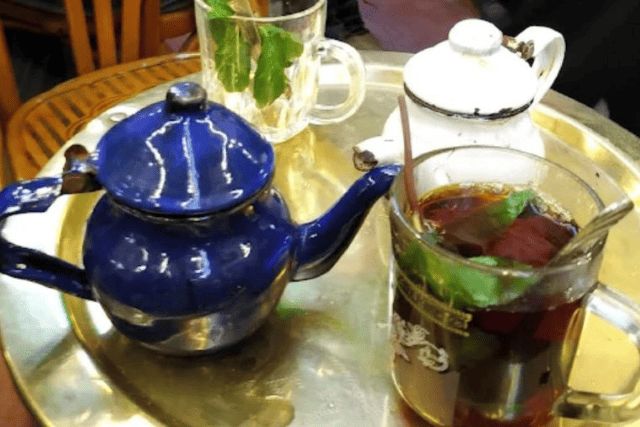
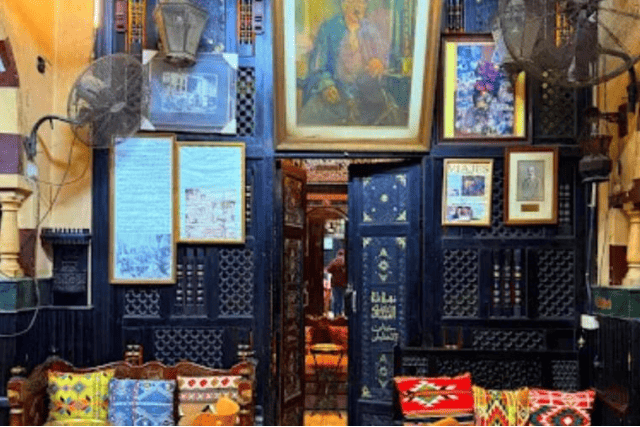
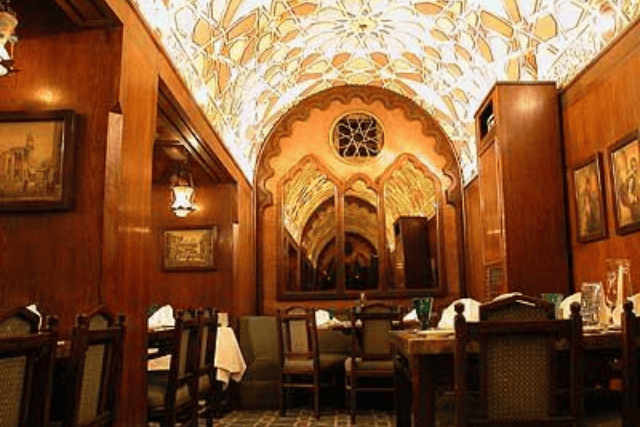
Shopping hungry is a rookie mistake. Shopping dehydrated in Cairo’s heat is borderline dangerous. Fortunately, Khan El Khalili and its immediate surroundings offer everything from legendary cafés to street food that’ll rewire your understanding of Middle Eastern flavors.
El Fishawy Café: You can’t visit Khan El Khalili without stopping at Fishawi’s. This 200-year-old institution defines “atmospheric”—ornate mirrors catching lantern light, worn wooden chairs that have supported countless thousands of customers, and mint tea served in glasses that have been washed and refilled since your great-grandparents were young. Egypt’s Nobel Prize-winning author Naguib Mahfouz spent countless hours here, and you can feel the creative energy still lingering in the crowded tables. Order the traditional mint tea (shai bil-nana) and settle in for people-watching that’s better than any museum. The tea costs around 20-40 EGP, and while it’s touristy, it’s touristy for good reason. Best time to visit: late afternoon when the light slants just right and the evening crowds haven’t yet descended.
Naguib Mahfouz Café: If El Fishawy feels like organized chaos, the Naguib Mahfouz Café is its sophisticated cousin. Managed by the Oberoi hotel group, this venue offers air-conditioning, table service, and a menu that goes beyond tea and shisha. The décor pays homage to the Nobel laureate with book-lined walls and quiet corners where you can actually have a conversation without shouting. Order the grilled kofta or stuffed pigeon if you want a proper meal. Prices run higher—expect 200-400 EGP per person—but you’re paying for respite from the sensory assault of the bazaar. When you need to escape the crowds and heat for an hour, this is your sanctuary.
The Street Food Scene: Real Cairo flavor lives in the street food, and Khan El Khalili’s edges offer excellent options. Hunt down Hawawshi—spiced minced meat mixed with vegetables, stuffed inside pita bread, and baked until the bread is crispy and the filling is juicy. It costs 30-60 EGP and constitutes a complete meal. Near the main square, several carts sell Koshari, Egypt’s national dish: a carbohydrate explosion of rice, lentils, pasta, and chickpeas topped with tomato sauce and crispy fried onions. It’s cheap (20-40 EGP), filling, and surprisingly delicious despite sounding like someone emptied their pantry into a bowl.
Local Meats: For sit-down meat meals, ask directions to El Dahhan (literally “The Oiler”). This no-frills restaurant specializes in kebab (grilled meat chunks) and kofta (spiced ground meat on skewers) served with tahini, fresh bread, and grilled vegetables. The meat is high quality, the portions are generous, and the price is fair (100-200 EGP per person). It’s where locals eat when they want protein without tourist markup.
Heritage Walk: Beyond the Stalls
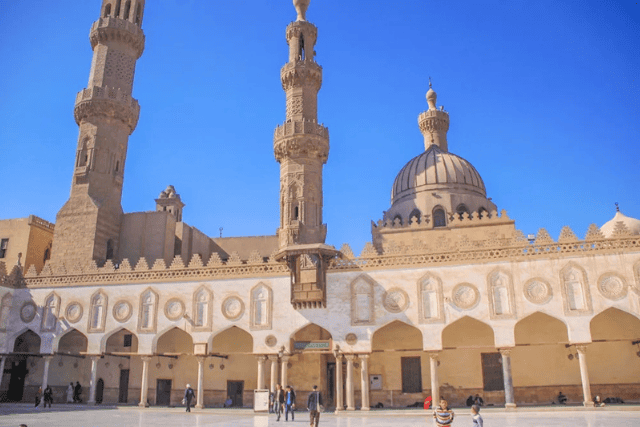
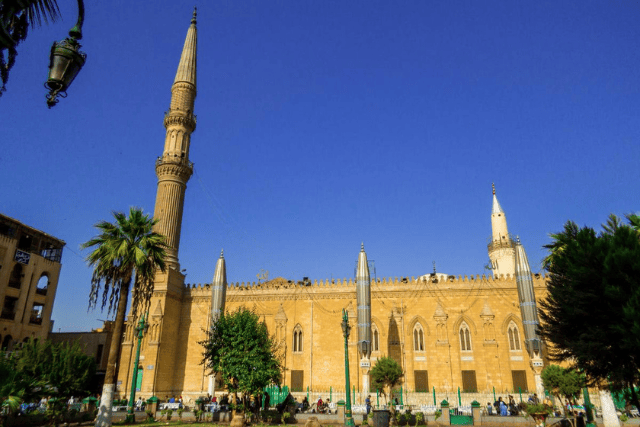
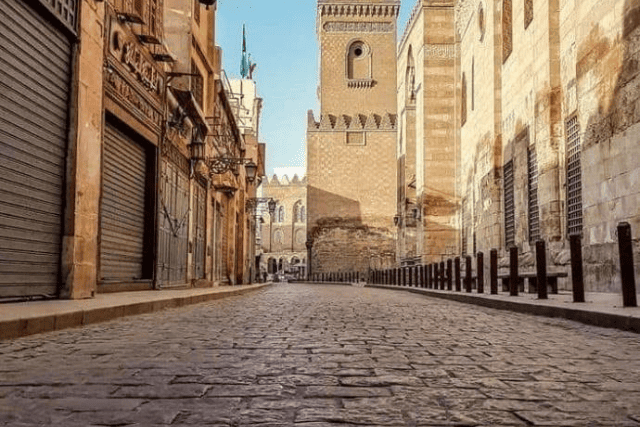
Khan El Khalili Cairo shopping is fantastic, but you’d be missing the bigger picture if you didn’t explore the architectural treasures surrounding the bazaar. Historic Cairo earned its UNESCO designation because of the density of medieval Islamic architecture—and you’re standing in the middle of it.
Al-Muizz Street (Moez Street): This pedestrianized street running north-south past Khan El Khalili contains the highest concentration of medieval Islamic architectural treasures in the world. Not “one of the highest”—THE highest. Walk it slowly and your neck will hurt from looking up at Mamluk-era minarets, Fatimid-era gates, and Ottoman-era sabils (public water fountains). The street is brilliantly restored thanks to Aga Khan Foundation funding, with buildings that show medieval Cairo’s glory without the aggressive vendors. Use it as your navigation spine: Khan El Khalili branches off to the east, and most major landmarks reference their position relative to Al-Muizz.
Al-Azhar Mosque: Founded in 970 CE, Al-Azhar is one of the oldest continuously operating universities in the world and the most prestigious center of Islamic learning. Non-Muslims can visit outside prayer times (confirm hours before going). Remove shoes, dress modestly (shoulders and knees covered; women should cover hair), and move respectfully. The courtyard’s architectural layers tell Cairo’s story: Fatimid foundations, Mamluk additions, Ottoman details. Entry is usually free, though a small donation is appreciated. It’s also the most reliable landmark for giving taxi or Uber directions—everyone knows Al-Azhar.
Al-Hussein Mosque: Located adjacent to Khan El Khalili’s main square, this mosque is particularly significant to Shia Muslims as it’s believed to house the head of Hussein ibn Ali, grandson of Prophet Muhammad. Non-Muslims cannot enter, but the exterior is magnificent—a focal point for local religious life where you’ll see Egyptians praying, socializing, and going about their daily spiritual practice. The square in front becomes especially vibrant during Islamic holidays, particularly Mawlid al-Nabi (the Prophet’s birthday).
The Qalawun Complex: This 13th-century masterpiece is where medieval Islamic architecture reaches its peak. Sultan al-Mansur Qalawun built this complex containing his mausoleum, a madrasa (religious school), and a bimaristan (hospital) that provided free healthcare to Cairo’s poor for centuries. The interiors feature marble columns, intricate geometric patterns, and Gothic-influenced arches—evidence of Crusader architectural ideas flowing back to Cairo through captured craftsmen. The mihrab (prayer niche) is considered one of the finest in existence. Entry costs 100 EGP but includes multiple structures in the area. Go early morning when sunlight streams through mashrabiya (wooden latticed windows) creating those light patterns you’ve seen in Instagram posts—except now you understand their functional purpose was air circulation.
Walk these heritage sites before or after shopping. Morning visits mean better light for photos and fewer crowds. Late afternoon offers golden hour magic, particularly on Al-Muizz Street. Budget 2-3 hours minimum if you’re actually interested in Islamic architecture, or 45 minutes if you’re just checking boxes.
“Tap here and book now Private Half Day Tour to Islamic Cairo.”
Practical Logistics
All the enthusiasm in the world won’t help if you can’t actually find Khan El Khalili, show up at the wrong time, or run out of cash halfway through shopping. Let’s cover the unglamorous but essential details.
Getting There: Take an Uber or taxi to Al-Azhar Mosque—it’s the universal reference point everyone recognizes. From there, use the underground pedestrian passage that leads toward Hussein Square. This passage seems sketchy if you’re not expecting it—dimly lit, echoing footsteps, occasional aggressive vendors—but it’s completely safe and used by locals constantly. Exit the passage and you’ll emerge into the chaos of Hussein Square with Khan El Khalili’s main entrance directly ahead. Metro works too (Al-Attaba station on Line 2), but involves more walking and navigating surface streets. Total cost: 50-150 EGP by Uber depending on Cairo traffic and your starting point.
Best Time to Visit: This is crucial. Khan El Khalili operates on two entirely different atmospheres depending on when you arrive. After 5:30 PM, particularly as evening settles in, the bazaar transforms into an “Arabian Nights” fantasy—hundreds of lanterns glowing, the heat finally breaking, crowds thinning slightly, and the energy shifting from frantic commerce to social atmosphere. Shops stay open until 10 PM or later, especially on weekends. This is prime time for photography and atmosphere.
Alternatively, arrive before 11:00 AM to avoid crowds entirely. Mornings are quieter, vendors are less aggressive (they haven’t been haggling for eight hours yet), and the heat is manageable. You’ll sacrifice some atmosphere but gain elbow room and better negotiating conditions. Avoid Friday mornings when Al-Azhar and Al-Hussein mosques have major prayers—the area becomes extremely crowded with worshippers.
What to Bring: Comfortable closed-toe shoes (alleys have uneven stones and occasional mystery liquids), modest clothing (shoulders and knees covered shows respect and reduces attention), a cross-body bag or secure backpack, your phone loaded with Google Translate and Maps, and more patience than you think you’ll need. Leave expensive jewelry at the hotel—it serves no purpose except making you a target for sales pitches.
How Long: Budget minimum three hours for a meaningful visit—one hour shopping, one hour eating/drinking, one hour exploring heritage sites. Serious shoppers and architecture enthusiasts could easily spend 5-6 hours. The beauty of Khan El Khalili is that there’s no single “right” way to experience it. Some people treat it as pure shopping mission. Others barely buy anything and spend hours photographing architectural details. Both approaches are valid.
Your Five-Step Khan El Khalili Strategy
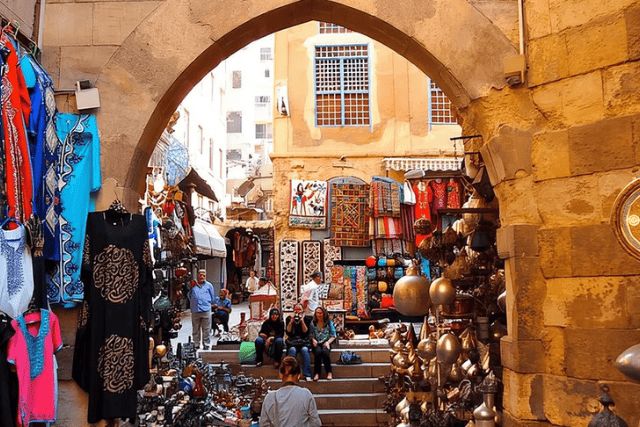
Let’s synthesize everything into an actionable plan you can actually execute:
Step 1 – Arrive Prepared: Time your visit for either early morning (before 11 AM) or early evening (after 5:30 PM). Take Uber to Al-Azhar Mosque, use the underground passage to Hussein Square, and emerge ready to engage. Have Egyptian Pounds cash in mixed denominations, comfortable shoes, and basic Arabic phrases memorized.
Step 2 – Do a Reconnaissance Walk First: Spend 30-45 minutes just walking the main corridors without stopping to shop. This accomplishes three things: you get oriented to the layout, you start seeing price patterns for items you’re interested in, and you identify shops that feel more authentic versus tourist traps. Note locations of interesting workshops, especially in the Bab al-Ghuri metalwork section and near the actual craftspeople.
Step 3 – Target Your Treasures: Based on our shopping hit list, prioritize what genuinely interests you. Going after everything creates exhaustion and bad decisions. Pick 2-3 categories (maybe metal lanterns, leather goods, and spices) and focus there. Ask vendors direct questions: “Is this made in Egypt or China?” “Can I see the stitching on the reverse?” “What makes this piece more expensive than that one?” Quality vendors appreciate informed questions and respond with better service.
Step 4 – Negotiate with Purpose: Apply the 30-50% rule, maintain friendly energy, and don’t be afraid to walk away. Remember that haggling is expected and even enjoyed by vendors when done respectfully. Pay attention to that moment in negotiations when the vendor’s tone shifts from performance to sincerity—that’s usually near the actual price. Complete your shopping in one or two focused sessions rather than constantly circling back, which burns time and energy.
Step 5 – Balance Commerce with Culture: Don’t make Khan El Khalili purely transactional. Stop at El Fishawy for tea and people-watching. Walk Al-Muizz Street to understand the historical context. Peek into workshops where craftspeople are actually making goods. Chat with shop owners about their family businesses—many have fascinating stories of four or five generations in the same stall. The best souvenirs you’ll take home are memories of conversations and moments, not just objects in your luggage.
Khan El Khalili isn’t going to be calm, organized, or predictable. It’s going to be loud, chaotic, overwhelming, and absolutely worth every moment of sensory overload. This is Cairo unfiltered—commercial hustle that’s been perfected over six centuries, medieval architecture standing strong despite modern neglect, and human connection happening in the space between vendor and customer, traveler and local, past and present.
Pack your patience, bring your curiosity, and remember that the “perfect” Khan El Khalili visit isn’t the one where everything goes smoothly—it’s the one where you embrace the beautiful chaos and come away with stories nobody else has. Welcome to 600 years of living history. Welcome to Khan El Khalili.
“Tap here and Discover Egypt’s most iconic landmarks and hidden gems.”
Pingback: Luxor Temple: The Symbol of Eternal Beauty on the Nile. - Discover Egypt Now