
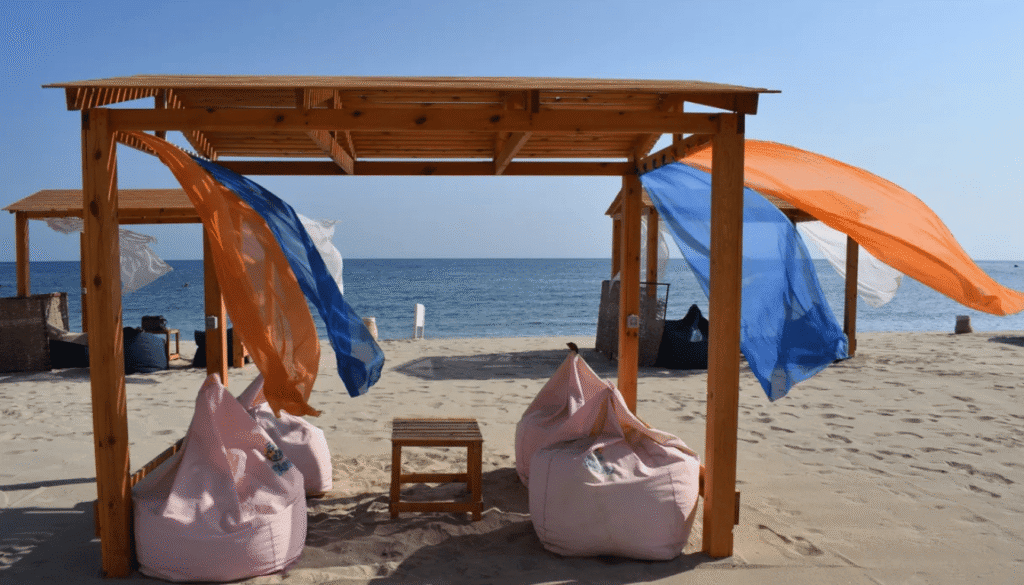
Why Abu Dabbab is the “Home of the Turtles”?
Picture yourself floating in crystal-clear turquoise water, and suddenly, a graceful sea turtle glides past you, seemingly unbothered by your presence. Just meters away, if you’re incredibly lucky, you might spot the gentle shadow of a dugong grazing on the seagrass below. This isn’t a fantasy—it’s a typical morning at Abu Dabbab Bay Egypt, one of the Red Sea’s most extraordinary marine sanctuaries.
Abu Dabbab Bay isn’t your ordinary beach destination. Nestled along Egypt’s southeastern coast, roughly 35 kilometers north of Marsa Alam town and just 30-35 kilometers south of Marsa Alam International Airport, this unique u-shaped natural bay has earned its reputation as one of the world’s last refuges for the critically endangered dugong. While other snorkeling spots might promise occasional wildlife encounters, Abu Dabbab delivers something far more special: a protected marine ecosystem where over 120 resident green turtles have made their permanent home, alongside the famous dugong residents known affectionately as “Dennis” and “Dougal.”
What makes this bay genuinely exceptional is its natural geography. Protected by robust northern and southern coral reefs that act as natural barriers against strong currents and waves, the shallow waters remain remarkably calm throughout the year. This creates perfect conditions for both marine life and snorkelers of all experience levels. Even if you’ve never snorkeled before, Abu Dabbab’s gentle waters and thriving seagrass meadows make it possible to swim with sea turtles Egypt offers, right from the shore—no boat required.
The bay’s seagrass beds, which carpet much of the sandy bottom, serve as a dining hall for these magnificent creatures. These underwater meadows aren’t just beautiful to look at; they’re critical carbon storage systems and feeding grounds that support the entire ecosystem. When you visit Abu Dabbab, you’re not just ticking off a bucket-list experience—you’re witnessing a rare conservation success story in action.
“Tap here and learn more about Blue Hole Dahab: The World’s Most Famous Dive Site.”
Encountering the “Gentle Sea Cows”: Seeing Dugongs
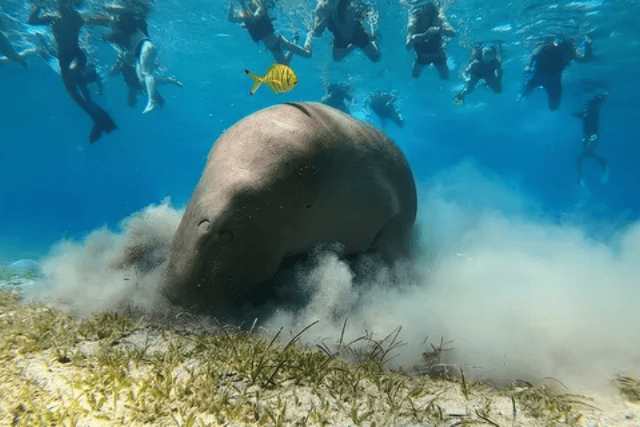
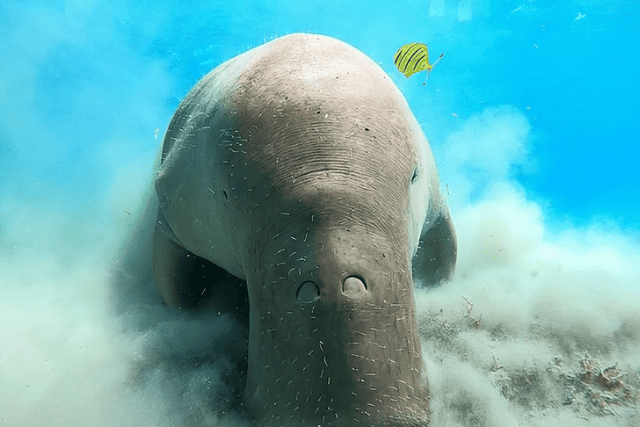
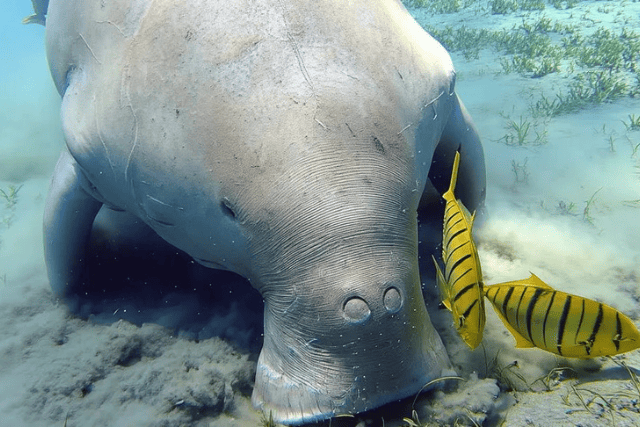
The real celebrities of Abu Dabbab Bay are undoubtedly the dugongs. These peaceful marine mammals, often called “sea cows,” belong to the same order as manatees and are among the most endangered species in the Red Sea. While the global dugong population has declined dramatically due to habitat loss and human activity, Abu Dabbab remains one of the few places on Earth where you can reliably spot them in their natural environment.
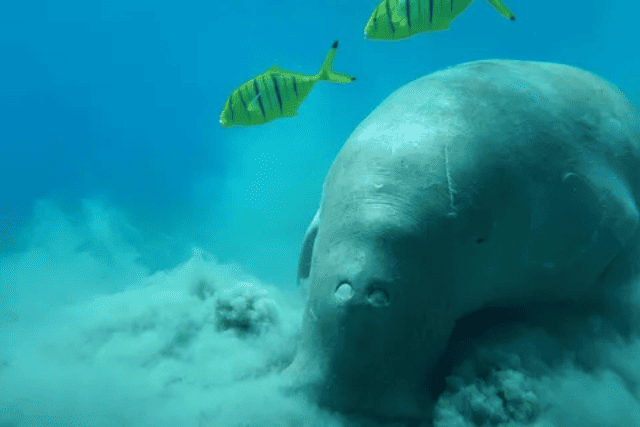
Meet the bay’s most famous residents: Dennis and Dougal. These individual dugongs have been documented by marine biologists and local dive guides for years, making Abu Dabbab their permanent address. Watching a dugong feed is an experience that stays with you forever. These gentle giants can consume between 30 to 40 kilograms of seagrass daily, spending most of their waking hours grazing methodically across the seafloor. They’re essentially underwater gardeners—their constant grazing stimulates new seagrass growth and helps maintain the health of these crucial carbon-storing ecosystems.
However, I need to be honest with you: seeing a dugong is never guaranteed. These are wild animals with their own schedules and preferences. Your best chance of encountering one lies in the central seagrass meadows, particularly at depths between 2 and 4 meters. The dugongs tend to favor these areas because the seagrass is denser and more nutritious there.
Timing matters considerably when it comes to dugong sightings. Based on years of observation data from local guides and marine researchers, the period from August to October offers the highest probability of encounters. During these months, the seagrass beds are at their most abundant following the summer growth season, which naturally attracts the dugongs to spend more time actively feeding in visible areas. Some dive centers report sighting frequencies as high as 60-70% during this peak window, compared to perhaps 30-40% during the winter months when seagrass growth slows.
If you do spot a dugong, remember you’re witnessing something truly remarkable. The Red Sea dugong population is estimated at fewer than 300 individuals, making every sighting precious. These animals can live for 70 years or more, and the individuals at Abu Dabbab may have been visiting this bay for decades.
What’s fascinating about dugong behavior is their routine. They typically feed during daylight hours, surfacing every few minutes to breathe. If you see ripples or disturbances in the shallow water over seagrass beds, stay still and patient—a dugong might be working its way toward you. The key is remaining calm and letting them approach on their own terms. These curious creatures sometimes swim remarkably close to snorkelers who stay still and quiet.
The dugongs’ presence at Abu Dabbab also tells us something important about the bay’s health. These animals are extremely sensitive to environmental changes and human disturbance. The fact that they’ve remained here year after year indicates that conservation efforts are working and the ecosystem remains robust enough to support their demanding dietary needs.
“Tap here and enjoy with Snorkeling Boat Trip with Dugongs and Turtles in Marsa Alam.”
The Turtle Paradise: Species and Nesting Seasons
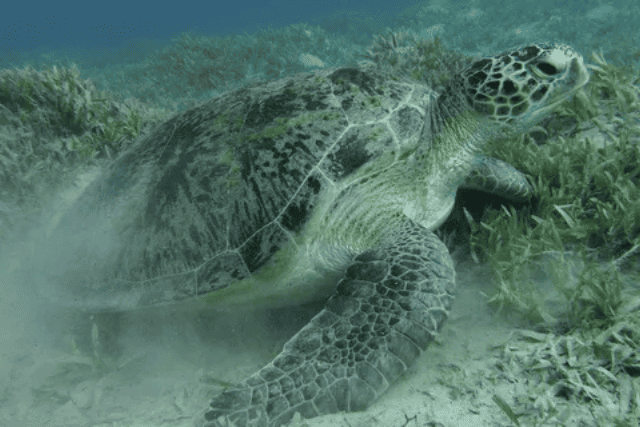
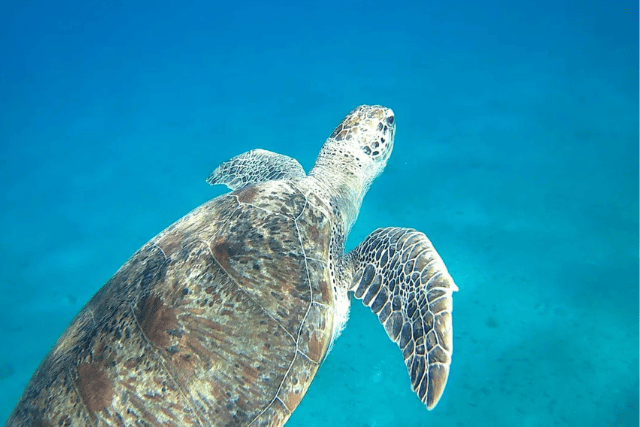
While dugongs might be the rarest sight, sea turtles are the guaranteed stars of Abu Dabbab snorkeling adventures. With over 120 resident turtles documented in the bay, your chances of swimming alongside these ancient mariners are exceptionally high—many visitors report multiple turtle encounters within their first hour of snorkeling.
Abu Dabbab is home to two distinct species, each with its own personality and habitat preferences. The Green Sea Turtle is the species you’ll most commonly encounter, and they’re generally found grazing in the central seagrass meadows alongside the dugongs. These herbivorous turtles spend hours each day munching on seagrass, occasionally surfacing for air with a gentle, almost meditative grace. Adult green turtles can weigh up to 200 kilograms and measure over a meter in length, making them impressive to observe up close.
The second species, the Hawksbill Turtle, prefers different real estate. These smaller, more colorful turtles with their distinctive hawk-like beaks are typically found around the coral reef edges at the north and south ends of the bay. Unlike their vegetarian cousins, hawksbills are carnivores with a particular fondness for sponges. Their beautiful, intricately patterned shells have unfortunately made them targets for illegal trade, contributing to their critically endangered status worldwide.
What makes Abu Dabbab particularly special for sea turtle conservation is its role as both a feeding ground and nesting site. The nesting season runs from late April through early September, with peak nesting activity occurring in July. During these months, female turtles emerge from the sea under cover of darkness to dig nests in the sand and deposit their eggs. Roughly 60 days later, tiny hatchlings emerge and make their frantic dash to the water.
This nesting period brings both wonder and conservation challenges. The beachfront hotels, while providing convenient access for tourists, create a significant hazard for hatchlings. Baby turtles instinctively navigate toward the brightest horizon, which should be the moon reflecting off the ocean. However, artificial lighting from hotels and resorts can disorient them, causing hatchlings to crawl inland toward danger instead of toward the sea. This is why responsible tourism practices and dark-sky policies during nesting season are absolutely critical.
The turtles at Abu Dabbab have grown remarkably accustomed to human presence, but this familiarity doesn’t mean they should be approached carelessly. These animals need to surface regularly to breathe, and a turtle that feels harassed by swimmers may be forced to swim further offshore to find peace, burning valuable energy in the process. The relaxed behavior you’ll observe—turtles feeding calmly while snorkelers float nearby—is the result of years of careful wildlife management and visitor education.
One particularly magical aspect of snorkeling here is watching the turtles’ feeding behavior. They use their front flippers to hold down seagrass while tearing off bites with their powerful beaks. Sometimes you’ll see them “flying” through the water with surprising speed and agility, their flippers beating like wings. Other times, they’ll rest motionless on the bottom between feeding sessions, conserving energy in the warm water.
The bay’s turtle population includes individuals of various ages, from juveniles still developing their adult coloring to ancient-looking adults whose shells are covered in algae and barnacles. Each turtle has unique markings that researchers use to identify and track individuals over time, building a comprehensive understanding of their behavior, health, and longevity.
“Tap here and book now Half-Day Snorkeling Experience in Abu Dabbab Beach from Marsa Alam.”
Snorkeling & Diving Logistics: Fees, Gear, and Tours
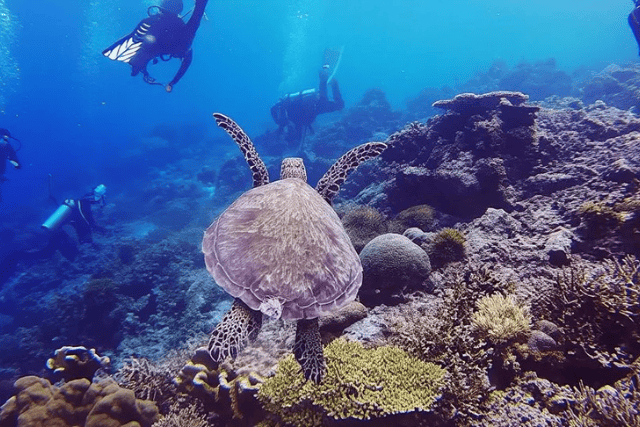
Planning your Abu Dabbab adventure requires understanding the practical details that make the experience smooth and enjoyable. The bay’s popularity has necessitated some management measures to protect the fragile ecosystem while allowing visitors access to this underwater paradise.
As of 2025, non-hotel guests face a mandatory entrance fee of €20 (approximately $22 USD or £17). This fee isn’t just a money grab—it’s a conservation tool designed to prevent overcrowding and includes beach access, sunbed, and umbrella for the day. The revenue directly supports bay management and marine conservation programs. If you’re staying at one of the beachfront resorts, this fee is typically included in your hotel package.
Many visitors find that organized tours offer the best value and convenience. Companies have built excellent reputations by offering comprehensive packages that typically range from €30 to €45 per person. These tours usually include hotel pickup from anywhere in the Marsa Alam area, round-trip transportation, the entrance fee, and—most valuably—an experienced guide who knows exactly where to find the marine life. For first-time snorkelers or those unfamiliar with the area, having a knowledgeable guide can transform your experience from good to extraordinary.
If you prefer independence, reaching Abu Dabbab by taxi from Marsa Alam town costs around 300-400 Egyptian pounds for a round trip, with waiting time negotiated separately. The drive takes roughly 30 minutes along the coastal highway, with clear signage marking the bay’s entrance.
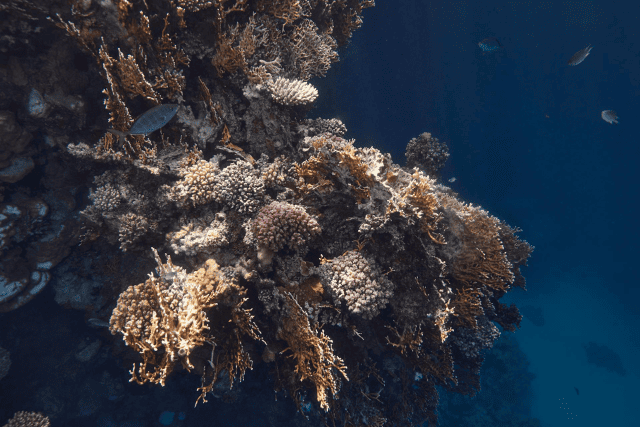
Understanding the bay’s underwater topography helps you maximize your time in the water. The North Reef extends along the northern edge of the bay at depths ranging from 2 to 8 meters. This is ideal territory for beginners and families with children—the water is shallow enough to stand if needed, the currents are minimal, and the reef provides fascinating underwater landscapes to explore. You’ll find plenty of colorful fish, coral formations, and often turtles grazing in the nearby seagrass.
The South Reef offers a more adventurous experience, with depths ranging from 5 to 12 meters and notably higher coral diversity. The coral formations here are more dramatic, with larger bommies and more complex structures that shelter a greater variety of fish species. This area requires more confident swimming abilities, as the depth makes it impossible to stand, but the rewards include more pristine coral and potentially more diverse marine encounters.
For certified scuba divers, Abu Dabbab offers something truly special: “The Abyss.” Beyond the protected shallow bay, the seafloor drops dramatically to depths of 30 to 40 meters. This deeper zone features caves, dramatic wall diving, and even a small wreck that has become encrusted with coral over the decades. Advanced divers exploring these depths report encounters with larger pelagic species that don’t venture into the shallower bay, including occasional reef sharks, large groupers, and schools of barracuda.
Regarding equipment, most tour operators provide basic snorkeling gear (mask, snorkel, and fins), but experienced snorkelers often prefer bringing their own for comfort and hygiene reasons. The water temperature ranges from 22°C in winter to 28°C in summer, so a wetsuit isn’t always necessary, though many snorkelers appreciate a 3mm shortie for sun protection and warmth during longer sessions. The visibility at Abu Dabbab is typically outstanding—often exceeding 20 meters—which means even budget snorkel gear will allow you to see the marine life clearly.
One practical tip: arrive early. The bay tends to be quietest between 7:00 AM and 9:00 AM, before the tour buses arrive. Early morning also offers the best lighting for underwater photography and the calmest water conditions. By midday, especially during peak season (October through April), the beach can become quite crowded, which sometimes pushes the more sensitive wildlife toward the outer edges of the bay.
“Tap here and book now, Diving experiences and courses in Marsa Alam.”
Responsible Tourism: The Red Sea Code of Conduct
The magic of Abu Dabbab Bay exists because of careful conservation management and responsible visitor behavior. Unfortunately, the bay’s popularity has created real pressures on the marine life, making it essential that every visitor understands and follows the established guidelines.
The most fundamental rule is maintaining distance. You must stay at least 3 to 4 meters away from all marine life—turtles, dugongs, rays, and fish alike. This isn’t just a suggestion; it’s a legal requirement enforced by the Egyptian Environmental Affairs Agency. These animals may appear relaxed around humans, but that calm behavior is the result of visitors respecting their space. When snorkelers crowd, chase, or attempt to touch wildlife, the animals become stressed and may eventually abandon the area entirely.
This is particularly critical with dugongs. Research has demonstrated that dugongs subjected to repeated harassment develop long-term avoidance behaviors. A dugong that’s been chased or touched multiple times may begin avoiding the shallow feeding areas where tourists snorkel, forcing it to feed in less optimal locations or even relocate to a different bay altogether. Given that Dennis and Dougal have been residents here for years, protecting their comfort and natural behavior should be every visitor’s priority.
The 30-minute observation limit is another important guideline that many visitors don’t understand. If you find yourself swimming alongside a turtle or watching a dugong feed, limit your interaction to 30 minutes before moving away to give the animal space. This prevents individual animals from being followed constantly by rotating groups of snorkelers throughout the day. The turtle or dugong needs time to feed, rest, and behave naturally without an audience.
Photography rules exist for good reason. Flash photography is strictly prohibited as it can startle marine life and potentially damage their sensitive eyes, particularly in the case of nocturnal species that might seek shelter in the reef during daylight. Selfie sticks are banned near animals because people inevitably try to get closer for better shots, often without realizing they’re getting too close or blocking the animal’s path. If you want stunning photos, invest in a decent underwater camera or waterproof phone case and learn to photograph animals from a respectful distance.
The most important rule—never touch marine life—applies universally. Sea turtles can carry salmonella, and your touch removes the protective mucus layer from fish and can damage coral. More significantly, touching teaches wild animals that humans are not a boundary to be respected, which can make them vulnerable to less responsible tourists or even poachers. Every time you resist the urge to touch a turtle that swims close to you, you’re helping protect that animal’s natural wariness and ensuring it remains wild and safe.
Coral reefs deserve equal protection. Never stand on, touch, or break coral. Many corals are extremely slow-growing—some large formations may be centuries old. A careless fin kick or misplaced hand can destroy decades of growth in seconds. Practice your buoyancy control before entering the reef areas, and if you need to adjust your mask or rest, swim to a sandy area rather than grabbing onto coral.
The bay also has rules about feeding fish, which is strictly prohibited. While it might seem harmless or even helpful, feeding disrupts natural behavior patterns, causes fish to become aggressive and dependent, and can introduce diseases. The fish at Abu Dabbab are healthy and abundant because they’re eating their natural diet, not bread or other inappropriate foods well-meaning tourists might offer.
Finally, take all your trash with you—and consider taking some you didn’t bring. Even in this relatively well-managed area, plastic bottles, snack wrappers, and cigarette butts sometimes wash up or get left behind. The five minutes it takes to collect a few pieces of debris can help protect the ecosystem that makes this place so special.
FAQ: Quick Answers for Your Trip
1-Is Abu Dabbab good for families with young children?
Absolutely. The soft sandy beach slopes gradually into shallow, calm water protected by the surrounding reefs. Young children can play safely near the shore while older kids snorkel in knee-to-waist-deep water. Many families report that Abu Dabbab was the place their children first learned to snorkel because the visibility is excellent and the wildlife encounters are so engaging that kids forget to be nervous. The turtles often come quite close to shore, meaning even timid swimmers can see them.
2-What other fish species will I see besides turtles and dugongs?
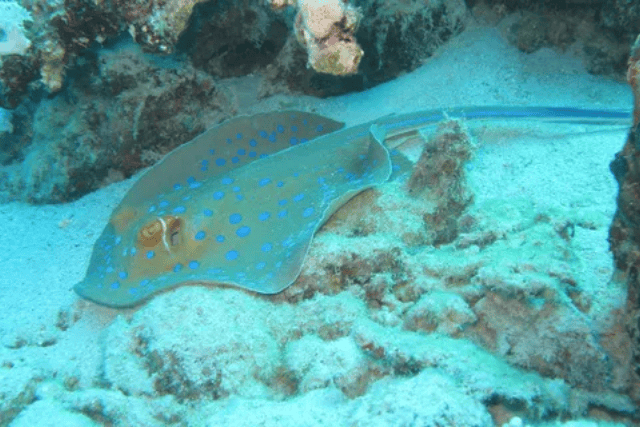
The biodiversity at Abu Dabbab is remarkable. You’ll regularly encounter colorful butterflyfish, large schools of striped parrotfish grazing on the reef, and lionfish hovering in the coral with their dramatic fan-like fins. The bay is also home to the rare Halavi guitarfish, which resembles a bizarre cross between a shark and a ray. Blue-spotted stingrays often rest on the sandy bottom, their neon-blue spots providing perfect camouflage against the dappled sunlight. Moray eels peer out from coral crevices, while triggerfish, angelfish, and wrasses add constant movement and color to every snorkel session.
3-How does climate change affect Abu Dabbab Bay?
This is an important question that doesn’t get asked enough. Rising water temperatures have caused periodic coral bleaching events throughout the Red Sea, and Abu Dabbab hasn’t been entirely spared. Bleached coral loses its color and vitality, and while it can sometimes recover, severe or repeated bleaching kills entire sections of reef. This affects the entire ecosystem—fewer fish, less biodiversity, and reduced coastal protection from storms.
The seagrass meadows face their own climate threats. Higher temperatures can stress seagrass, reducing its growth rate and nutritional value. Since the dugongs require such massive quantities of seagrass daily, any significant decline in these meadows could force them to relocate. Additionally, more intense storms and flooding can bury seagrass under sediment or expose it to freshwater runoff, both of which can kill large sections of the meadow. Conservation scientists are monitoring these threats closely, but the reality is that Abu Dabbab’s long-term future depends partially on global climate action.
4-What time of year is best to visit?
This depends on your priorities. For the highest probability of dugong sightings, visit between August and October when seagrass is most abundant. However, these months are also extremely hot, with daytime temperatures often exceeding 40°C (104°F). For more comfortable weather and still-excellent marine life viewing, October through April is ideal. The water remains warm enough for extended snorkeling (22-26°C), and the air temperature is pleasant. The winter months (December through February) see the highest tourist numbers, so expect more crowded conditions. May through July brings the nesting season, which is fascinating to witness, though temperatures climb steadily through this period.
5-Do I need to be a strong swimmer to snorkel here?
Not necessarily. The shallow northern section of the bay allows even nervous swimmers to snorkel in chest-deep water where they can stand if needed. However, you should be comfortable in water and capable of swimming continuously for at least 15-20 minutes. A life jacket or flotation vest is available from most tour operators if you lack confidence. The key is understanding your limitations—don’t venture into deeper water unless you’re completely comfortable, and always snorkel with a buddy.
6-Can I visit Abu Dabbab on a day trip from Hurghada or other northern Red Sea resorts?
Technically yes, but it’s not practical. Hurghada lies roughly 280 kilometers north of Abu Dabbab, making it a 3.5 to 4-hour drive each way. You’d spend 7-8 hours traveling for perhaps 2-3 hours at the bay—hardly worth it. If Abu Dabbab is your priority, base yourself in Marsa Alam for at least a few days. This also allows you to explore nearby sites like Marsa Mubarak (home to the dugong “Dyson”), Sharm El Luli’s pristine beaches, and other exceptional dive sites along this less-developed section of coastline.
Making Your Abu Dabbab Adventure Unforgettable
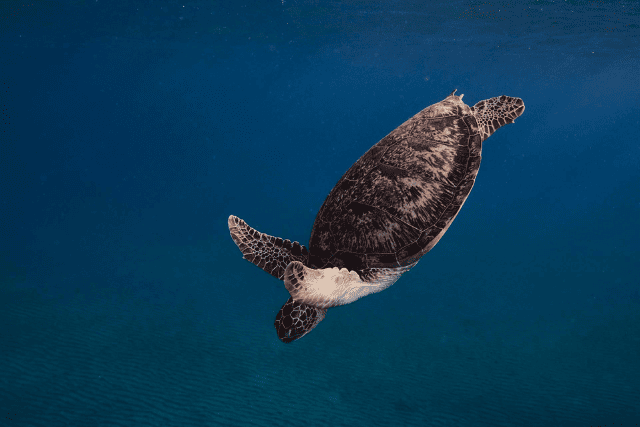
There’s something profoundly moving about floating weightlessly in clear water, watching an ancient sea turtle graze peacefully just meters away, completely untroubled by your presence. Abu Dabbab Bay offers these moments not as rare flukes but as the expected experience—a testament to successful conservation and responsible tourism management.
Whether you spend a single day here or make it your base for a week-long exploration of the southern Red Sea, Abu Dabbab rewards visitors with memories that last a lifetime. The combination of accessibility and abundance makes it unique: you don’t need to be an experienced diver or wealthy enough for luxury liveaboards to witness some of the planet’s most endangered and charismatic marine life.
For underwater photography enthusiasts, consider investing in a GoPro Hero 11 or newer model. The exceptional water clarity and abundant marine life make Abu Dabbab perfect for capturing stunning footage, and modern action cameras handle the lighting conditions beautifully. The video of your child’s face lighting up as a turtle swims past, or the graceful silhouette of a dugong against the sunlit surface, will be treasured for years.
Finally, consider contributing to the conservation efforts that make places like Abu Dabbab possible. If you witness a dugong or turtle in distress, or if you observe other visitors harassing wildlife, report it to your dive center or hotel management. Many research organizations also welcome sighting reports from visitors—your observations become part of the citizen science efforts that help monitor population health and behavior patterns. The Red Sea Project and various marine conservation organizations maintain databases of sightings that inform protection policies and help identify threats before they become crises.
Abu Dabbab represents something increasingly rare in our crowded world: a place where humans and endangered wildlife coexist successfully, where tourism generates the economic incentive for protection rather than exploitation. Every respectful visitor who follows the guidelines and spreads awareness about responsible marine tourism helps ensure that future generations can also experience the wonder of swimming alongside sea turtles and catching that magical glimpse of a gentle dugong grazing in the shallows.
Pack your snorkel gear, book your accommodation, and prepare for an experience that will fundamentally change how you think about marine conservation and the Red Sea’s remarkable biodiversity. The turtles and dugongs of Abu Dabbab are waiting.
“Tap here and book now Luxury hotels and stays in Marsa Alam by the Red Sea.”